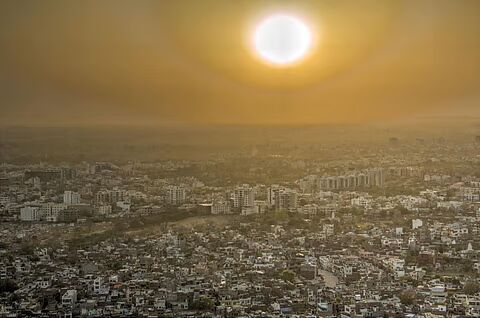
Gurugram is expected to see a brief spell of light rain even as temperatures continue their upward climb this week, reflecting the increasingly erratic weather patterns shaping urban climate conditions across the National Capital Region. The short-lived relief, driven by changing atmospheric conditions, is unlikely to offset the broader trend of intensifying heat across the region. Meteorological forecasts indicate that while patchy rainfall and cloud cover may bring temporary moderation, maximum temperatures are projected to rise steadily, with heatwave-like conditions likely to return within days.
Recent trends already show temperatures crossing 40°C, with further increases of 3–5°C anticipated in the near term. Such fluctuations—alternating between light rain and sharp heat spikes—are becoming more frequent in northern Indian cities. Gurugram’s semi-arid climate typically transitions rapidly into peak summer by late April, but recent years have seen more volatile patterns, including unseasonal rain followed by sudden temperature surges. For urban infrastructure, this variability presents a complex challenge. Brief rainfall events often fail to provide meaningful groundwater recharge but can strain drainage systems, especially in rapidly built-up sectors with limited permeability. At the same time, rising temperatures significantly increase electricity demand, particularly for cooling, placing additional pressure on already stretched urban power networks. The implications extend beyond infrastructure to public health and urban productivity. Heat stress is emerging as a major concern, particularly for outdoor workers, delivery personnel, and construction labourers who face prolonged exposure to extreme temperatures. Even short breaks in heat, such as light rain, do little to mitigate cumulative exposure risks when temperatures rebound quickly.
Urban planners argue that such patterns highlight the need for climate-responsive city design. Increasing green cover, improving urban ventilation corridors, and promoting reflective building materials can help reduce the urban heat island effect—where dense construction amplifies temperature levels compared to surrounding rural areas. Without these interventions, cities like Gurugram risk becoming increasingly vulnerable to both heat extremes and sudden weather disruptions. There is also a growing case for decentralised resilience measures. Rooftop solar systems, energy-efficient cooling technologies, and water-sensitive urban design could help cities adapt to both rising temperatures and irregular rainfall. However, adoption remains uneven, particularly in newer residential clusters where infrastructure often lags behind occupancy. From a governance perspective, the interplay between heat and rainfall underscores the need for integrated climate planning. Weather events are no longer isolated occurrences but part of a broader pattern of volatility that requires coordinated responses across sectors—from power distribution and water management to public health systems.
As Gurugram moves deeper into the summer season, the current forecast suggests that the brief rain spell will offer only limited respite. The larger trajectory remains one of rising heat intensity, reinforcing the urgency for cities to move beyond reactive responses and build long-term resilience into their urban systems.