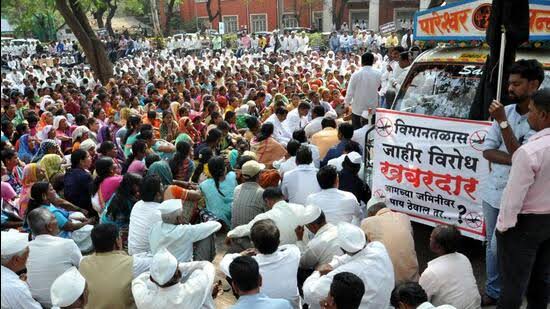
Pune Village Protest Links Farm Debt And Pollution
A farmer’s hunger strike in Kangaon village of Pune district has entered its second week, bringing together demands on farm debt, agricultural incomes, water infrastructure and industrial pollution. The protest reflects a wider rural challenge in which household finances, environmental conditions and basic public infrastructure are increasingly interconnected.
The 49-year-old farmer, associated with a farmers’ organisation, began the fast in Daund taluka and has said it will continue until the state government responds to a list of demands. The organisation has sought comprehensive relief from outstanding farm loans, financial assistance for farmers with active dues and a temporary halt to compulsory loan recovery. At the heart of the economic demand is the vulnerability of agricultural households to fluctuating crop prices and borrowing costs. A loan waiver can provide immediate relief, but rural economists have repeatedly pointed to the need for more durable measures, including predictable farm incomes, access to affordable credit and stronger market infrastructure. Without these, debt relief risks becoming a recurring intervention rather than a long-term solution. The protest has also raised a local environmental concern. Residents and the organisation have alleged that industrial activity involving two cement units near Kangaon has contributed to air pollution, heavy vehicle movement and deterioration of local roads. These allegations require regulatory assessment, but they highlight the infrastructure burden that industrial corridors can place on surrounding villages.
For communities living alongside industrial areas, the issue is not limited to emissions. Frequent movement of heavy vehicles can increase road damage, safety risks and congestion, while inadequate monitoring can deepen distrust between residents, businesses and authorities. Environmental compliance and transport planning therefore need to operate alongside industrial development rather than after problems emerge. The organisation has also called for stalled piped-water projects to be resumed, including schemes affecting Daund. Reliable water infrastructure remains particularly important for rural settlements facing competing demands from households, agriculture and industry. Delays can increase dependence on private supplies and deepen inequality between better-served and peripheral communities.
Other demands include returning unused land acquired for the Ujani Dam project, changes to agricultural marketing regulations and expanded access to low-cost credit for economically vulnerable groups. The breadth of the demands shows how rural distress extends beyond crop production into healthcare, land, finance and public services. The immediate focus is now on whether the state government will engage with the protesters and examine the individual demands through the relevant departments. For Pune’s rural belt, the episode also underlines a broader planning challenge: industrial expansion and infrastructure investment must deliver economic opportunity without transferring environmental and social costs to neighbouring farming communities.