


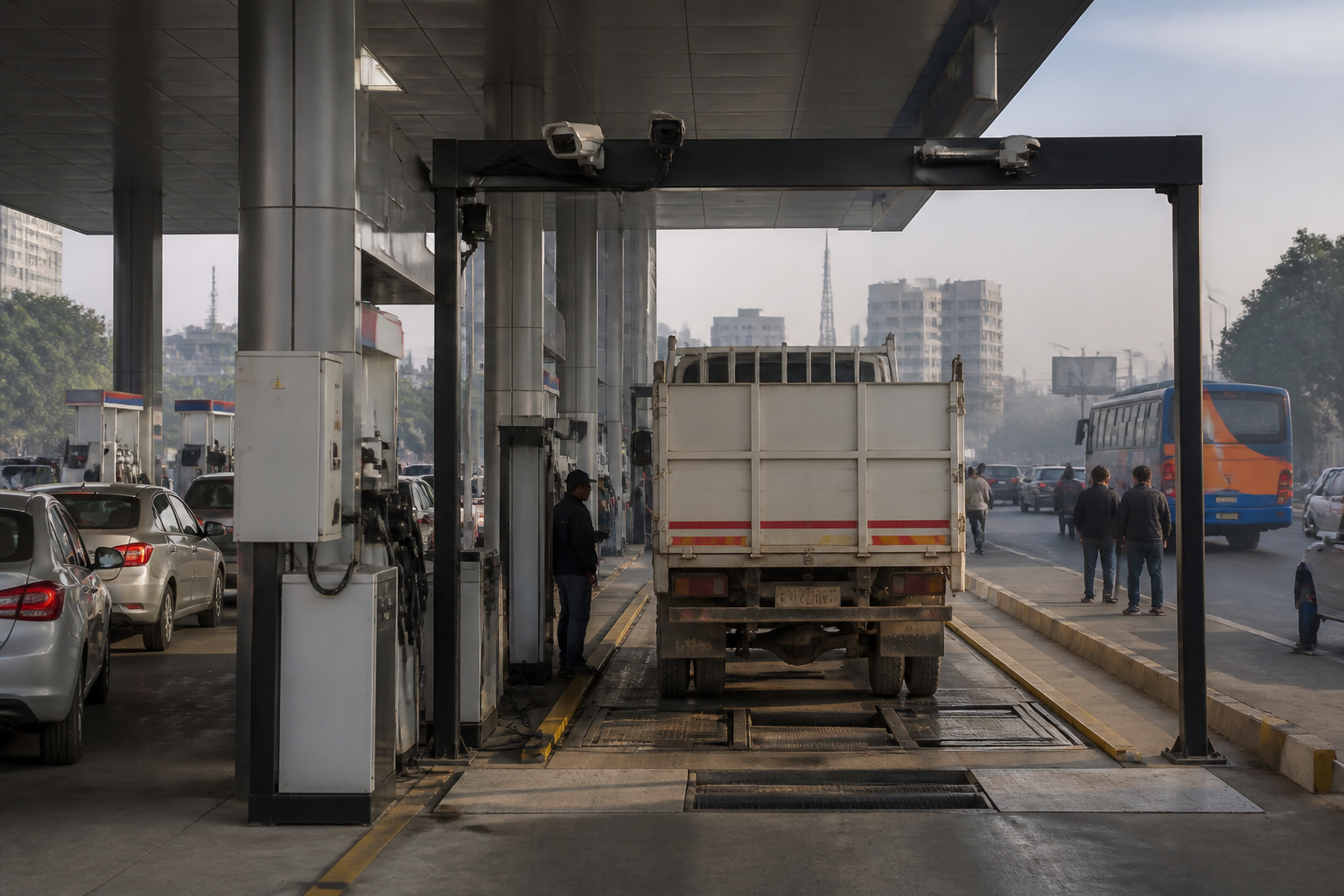
Delhi will install cameras at all pollution-under-control certificate centres and expand technology-led testing for commercial vehicles, as the government seeks to make vehicle-emissions checks more transparent and reliable across the capital.
Chief Minister Rekha Gupta announced the measures in a video message, saying that stronger monitoring was necessary to address gaps in the existing pollution-control and vehicle-testing system. The government plans to upgrade all pollution-checking centres and install cameras to monitor the process.
The announcement follows concerns over the different systems used for commercial and private vehicles. According to the Chief Minister, commercial vehicles have been receiving fitness certificates from centres using older technology, while private vehicles have been issued pollution certificates through booths operating outside petrol pumps under the existing system. The government has identified closer oversight as necessary to improve the credibility of both processes.
Two automated testing stations for commercial vehicles have opened at Tekhand and Nand Nagri. Each station has an annual capacity to test about 72,000 vehicles, according to the announcement. The centres are intended to connect commercial-vehicle fitness checks with modern testing technology and make the process more effective.
Delhi has around 900 pollution-checking centres, most of them located at petrol pumps. These centres issue approximately three lakh pollution-under-control certificates every month. From January this year until the time of the announcement, 2,715,337 certificates had been issued, the report said.
The number is lower than during the corresponding period last year, when more than three million certificates had been issued. The supplied report does not establish whether the decline reflects changes in vehicle use, compliance, enforcement activity, certificate validity or reporting practices. It also does not provide a vehicle-wise breakdown of certificates issued or the number of centres already equipped with monitoring systems.
The government has presented the camera programme and automated testing stations as part of a wider approach to pollution control rather than as a standalone intervention. The Chief Minister said vehicle testing would be strengthened through technology and increased monitoring, while describing pollution reduction as requiring a broad, 360-degree approach.
The immediate implementation details, including the camera installation schedule, data-retention arrangements, public access to inspection records and the process for handling disputed test results, were not specified in the announcement. The next operational milestone will be the rollout of cameras across Delhi’s pollution-checking centres and the use of the automated stations at Tekhand and Nand Nagri for commercial-vehicle testing.
