


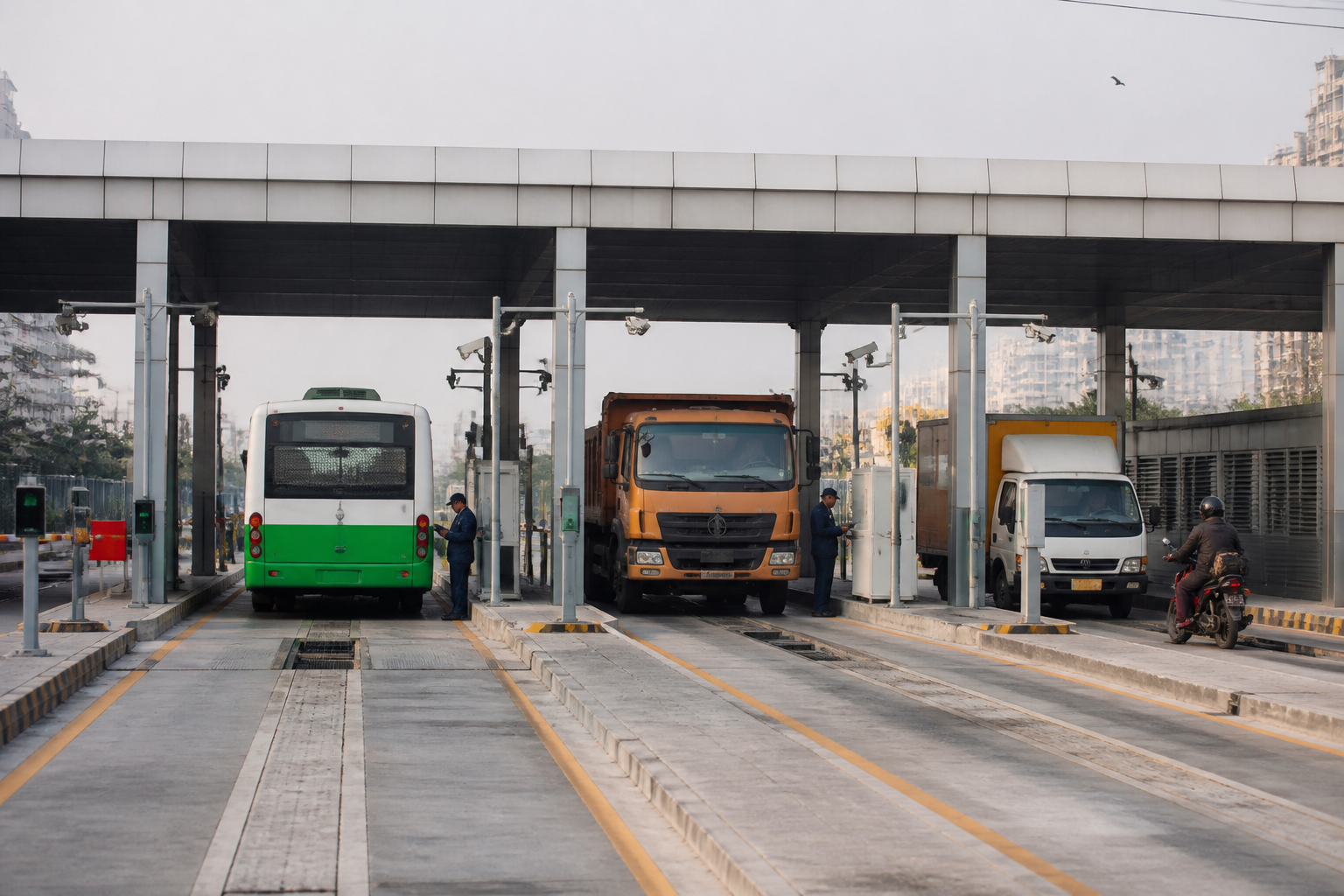
Delhi vehicle testing is set for tighter surveillance, with the government planning cameras at every pollution-under-control centre and expanding automated fitness testing for commercial vehicles, Chief Minister Rekha Gupta said. The measures are intended to improve scrutiny of emission checks and fitness certification across the capital.
The announcement comes amid concerns about the effectiveness of existing pollution testing, particularly at centres operating near petrol pumps. Gupta said the government identified gaps in the vehicle testing system while working on measures to address pollution.
“While working on solutions to pollution, we identified a major gap. Commercial vehicles were getting fitness certificates from centres using old technology, while private vehicles were getting pollution certificates from booths outside petrol pumps,” Gupta said.
To strengthen oversight, the government has decided that every pollution testing centre will be upgraded and equipped with cameras. The surveillance system is intended to allow authorities to monitor the testing process more closely and improve scrutiny of pollution certificates issued to vehicles.
Delhi has also opened automated vehicle testing stations at Tehkhand and Nand Nagri for commercial vehicles. The facilities use digital systems and are designed to reduce manual intervention in fitness certification. Their checks cover emissions, brakes, suspension, underbody condition and headlamp alignment.
The Nand Nagri facility has four automated testing lanes: two for heavy motor vehicles, one for light motor vehicles and another for two-wheelers. It is housed in a 40-metre by 26-metre pre-engineered building and can test up to 72,000 vehicles annually, including about 20,000 two-wheelers.
The two new facilities will add capacity to Delhi’s automated vehicle testing network, which already includes a station at Jhuljhuli in southwest Delhi. Unlike conventional fitness testing, the automated stations use equipment to generate test results through a largely digital process, allowing authorities to track the process with less reliance on manual intervention.
A pollution-under-control certificate is mandatory for vehicles and certifies that their emissions comply with prescribed standards. The certificate records a vehicle’s registration details, emission readings and validity period. Fitness certification for commercial vehicles, meanwhile, involves checks on the vehicle’s mechanical and safety condition.
The government’s stated approach combines surveillance at PUC centres with automated fitness testing for commercial vehicles. Gupta said tackling vehicular pollution would require action across multiple areas rather than relying on one measure. “Pollution needs a 360-degree response. Together, we will find the solution. Delhi will win this fight,” she said.
