


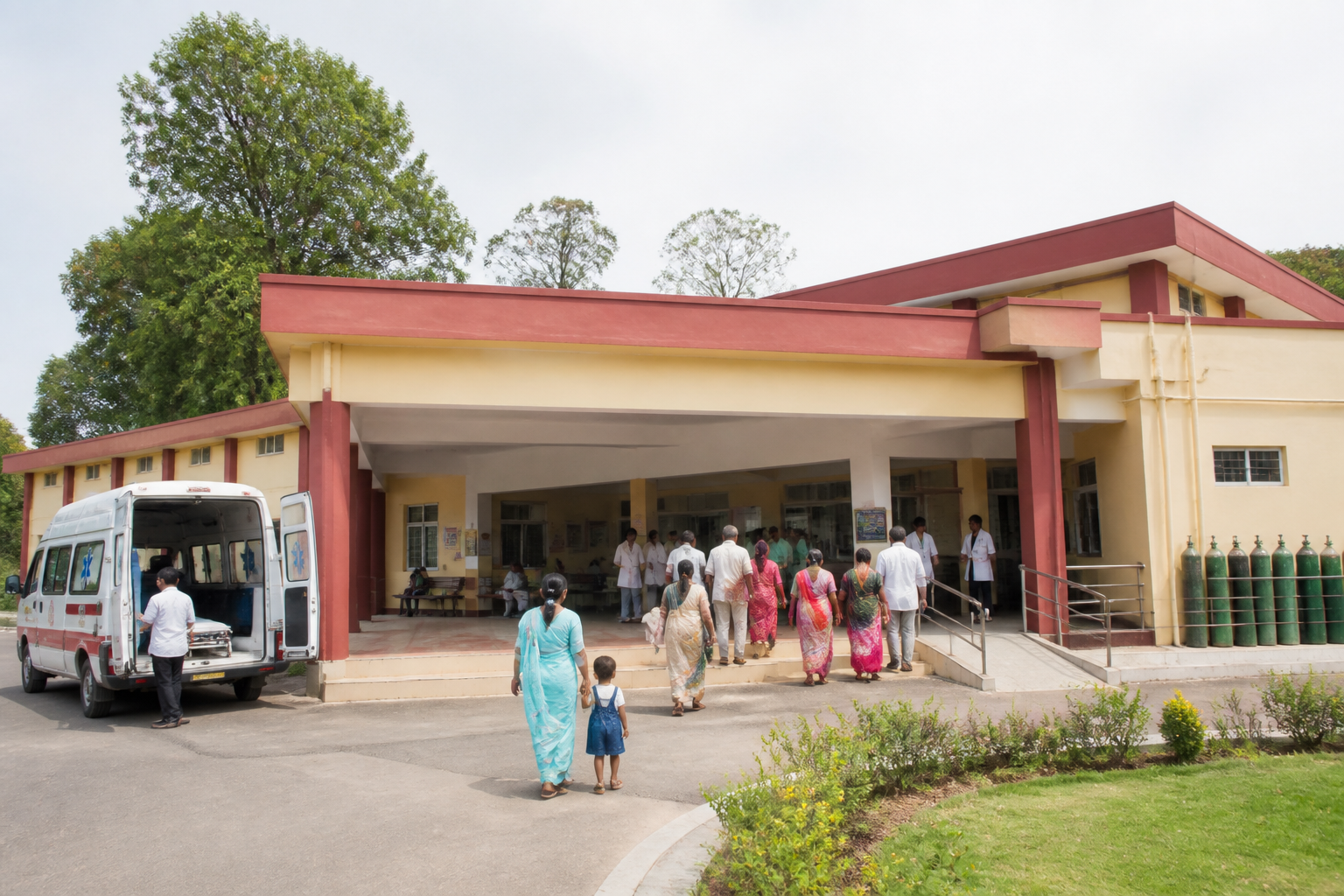
Karnataka has allocated ₹900 crore in the 2026–27 financial year to strengthen primary health centres, community health centres and taluk hospitals, with the plan covering building repairs, medical equipment and expanded inpatient and outpatient services, according to a report by Prajavani.
The proposed work is intended to improve access to medical care in rural areas and reduce patient congestion at district headquarters hospitals. The funding will be used to strengthen outpatient departments and inpatient departments at different levels of the public health system, the report said.
The state government also plans to provide specialist medical services to these facilities through medical colleges. Under the programme linked to the Chief Minister’s 100-day agenda, government and private medical colleges will each adopt one taluk hospital, community health centre and primary health centre. The institutions are expected to support specialist services, staff training, quality improvement and other healthcare needs.
Health centres identified for adoption will be selected district by district. Agreements are being arranged between the heads of medical colleges and district health officers, according to the report. The supplied information does not specify the number of facilities to be adopted, the district-wise allocation of the ₹900 crore or the implementation timeline for each project.
The plan also includes a phased expansion of intensive care units, emergency care units and medical oxygen-based treatment facilities. The government has expanded the capacity of medical oxygen-supported beds, intensive care units and ventilators across state-run health institutions, the report said. Details of the existing and planned capacity were not provided.
The Health Department has additionally reallocated specialist doctors to taluk hospitals to strengthen maternal healthcare. The measure is intended to ensure that teams capable of conducting deliveries are available around the clock. The department expects the arrangement to improve care for mothers and newborns and reduce mortality, although the report does not provide a target or baseline for measuring the expected change.
Karnataka is also preparing to extend its ‘Gruha Arogya’ home healthcare programme to urban areas. The initiative was first launched on a pilot basis in Kolar in October 2024 and expanded across the state in June 2025. It currently provides health check-ups in rural areas, with medical staff trained to identify health problems at an early stage and distribute medicines at people’s homes.
The report also highlighted the ‘Dr Puneeth Rajkumar Hrudaya Jyothi’ programme, which provides support for suspected heart-attack patients at the taluk level. More than 1.2 million electrocardiograms have been conducted under the programme in three years. It was introduced initially at the taluk level and expanded across Karnataka in March 2024. The programme is designed to support treatment during the first hour after a heart attack, when timely care is critical.
Alongside hospital and home-based services, the Food Safety Department has intensified inspections of hotels, restaurants and catering establishments over the past one and a half months. Inspections have also covered five-star hotels and e-commerce company warehouses in Bengaluru, where expired and substandard food was seized, according to the report. Authorities have issued notices under the Food Safety and Standards Act to businesses found violating rules.
The department has also prohibited the sale of junk food within school and college premises and within a 50-metre radius of them. The measure is intended to improve the availability of safe and healthier food for students. The report did not provide details on the enforcement mechanism, penalties or the number of establishments inspected.
