


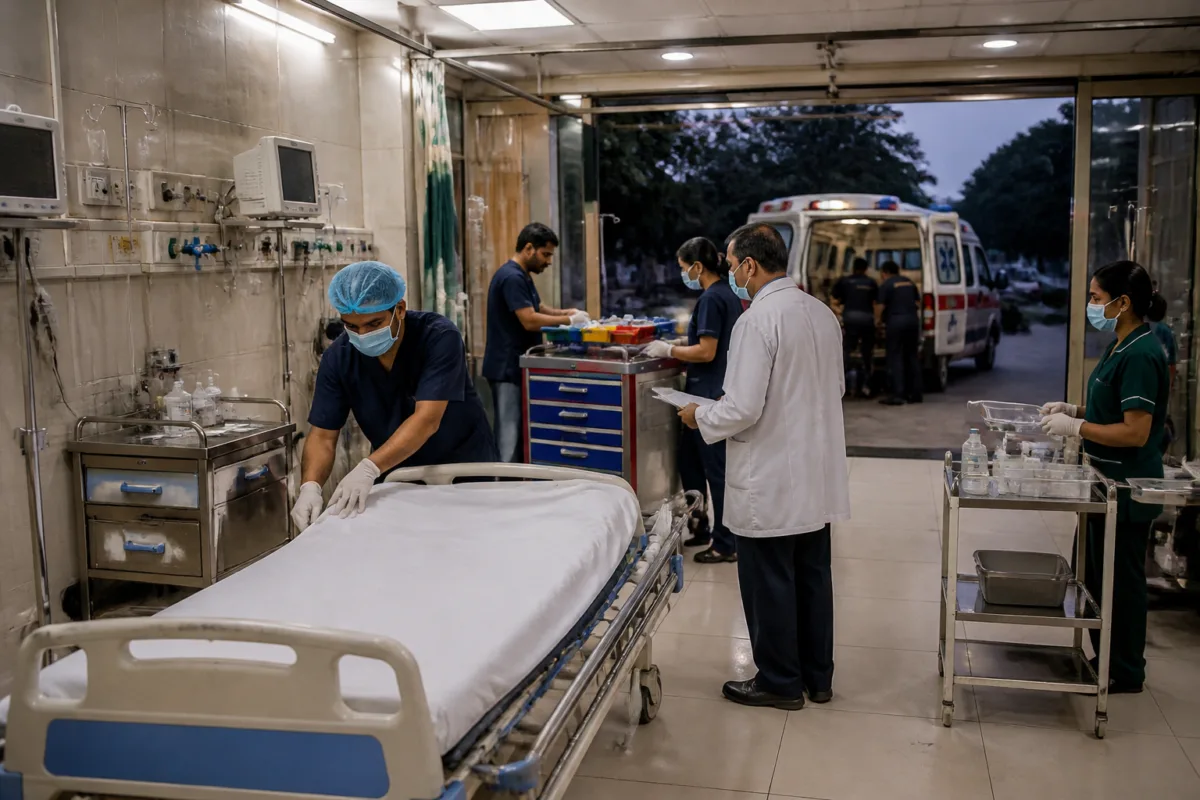
Uttar Pradesh has ordered government and autonomous medical colleges to keep emergency medical services running round the clock during Diwali and Chhath Puja, with hospitals directed to prepare for possible fire incidents, road accidents, stampedes and other festival-related emergencies.
The directions were issued by Neha Sharma, director general of the medical education department, and apply to medical colleges and their affiliated hospitals across the state. An official spokesperson said detailed instructions had been issued to ensure uninterrupted medical care during the festive period.
The order requires emergency departments, trauma centres, intensive care units and burn units to remain operational at all times. Hospital authorities have been asked to prepare duty rosters covering doctors, nurses, technicians and other personnel in emergency medicine, surgery, orthopaedics, anaesthesia, radiology, medicine and other critical departments.
Medical college heads have also been told to keep additional manpower and beds available to manage a sudden increase in patients. The preparedness measures cover not only staffing but also the equipment and supplies required to sustain emergency care during a period when hospitals may face multiple incidents at the same time.
Hospitals must check the availability and functioning of ventilators, oxygen supply systems, patient monitors, defibrillators and suction machines. They have also been directed to maintain adequate stocks of essential medicines, injections, dressing material and emergency kits. Blood banks are expected to ensure sufficient supplies of blood and its components.
The instructions place particular emphasis on referral arrangements for critically injured patients. Medical colleges have been asked to ensure that ambulances and medical assistance are available to transfer patients to higher centres without delay when a facility cannot provide the required treatment.
Fire safety inspections have been ordered in sensitive areas, including intensive care units, operation theatres, oxygen plants, laboratories and hostels. Emergency exits and staircases must remain unobstructed, highlighting the operational risks that can arise when hospitals face a fire or mass-casualty incident while treating patients who may not be able to evacuate independently.
The hospitals have also been asked to update disaster management plans for mass casualties arising from accidents, fires or stampedes. Principals and directors will personally monitor the arrangements, while nodal officers will oversee implementation at individual institutions.
The order assigns responsibility at the institutional level and states that negligence in implementing the directions will invite accountability. The instructions do not specify a separate statewide deployment figure for additional beds, staff or ambulances, leaving preparedness levels to be organised and monitored by individual medical colleges and their affiliated hospitals.

