


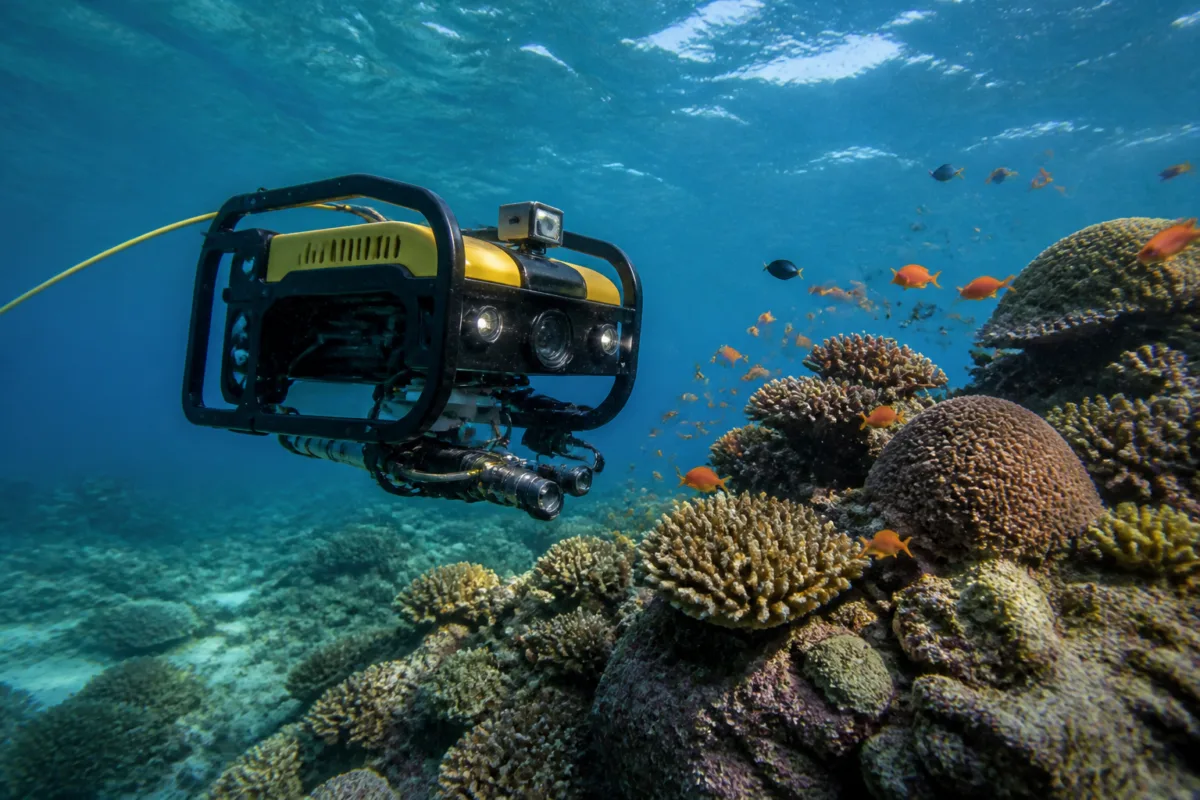
CSIR-National Institute of Oceanography (CSIR-NIO) has transferred its indigenously developed coral reef monitoring robot technology, known as C-BOT, to Corrosion Protection Ltd in Bhubaneswar, Odisha, in a move aimed at making reef surveys faster and more data-driven.
CSIR-NIO director Sunil Kumar Singh said the technology was developed in response to growing challenges faced by coral ecosystems, which are increasingly affected by global warming and coral bleaching. The transfer will allow the Odisha-based company to work with the technology for applications including coral monitoring and underwater assessments.
Conventional coral reef surveys require divers to enter the water and visually inspect reef formations. According to Singh, this process can be difficult and time-consuming, and the quality of the survey can be restricted by underwater conditions. C-BOT is designed to reduce those limitations by approaching coral formations independently, scanning them with specialised sensors and cameras, and returning with data for further analysis.
The system is intended to help scientists build a more consistent record of coral condition. CSIR-NIO is also developing photogrammetry-based tools that can use photographs to calculate the precise dimensions, area and volume of coral structures. These measurements could allow researchers to track changes in coral health, assess recovery and compare growth patterns from one year to the next.
The development comes as India’s coastline is being assessed using updated measurements. Singh said the coastline had been re-assessed from approximately 7,500 km to 11,096 km by the National Hydrographic Office in coordination with the Survey of India, following updated terms of reference from the National Security Council Secretariat. A longer and more accurately assessed coastline increases the scale of the marine areas that require monitoring, although the supplied announcement did not specify the locations where C-BOT will first be deployed.
Singh also highlighted the wider significance of ocean resources, including fisheries, minerals, metals and bioactive molecules with potential applications in medicines. CSIR-NIO’s underwater vehicles have operated at depths of up to 500 metres, with plans to extend their operating range to 2,000 metres and 6,000 metres.
Beyond coral surveys, Singh said C-BOT could support bathymetric surveys, strategic missions and other underwater assessments. The technology transfer therefore links reef monitoring with a broader expansion of India’s domestic underwater capability. The next stage will depend on how Corrosion Protection Ltd applies the system and how the resulting data is used for coral health assessment and other marine surveys.

