


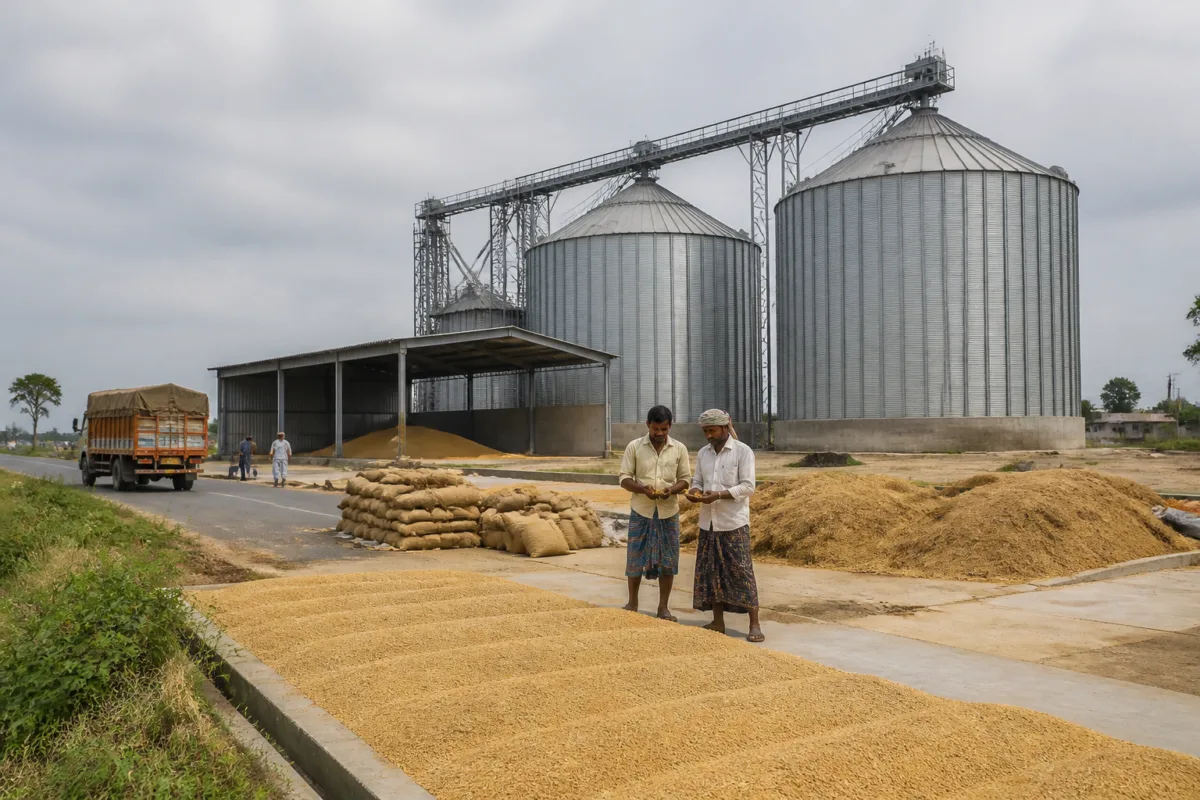
Telangana is planning a network of modern grain silos to help paddy farmers store produce safely, reduce post-harvest losses and avoid selling immediately after harvest, Civil Supplies Minister N. Uttam Kumar Reddy said after reviewing the proposals at the Secretariat.
The proposed facilities would include scientific drying and storage systems, allowing farmers to preserve grain quality and wait for more favourable market prices. The minister said inadequate storage was forcing some farmers to sell their harvest within 24 hours, irrespective of prevailing market conditions.
Officials presented two models for creating the storage network. Under the first, the Telangana State Civil Supplies Corporation would establish silos directly by raising loans from reputed financial institutions. The second model would bring in private investment to develop facilities at about 20 locations across the state during the initial phase.
Under the private-investment model, the corporation would provide rental guarantees to make the facilities financially viable. The guarantees are intended to support investor participation while creating storage capacity that farmers can use after harvesting.
Reddy directed officials to finalise the proposals quickly, including their financial implications, funding arrangements and rental commitments. The details of the final locations, project costs and implementation schedule were not specified in the report.
The storage challenge is linked to the moisture content of freshly harvested paddy. According to the minister, newly harvested grain generally contains about 25 per cent moisture, which makes safe storage difficult without scientific drying. Premium paddy with that moisture level fetches around ₹3,500 to ₹4,500 per quintal, he said.
After drying to about 12 per cent moisture, the same variety could command between ₹5,000 and ₹5,500 per quintal, according to the minister. The proposed silos are therefore intended not only to add physical storage but also to create a controlled drying process that can protect grain quality and reduce the pressure to sell immediately.
The proposal places the civil supplies corporation at the centre of the planned network, either as a borrower and project developer or as an institution providing rental guarantees to private operators. Its eventual financial commitments, including the scale of guarantees and loan repayments, will depend on the proposals that officials are asked to finalise.

