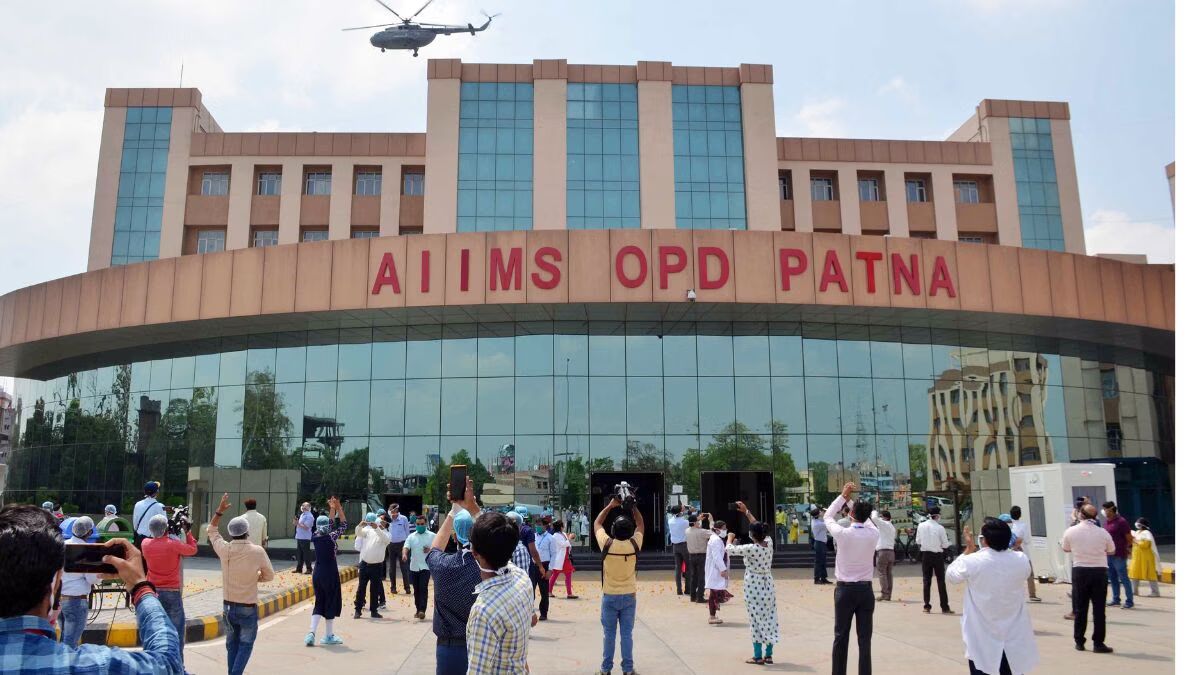
A high-level review of infrastructure projects in Patna has brought renewed focus on execution gaps and coordination challenges, with senior state officials assessing progress on critical developments including the upcoming AIIMS Darbhanga. The review underscores the growing urgency to align timelines with Bihar’s expanding urban and regional infrastructure needs.
The assessment, led by the state’s top administrative leadership, examined multiple ongoing projects tied to healthcare, logistics, and urban services. Among them, AIIMS Darbhanga—envisioned as a major public healthcare institution—remains central due to its potential to reshape medical access across north Bihar. Officials reviewed construction progress, utility shifting, and land readiness, while directing departments to address bottlenecks affecting timelines. The AIIMS Darbhanga infrastructure project is not just a healthcare initiative but a key component of regional development strategy. Once operational, it is expected to reduce pressure on urban medical facilities in Patna and improve access for underserved districts. However, delays linked to site preparation, including high-tension line relocation and land-related works, highlight the systemic hurdles often faced in large-scale public projects. Beyond healthcare, the review extended to industrial and logistics infrastructure, including manufacturing clusters and inland water transport initiatives. These projects are designed to strengthen Bihar’s economic base by improving connectivity and attracting investment. Progress, however, remains uneven, with officials emphasising the need for tighter inter-departmental coordination and faster decision-making to avoid cascading delays.
Urban development experts point out that such reviews reflect a broader shift towards performance monitoring in public infrastructure delivery. Bihar, like many rapidly urbanising states, is balancing multiple priorities—expanding healthcare access, building industrial capacity, and improving urban services—often within constrained administrative and financial frameworks. The AIIMS Darbhanga infrastructure project also illustrates the intersection of social infrastructure and urban planning. Large institutions of this scale typically trigger surrounding development, including housing, transport links, and service economies. Without integrated planning, this growth can become fragmented, placing additional strain on local ecosystems and civic amenities. Environmental and resilience considerations are increasingly relevant in this context. Infrastructure projects in flood-prone regions such as north Bihar require careful planning to ensure durability and climate adaptability. Experts suggest that embedding resilience measures early in the construction phase can reduce long-term costs and improve service continuity.
Officials have indicated that stricter accountability mechanisms will be enforced to ensure adherence to timelines and quality standards. The emphasis is now shifting from project announcements to measurable outcomes—completion rates, service delivery, and long-term sustainability. As Bihar accelerates its infrastructure pipeline, the effectiveness of such monitoring exercises will be judged by their ability to translate intent into on-ground progress. For citizens, the outcome will be visible not just in new facilities, but in how reliably these projects improve access, mobility, and quality of life.