


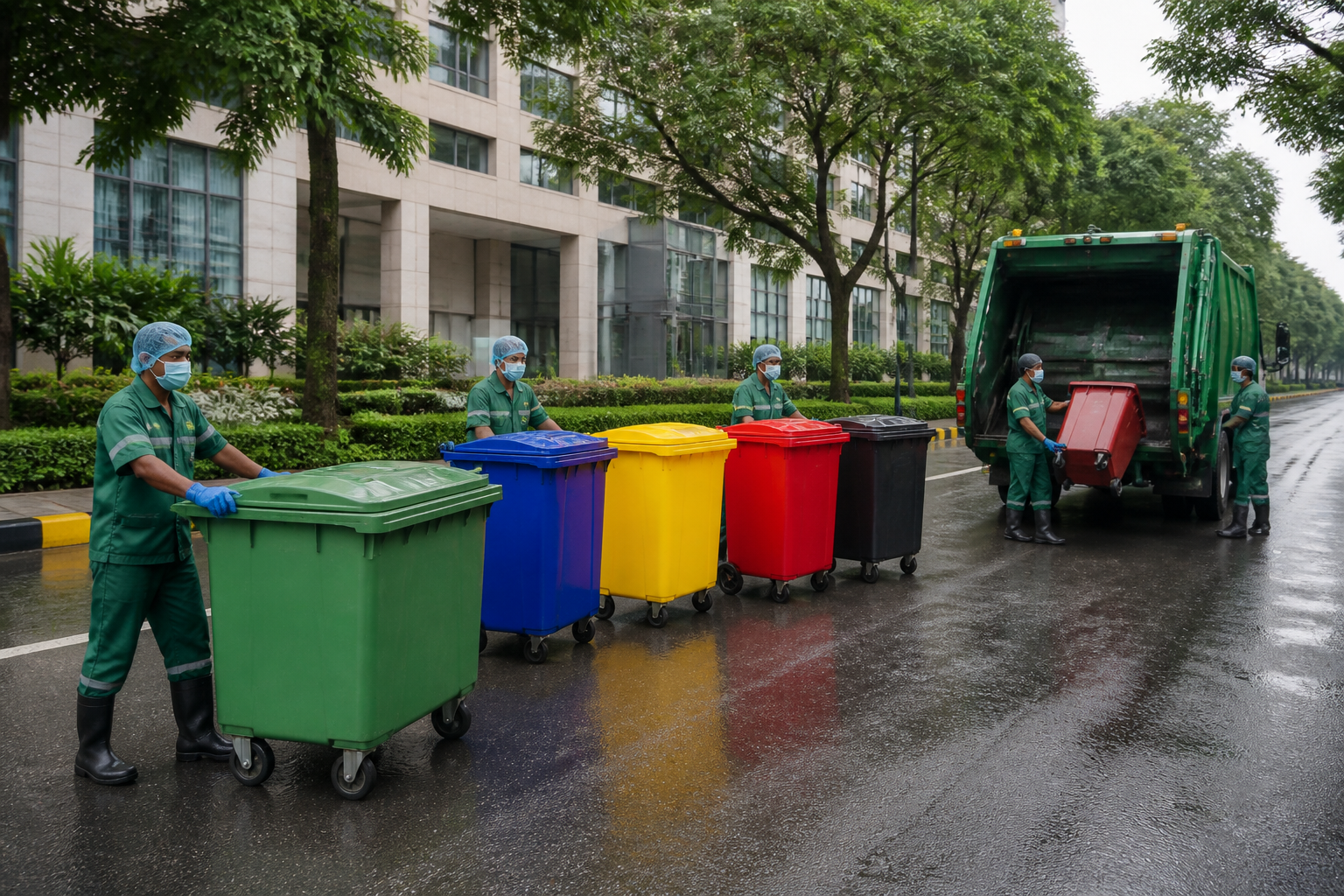
The New Delhi Municipal Council (NDMC) will intensify enforcement against bulk waste generators, warning establishments that fail to comply with the expanded Solid Waste Management Rules, 2026 that they could face heavy fines and environmental compensation.
NDMC chairman Manoj Kumar Dwivedi called for “zero tolerance” towards non-compliance in a post on X, directing officials to begin strict enforcement against bulk waste generators and impose penalties for violations. The civic body has also issued an infographic explaining the revised criteria under which establishments are classified as bulk waste generators.
Under the new framework, which came into force on April 1, an establishment can be classified as a bulk waste generator if it has a floor area of at least 20,000 square metres, consumes 40,000 litres or more of water a day, or generates at least 100 kg of solid waste daily. The criteria apply to a broad range of properties, including hotels, hospitals, educational institutions, malls, industrial units, hostels and residential societies.
Officials said the new rules place greater responsibility on large waste generators to manage waste produced on their premises rather than depend entirely on municipal collection and disposal systems. In the NDMC area, approximately 700 to 800 bulk waste generators have been identified.
The establishments must segregate waste at source into four streams: wet, dry, sanitary and special-care waste. These streams must then be handed over separately to authorised waste pickers, collectors or recyclers. Bulk waste generators are also required to ensure environmentally sound processing and disposal of the waste generated on their premises.
The rules require biodegradable waste to be processed through methods such as composting or biomethanation as far as possible. Environmental compensation can be imposed under the “polluter pays” principle for non-registration, submission of false information or forged documents, and violations involving the collection, segregation, transportation, processing and disposal of waste.
Officials said penalties under the amended Environment (Protection) Act, 1986, can range from Rs 10,000 to Rs 15 lakh. A further penalty of Rs 10,000 can be imposed for every day that a continuing violation persists. These provisions substantially raise the financial consequences for establishments that do not meet the requirements.
Earlier, violations such as non-registration of bulk waste generators attracted fines ranging from Rs 5,000 to Rs 25,000, depending on the nature of the violation and the applicable bylaws. The NDMC’s latest enforcement direction will therefore shift the immediate focus from registration and awareness to compliance monitoring, on-site processing and authorised handover of segregated waste.
The civic body’s next step is to begin strict enforcement against the identified bulk waste generators and act against establishments that fail to comply with the new requirements.
