


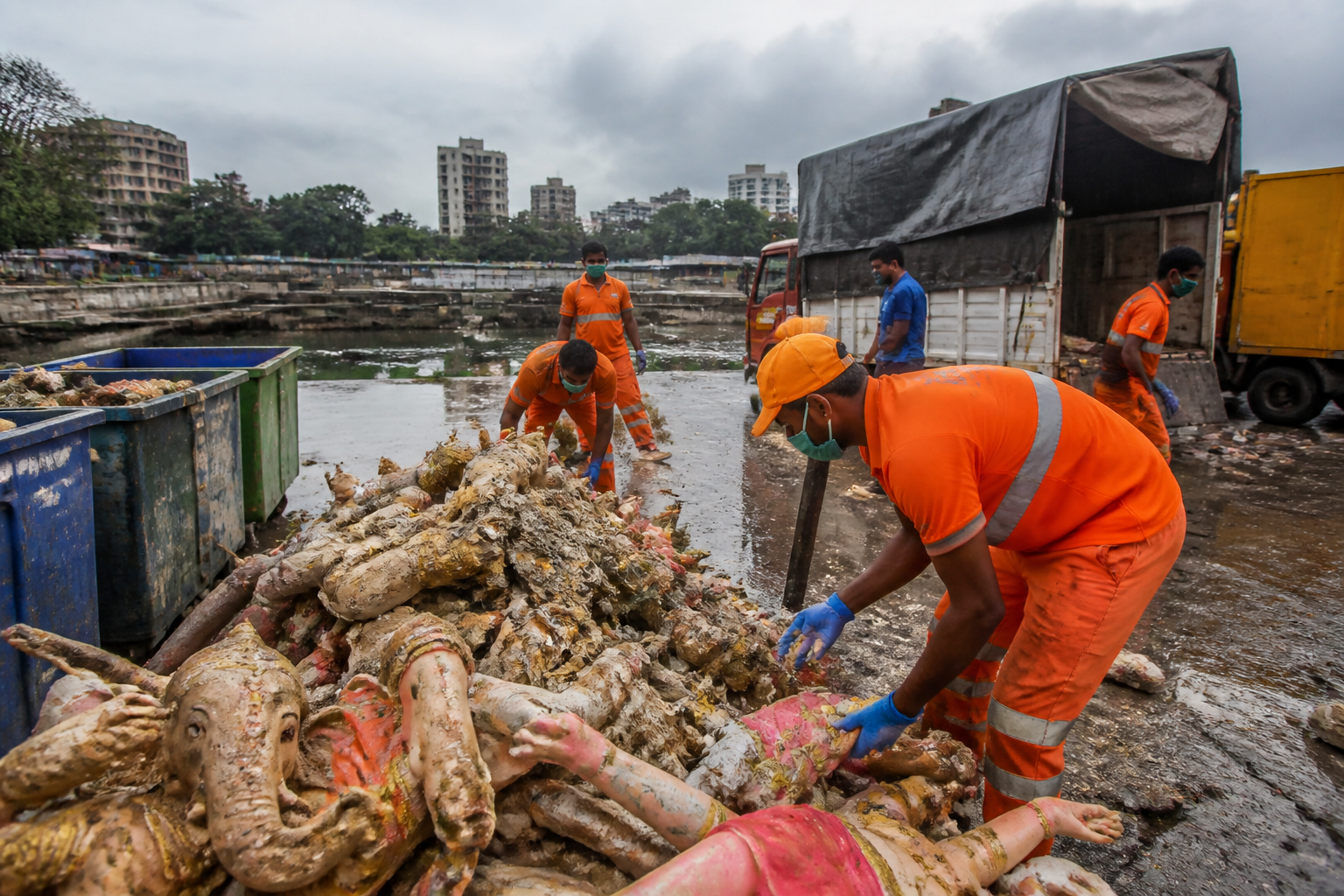
The Brihanmumbai Municipal Corporation has invited agencies to scientifically process and reuse Plaster of Paris (PoP) collected after Ganesh idol immersions, in a move aimed at reducing festival waste and finding productive uses for the material in Mumbai.
The civic body issued an Expression of Interest (EOI) for agencies that can use environmentally compliant methods to make recovered PoP suitable for applications including idol-making material, plasterboards, ceramics, medical plaster and bricks. The plan will combine material collected after the previous two festival cycles, according to Kiran Dighavkar, deputy municipal commissioner in charge of Solid Waste Management.
The BMC collected nearly 2,400 metric tonnes of PoP after last year’s Ganeshotsav immersions and approximately 315 tonnes after Navaratri, Dighavkar said. The quantities highlight the scale of the disposal challenge created by immersion-related waste, particularly when idols made from PoP are recovered from artificial ponds and other designated immersion facilities.
“Last year was our first attempt at collecting all the used PoP after festivities for responsible disposal. This time we intend to combine the PoP collected over the two years and work with agencies that can process this material,” Dighavkar said.
The civic body has also introduced zone-level Standard Operating Procedures for idol immersions. Under the procedures, idols are to be retrieved from temporary tanks within 24 hours and moved to an interim storage facility. The concerned ward will maintain collection records, while closed-body vehicles will be used to transport the recovered material.
The PoP initiative is being planned alongside a separate organic-waste and energy project called “Prasad to Power”. The Solid Waste Management department and the Lalbaugcha Raja Sarvajanik Ganeshotsav Mandal plan to collect food and other organic waste generated at the festival’s prasad and community meal facilities and send it to BMC biomethanation plants at Nair Hospital, Kasturba Hospital, GTB Hospital and Sion Hospital.
The organic waste generated during the festival is estimated at approximately 810 tonnes over 10 to 11 days. The project currently estimates that around 80 tonnes will be collected for biomethanation, producing about 7,744 units of renewable electricity, depending on the quantity and quality of the waste and plant operations. Each of the plants has a processing capacity of two metric tonnes per day.
The electricity generated through the project is intended for use within the four hospitals, including for lighting patient wards and common areas. The BMC’s next step on PoP reuse is to assess agency proposals and identify scientifically compliant methods for processing the material collected during the recent festival cycles.
