


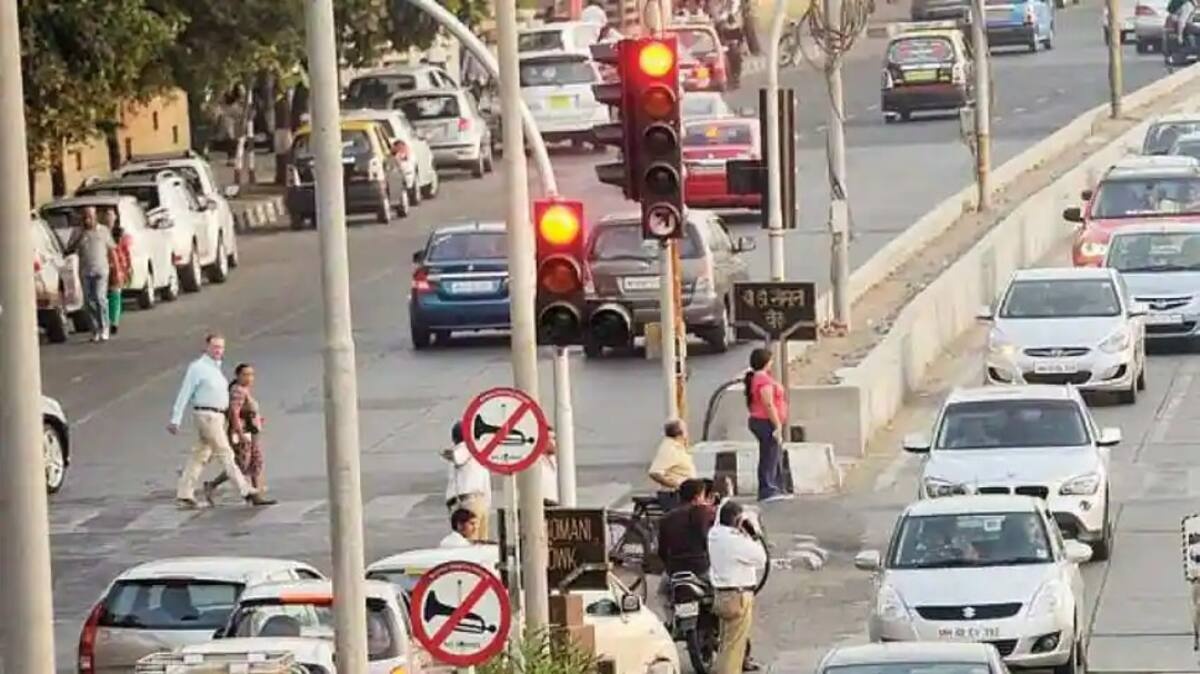
Rapid urban growth and rising vehicle ownership are intensifying parking shortages across Nagpur, prompting renewed calls for stronger urban planning strategies to address mobility challenges in the city. Urban planners and policymakers say the Nagpur parking crisis has become increasingly visible in commercial districts, residential neighbourhoods and busy market areas where roadside parking has begun to dominate public spaces. Congested streets and limited parking infrastructure are now affecting daily traffic flow and commuter convenience.
Officials involved in urban planning discussions say the city’s infrastructure has struggled to keep pace with the surge in private vehicles over the past decade. As incomes have risen and urbanisation accelerated, two-wheelers and cars have become more common in households, significantly increasing demand for parking space. The Nagpur parking crisis is particularly evident in older parts of the city where roads were designed decades ago and lack dedicated parking facilities. In these areas, vehicles parked along narrow streets often reduce available road width, slowing traffic movement and increasing congestion during peak hours. Urban mobility experts note that parking shortages are a common challenge in rapidly expanding Indian cities. When urban planning does not adequately account for parking infrastructure, public roads often become informal parking zones, affecting both traffic efficiency and pedestrian safety. In Nagpur, the issue has drawn attention from policymakers who have emphasised the need for long-term urban planning solutions. Experts suggest that multi-level parking structures, designated parking zones and stricter enforcement of traffic regulations could help alleviate pressure on city streets. The Nagpur parking crisis also highlights the broader relationship between transportation planning and urban development. Cities that rely heavily on private vehicles often face mounting congestion and land-use conflicts unless alternative mobility systems are strengthened. Public transport expansion, including metro rail systems and improved bus networks, can reduce dependence on personal vehicles by offering reliable commuting options. Encouraging public transport usage can help free up urban space that would otherwise be used for parking. Urban design strategies such as transit-oriented development and pedestrian-friendly neighbourhoods are also being discussed as ways to reduce vehicle reliance. When residential, commercial and transit facilities are located closer together, commuters may rely less on private vehicles. City planners emphasise that parking infrastructure should be integrated into broader mobility strategies rather than treated as an isolated issue. Effective urban planning considers road design, public transport accessibility and land-use policies simultaneously.
As Nagpur continues to grow into a major regional centre for logistics, education and industry, transportation infrastructure will play an increasingly important role in shaping urban quality of life. Addressing the Nagpur parking crisis will likely require coordinated action between municipal authorities, urban planners and transport agencies to create a more balanced mobility ecosystem that accommodates both vehicles and people.
ALSO READ – Nagpur Dharampeth Road Redesign Delays Cement Work
Nagpur Parking Crisis Signals Urgent Planning Challenge
