


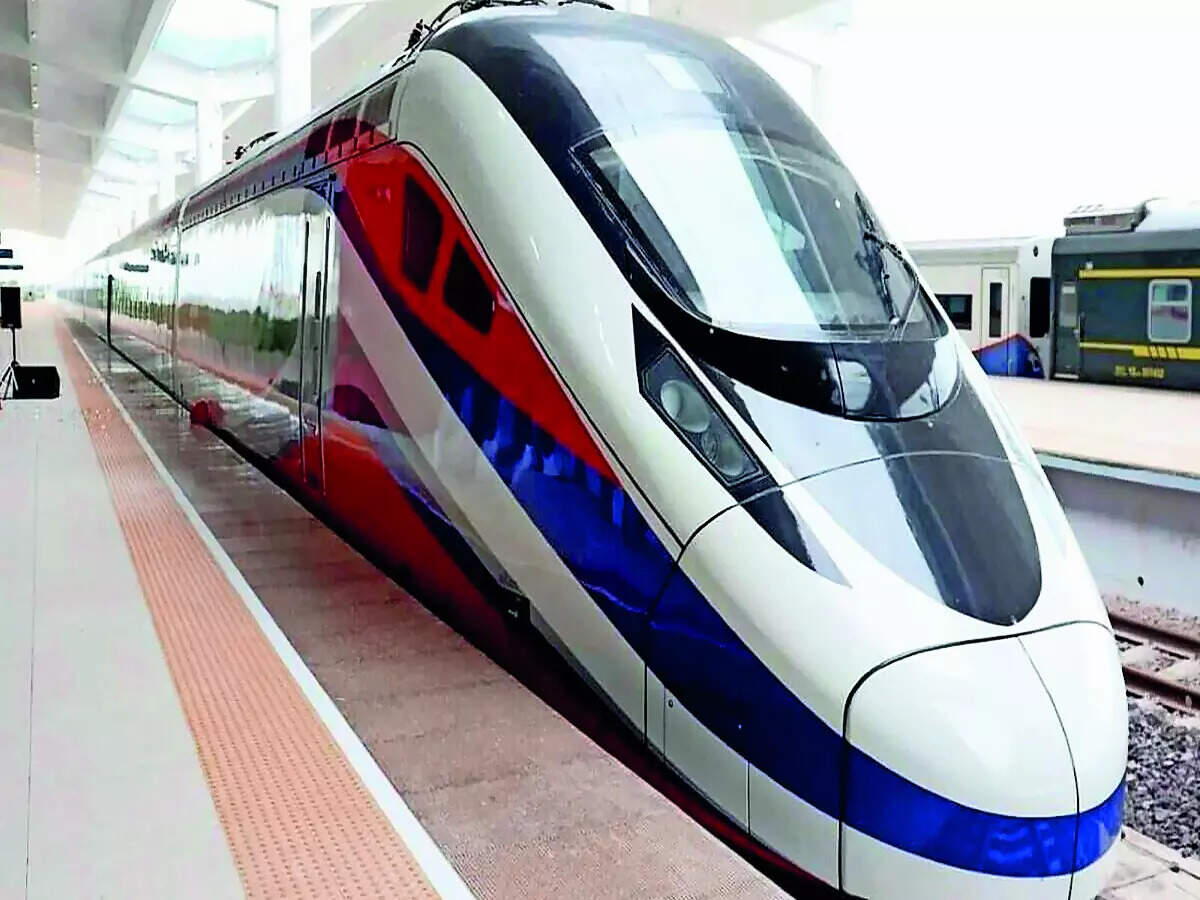
Plans for high-speed rail connectivity linking Bengaluru with Chennai and Hyderabad have moved into a more defined planning phase, with proposed route alignments now under evaluation as southern India prepares for a potential transformation in intercity mobility and regional economic integration.The emerging bullet train corridors are expected to strengthen travel links between three of India’s largest technology and industrial centres, potentially reshaping business movement, labour mobility and urban growth patterns across the southern peninsula.
Infrastructure authorities are currently assessing alignment options, land requirements and engineering feasibility for the proposed high-speed network.Urban transport economists say the project reflects a broader shift in India’s infrastructure strategy, where faster regional connectivity is increasingly being viewed as critical to sustaining economic productivity in rapidly urbanising corridors. Bengaluru, Chennai and Hyderabad collectively represent major hubs for information technology, manufacturing, aerospace, pharmaceuticals and research industries, generating substantial intercity travel demand.The proposed Bengaluru bullet train routes could significantly reduce travel durations between the cities, altering commuting behaviour for business travellers and potentially encouraging decentralised economic activity beyond traditional metropolitan cores. Analysts believe improved regional rail accessibility may also influence investment flows into emerging satellite towns and logistics clusters situated along the corridors.However, the scale of the project raises complex questions around land acquisition, ecological impact and equitable infrastructure development.
High-speed rail systems require extensive linear infrastructure, often cutting through peri-urban landscapes, agricultural zones and environmentally sensitive regions.Urban planners stress that alignment decisions will play a crucial role in determining the project’s long-term sustainability outcomes.Experts also point out that high-speed rail investments must be integrated with broader public transport ecosystems to maximise economic and environmental benefits.Without seamless last-mile connectivity and multimodal transit planning, premium intercity infrastructure risks serving only a narrow section of travellers while placing additional pressure on urban transport systems at destination points.The Bengaluru bullet train initiative arrives at a time when Indian cities are increasingly confronting the dual challenge of economic expansion and climate resilience. Transport remains one of the largest contributors to urban emissions growth, and policymakers are under rising pressure to create alternatives to short-haul aviation and highway-based mobility.Infrastructure specialists argue that high-speed rail can offer lower-emission regional connectivity when powered through cleaner energy systems and supported by transit-oriented urban planning. Yet they caution that operational affordability, accessibility and inclusive station development will ultimately determine whether such projects evolve into widely used public assets or remain premium mobility corridors.
The planning process is expected to continue through technical assessments and stakeholder consultations before execution timelines are finalised. For Bengaluru and neighbouring metropolitan regions, the proposed network signals a larger reimagining of how Indian megacities may connect, compete and cooperate in an increasingly integrated regional economy.
Also Read:Bengaluru Suburban Rail Project Reaches Construction Milestone
