


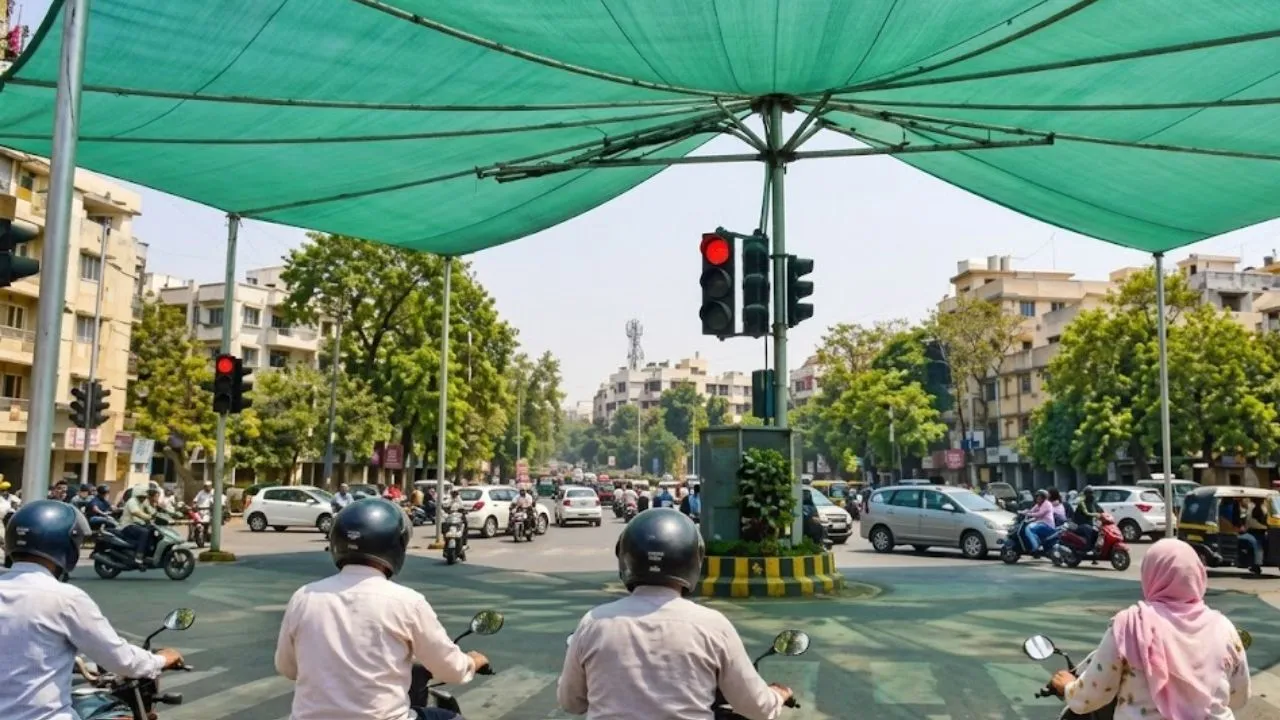
Nagpur’s municipal administration has moved to formally permit the use of green shade nets across parts of the city, a decision that aims to address rising heat exposure while also bringing regulatory clarity to a practice that had expanded informally in recent years. The approval comes amid increasing use of green nets in public spaces, including along streets and open areas, where they are installed to provide temporary relief from intense sunlight. With temperatures regularly crossing seasonal averages, such interventions have become more visible in cities grappling with heat stress and limited shaded infrastructure.
Officials indicate that the decision is intended to standardise usage and ensure that installations meet safety and urban design norms. Until now, the unregulated spread of such structures had raised concerns around obstruction, visual clutter, and potential risks during extreme weather conditions such as high winds. Urban planners note that while green nets can offer short-term mitigation against heat, they are not a substitute for long-term climate-responsive planning. “Temporary shading solutions highlight a deeper infrastructure gap—cities need permanent, nature-based cooling systems,” said an environmental design expert, pointing to the importance of tree cover, shaded walkways, and climate-sensitive urban layouts. Nagpur, like many Indian cities, has been experiencing rising temperatures linked to both climate change and urban heat island effects. The growing reliance on artificial shading solutions reflects the challenge of balancing rapid urbanisation with ecological resilience. Experts emphasise that reliance on such measures should be complemented by investments in green infrastructure, including urban forestry and water-sensitive design. From a citizen perspective, the move provides immediate relief, particularly for pedestrians, street vendors, and outdoor workers who are most exposed to heat. However, questions remain about equitable distribution—whether such interventions will be prioritised in high-footfall and vulnerable areas or remain concentrated in select zones. The decision also underscores the evolving role of municipal governance in managing adaptive responses to climate pressures. As cities experiment with interim solutions, ensuring they align with broader planning goals becomes critical. Poorly integrated interventions risk creating fragmented urban environments that solve one issue while introducing others. Infrastructure experts suggest that standardising materials, installation guidelines, and maintenance responsibilities will be key to the initiative’s success. Clear policies can help avoid misuse while ensuring that public spaces remain functional, safe, and accessible.
Looking ahead, Nagpur’s approach to regulating green nets may serve as a transitional step in addressing urban heat. However, the larger challenge remains—embedding climate resilience into the city’s physical fabric through sustainable design, long-term investments, and inclusive planning. As heatwaves become more frequent, the effectiveness of such measures will ultimately depend on whether they evolve into comprehensive strategies that prioritise both immediate comfort and long-term environmental stability.
ALSO READ – Nagpur MIDC Moves To Reclaim Idle Industrial Land
Nagpur Moves To Regulate Green Net Installations
