Pune Residential Expansion Gains A Cultural Dimension
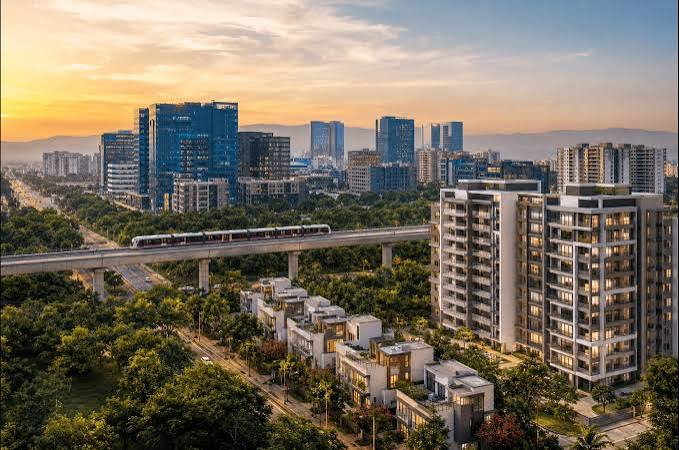
A proposed Swaminarayan temple on about 1.5 acres in Pune’s expanding western residential belt is set to add a religious and community facility to an area undergoing rapid housing development. Planned near the Land of Dreams township in the Vadgaon-Lonavala Growth Corridor, the project highlights a broader shift in emerging suburbs, where social infrastructure is increasingly becoming part of how new neighbourhoods develop.
The temple is currently at the planning stage, and a construction schedule has not yet been announced. Once developed, the facility is expected to accommodate religious activities as well as festivals, cultural programmes and community gatherings. Its proposed location is significant because Pune’s newer housing corridors are growing beyond conventional residential layouts. Large developments are increasingly surrounded by schools, healthcare facilities, retail, recreation and community spaces. These facilities can determine whether a housing cluster functions as a connected neighbourhood or remains dependent on older parts of the city for everyday needs. The proposed temple therefore represents more than an individual cultural project. It points to the growing importance of social infrastructure in Pune as residential development spreads towards peripheral areas. Urban planners note that community facilities can help establish a sense of place, but their value depends on accessibility and their ability to serve surrounding neighbourhoods rather than only residents of a particular development.
The Vadgaon-Lonavala belt has attracted greater development interest as Pune’s urban footprint expands. Improved road connectivity and new housing projects are bringing more households into areas that were previously less urbanised. This expansion is also creating pressure for supporting infrastructure, including public transport, pedestrian links, drainage, healthcare, education and open spaces. For residents, proximity to community facilities can reduce the need for longer journeys. However, planners caution that private development alone cannot substitute for coordinated public infrastructure. As population density rises, local authorities will need to ensure that roads, public transport and civic services grow alongside residential construction. The temple could eventually become a community focal point for the surrounding area, particularly during festivals and major gatherings. That also makes planning for pedestrian movement, traffic management, parking, waste handling and emergency access important before construction and regular operations begin.
The wider lesson for social infrastructure in Pune is that the success of emerging residential corridors will depend on how well housing is integrated with the institutions and services that support daily life. As development moves further outward, creating complete, accessible and resilient neighbourhoods will matter as much as adding new housing supply.