


Fresh protests in Mumbai over tree felling for the Malabar Hill Reservoir repair and the Versova-Dahisar Link Road have renewed questions about how the city balances essential infrastructure with the protection of public green spaces.
At Malabar Hill, residents have asked Municipal Commissioner Ashwini Bhide to stop the proposed cutting of trees for an alternate reservoir tank. The revised plan proposes felling 43 trees and transplanting another 41, according to the civic project details reported by the Free Press Journal.
The controversy concerns the 139-year-old Malabar Hill Reservoir, which supplies 147 million litres of water a day to South Mumbai. The Brihanmumbai Municipal Corporation’s original Rs 700-crore redevelopment plan, proposed in 2022, was scrapped in June 2024 after opposition to the proposed felling of 189 trees and transplantation of 200 others.
Following recommendations from the Indian Institute of Technology, Roorkee, the civic body moved towards repairing the existing reservoir instead. The revised approach includes a three-tier alternate reservoir with a capacity of 52 million litres on the western side of the existing tank. The temporary or supporting facility is intended to allow repairs to the existing structure, but its proposed location would still affect trees on and around the reservoir plot.
Notices pasted on the affected trees have led to renewed protests. Environmental activist Zoru Bhathena said residents wanted the BMC to identify another site for an alternate tank rather than disturb the green cover on the Malabar Hill plot and adjoining areas. Residents have formally submitted objections and planned to write to the civic administration seeking a rethink of the proposal.
The BMC said the number of trees proposed to be affected at Malabar Hill had been reduced to 84 and that efforts were being made to limit the loss. The statement was attributed to an unnamed civic official. The official also said the civic body had been engaging with residents from the beginning of the process.
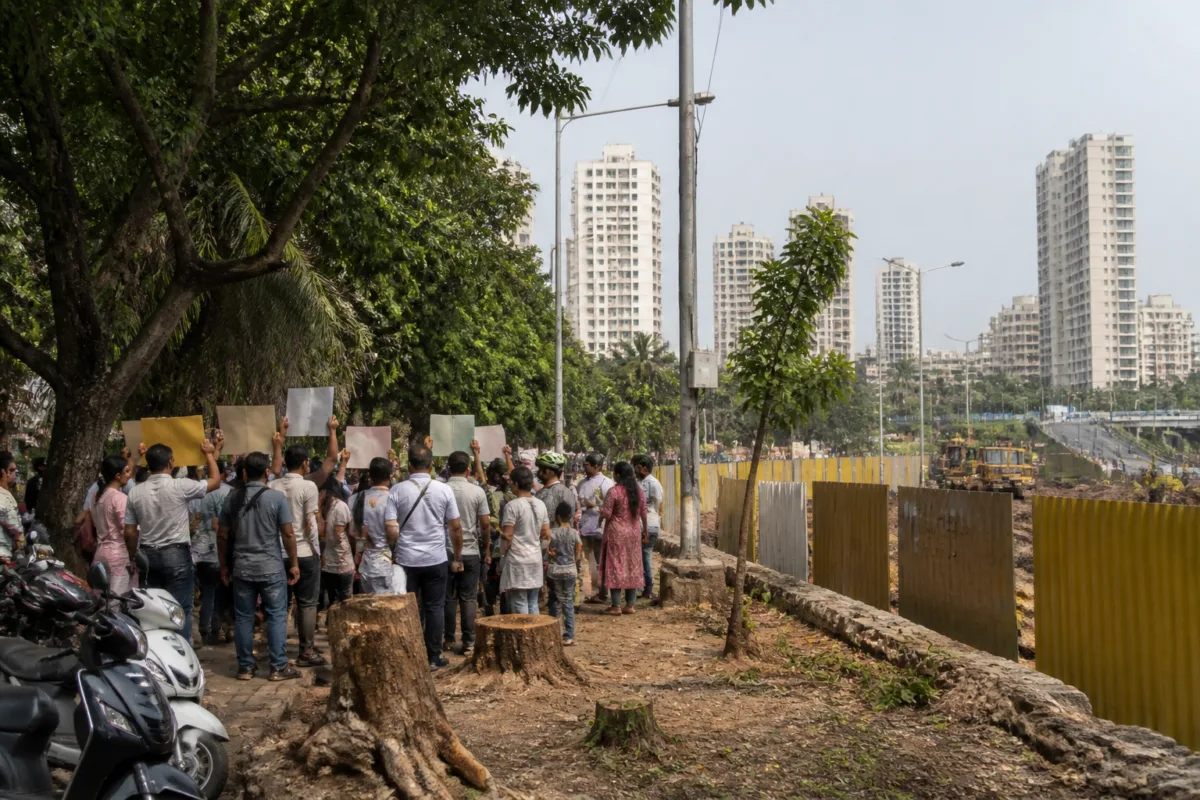
A separate protest took place at Nana-Nani Park in Versova after tree cutting linked to the Mumbai Coastal Road Project (North). The Versova-Dahisar Link Road, a major component of the coastal road project, is expected to use a double-decker bridge whose construction will affect 89 trees at the park.
The BMC has already felled 44 of those trees, according to the report. Eight trees have been saved, while a second phase of work planned for next year is expected to involve the felling of 37 trees and transplantation of another 18. The park has been divided into two phases because bridge construction will require piers within the park premises. Foundation work is expected to begin shortly, the civic official said.
Residents and environmental activists gathered at the park on Saturday morning, amid a heavy police presence, carrying banners and placards opposing the loss of green cover. Activists argued that the park is an important neighbourhood public space and criticised the BMC for failing to demonstrate a sufficient balance between infrastructure expansion and environmental protection.
The civic official said the garden would be restored after the coastal road project is completed. That commitment, however, does not resolve the immediate questions raised by residents over the loss of mature trees and the disruption of a functioning public park during construction.
Together, the two disputes show the competing pressures facing Mumbai’s infrastructure planning. The Malabar Hill project is linked to the continuity of a major water supply facility, while the Versova project is tied to a large transport corridor. In both cases, the immediate environmental cost is being contested through objections and public protests after project designs or construction activity have advanced.
The unresolved issue is whether further design changes, alternative sites or stronger protection measures can reduce the impact before additional trees are removed. For residents, the protests have made tree loss a central part of the public debate over how Mumbai builds and repairs essential infrastructure.

