


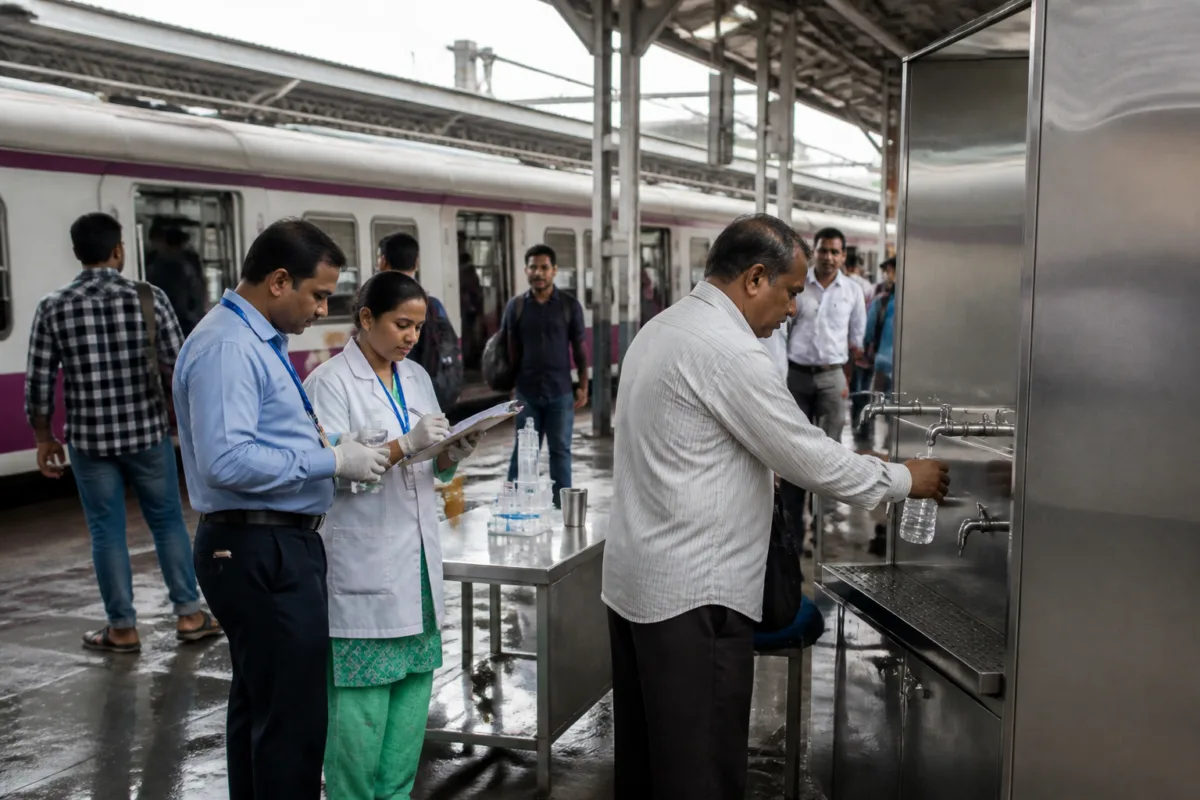
Western Railway has reported a 100 per cent pass rate in 18,610 drinking-water quality tests conducted across its stations and railway colonies between September 1 and October 20, 2026, covering facilities used by passengers, railway employees and their families.
According to an official statement issued by Western Railway, the monitoring drive included 15,936 residual chlorine tests and 2,674 bacteriological tests. All samples passed the checks carried out under the two testing categories.
Residual chlorine testing is used to assess whether disinfection is effective, while bacteriological testing helps identify microbiological contamination risks in drinking water. Together, the tests allow railway authorities to monitor water supplied at passenger facilities and residential colonies.
Western Railway said the programme was undertaken to ensure access to safe drinking water for passengers and railway employees, including families living in railway colonies. Thousands of travellers, including children, senior citizens and daily commuters, depend on station water facilities during their journeys, the railway administration said.
The administration described safe drinking water as an essential passenger amenity and said access to clean water was important for preventing waterborne illnesses and maintaining a safe travel experience. The monitoring programme also covers water supplies used by employees and their families for daily needs.
Western Railway’s Medical Department will continue regular water-quality surveillance, laboratory testing and supervision across the network, according to the statement. The department will coordinate with other railway departments and take corrective measures when potential water-quality issues are identified.
The announcement comes as Central Railway’s Mumbai Division continues a separate special drive to inspect and improve drinking-water facilities at stations, railway colonies and workplaces. The drive followed directions from the Railway Board and was linked to observations in a Comptroller and Auditor General report on sanitation facilities and passenger amenities at non-suburban railway stations.
Central Railway said its inspection covered drinking-water sources, filtration plants, underground and overhead tanks, PVC tanks, water booths, taps and dispensing points at 2,967 locations. Inspectors recorded 410 deficiencies, of which 365 had been rectified. The remaining 45 were under work, according to the railway administration.
The division has 2,913 water tanks across platforms, station premises, colonies and office premises. Between August 20 and September 22, 1,753 tanks were cleaned, while tight covers and mesh on vents and overflow points were provided at 1,716 locations.
Western Railway said its regular surveillance and inter-departmental coordination would continue to maintain hygiene standards and address water-quality concerns across its railway network.

