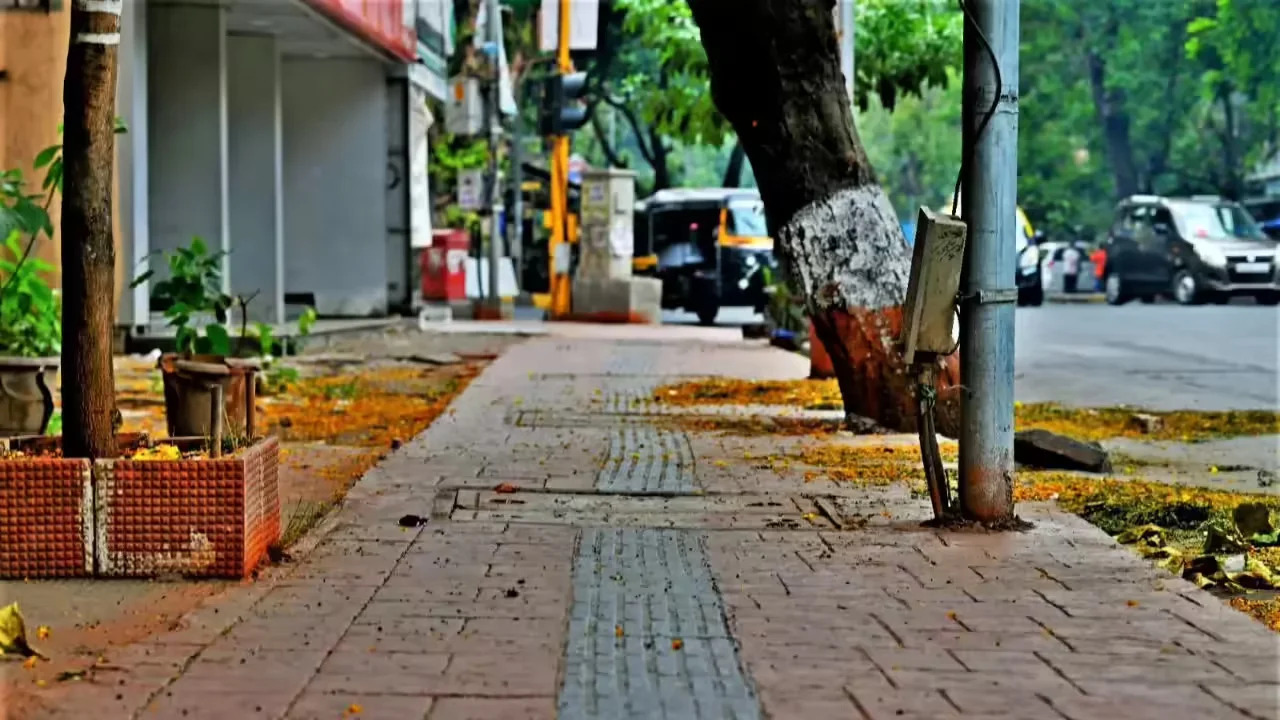
Mumbai’s civic administration has expanded its drive to reclaim pedestrian space, clearing obstructions from 134 of the 200 footpaths identified for action in the first phase. The latest exercise includes the removal of 94 stalls in Bhandup, while enforcement has reached 1,459 locations across all 26 civic wards. The scale of the Pedestrian First drive highlights a wider challenge for Mumbai: making walking space continuous, accessible and usable as the city grows denser. The municipal corporation has reported that nearly 197 km of pedestrian space has been cleared so far. The progress marks a significant increase from the 68 km cleared across 81 stretches during the campaign’s first two weeks. The first phase initially targeted about 320 km of footpaths, indicating that the current intervention remains part of a larger citywide exercise.
In Bhandup, the focus has been particularly strong around the railway station, where footpath and traffic management are being reviewed alongside the removal of commercial obstructions. Recent civic planning also envisages alternative spaces for affected shopkeepers, while similar interventions are planned around Kanjurmarg and other eastern suburban locations. For commuters, the importance of the Pedestrian First drive extends beyond simply removing stalls. Footpaths that are blocked by hawking, construction material, parked vehicles, waste or poorly placed street infrastructure can push people onto carriageways, increasing exposure to traffic and making short walking trips less safe. Mumbai’s existing pedestrian policy has long recognised that footpaths need to function as a connected part of the transport network rather than isolated strips beside roads.
The economic implications are also significant. Station areas and major road corridors depend on reliable pedestrian movement to connect residential neighbourhoods with public transport, shops and workplaces. Better walking access can reduce friction between different forms of mobility, particularly where rail and bus services generate heavy pedestrian flows. Urban planners, however, note that enforcement alone cannot resolve the problem. Clearing an obstruction without maintaining the reclaimed space, managing loading and parking, providing accessible designs and addressing legitimate vending needs could result in the same conflicts returning. Earlier civic policy has also recognised the need for designated hawking areas alongside pedestrian improvements.
The next test for Mumbai will therefore be permanence. If the reclaimed stretches remain continuous, accessible and properly maintained, the Pedestrian First drive could strengthen walking as a dependable part of the city’s transport system rather than treating footpaths as leftover road space.