Hyderabad Metro Expansion Gets Fresh Progress Review
Hyderabad’s metro expansion and ongoing rail projects came under review as Telangana officials assessed progress and implementation challenges at a high-level meeting on Friday. The review comes as the city’s rapid growth increases pressure on public transport, making timely delivery and better network integration increasingly important for future urban mobility.
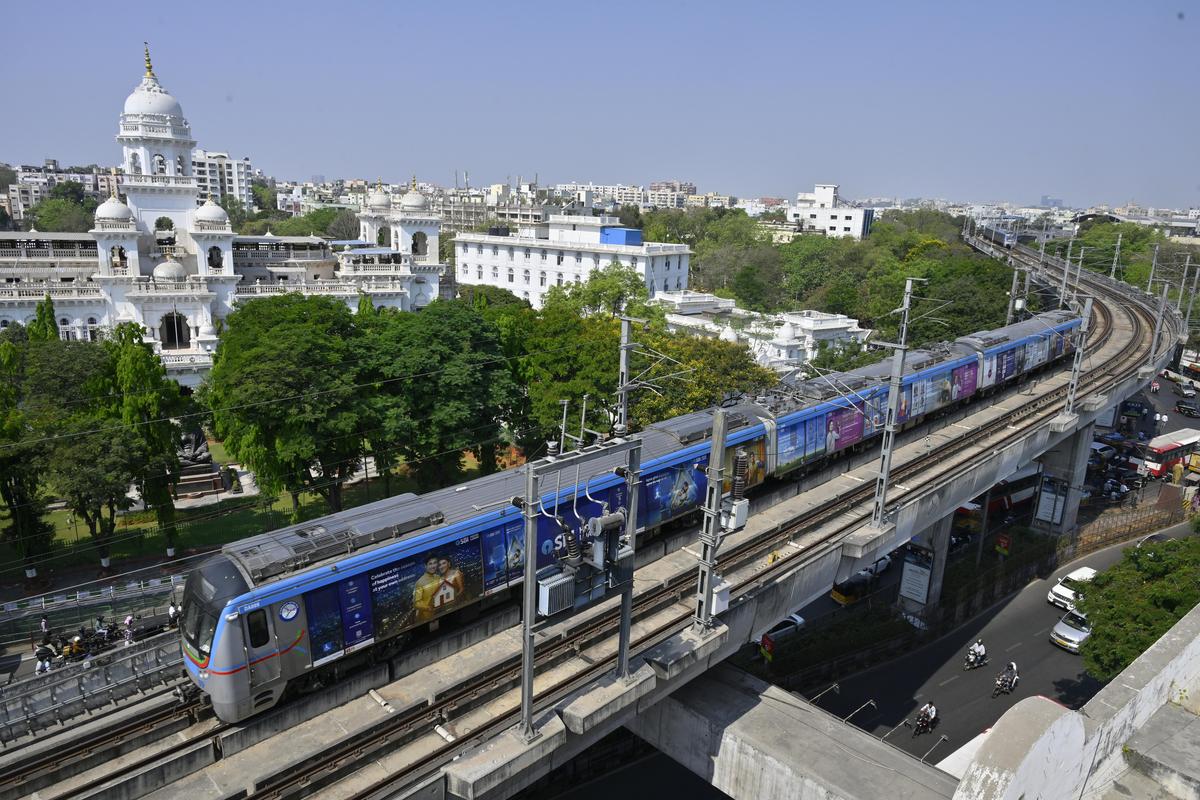
The meeting, chaired by the Telangana chief secretary, examined the status of ongoing Hyderabad Metro Rail initiatives and issues that could affect their implementation. Officials were directed to maintain project timelines and address bottlenecks that could delay delivery. The Hyderabad Metro expansion is significant for a city where rising population, employment growth and expanding suburban development are placing greater demands on road infrastructure. A stronger rail network can provide an alternative to private vehicles and help manage congestion on major urban corridors. Hyderabad’s existing metro system spans about 69 kilometres across three operational corridors, linking areas such as Miyapur, LB Nagar, Nagole, Ameerpet and Jubilee Bus Station. The network has become an important component of daily commuting in the metropolitan area. However, expansion alone will not determine the effectiveness of the system. Urban planners increasingly emphasise connectivity between metro stations, buses, walking routes and other forms of public transport. Poor last-mile access can reduce the practical benefits of a metro line, particularly for commuters travelling from residential neighbourhoods to stations.
The government’s focus on future mobility therefore extends beyond adding rail kilometres. Better interchange facilities, pedestrian access, feeder services and coordinated transport planning will be important as new corridors are developed. The Hyderabad Metro expansion also has implications for the city’s development pattern. Well-connected public transport can support denser development around transit corridors and reduce dependence on long car journeys. This can help contain traffic growth while improving access to employment and services for residents without private vehicles. At the same time, large infrastructure projects require careful attention to construction impacts, land requirements, pedestrian safety and disruption to existing neighbourhoods. Maintaining clear timelines should therefore be accompanied by effective project management and transparent communication with affected communities.
The latest review signals continued government attention to Hyderabad’s public transport capacity. The immediate challenge is to convert planning decisions into projects that are delivered on schedule and function as part of an integrated mobility network. As Hyderabad continues to expand, the quality of its transport infrastructure will influence not only commute times but also where people live, work and invest. A metro system that is accessible, connected and supported by other sustainable transport modes will be central to making that growth more efficient and resilient.