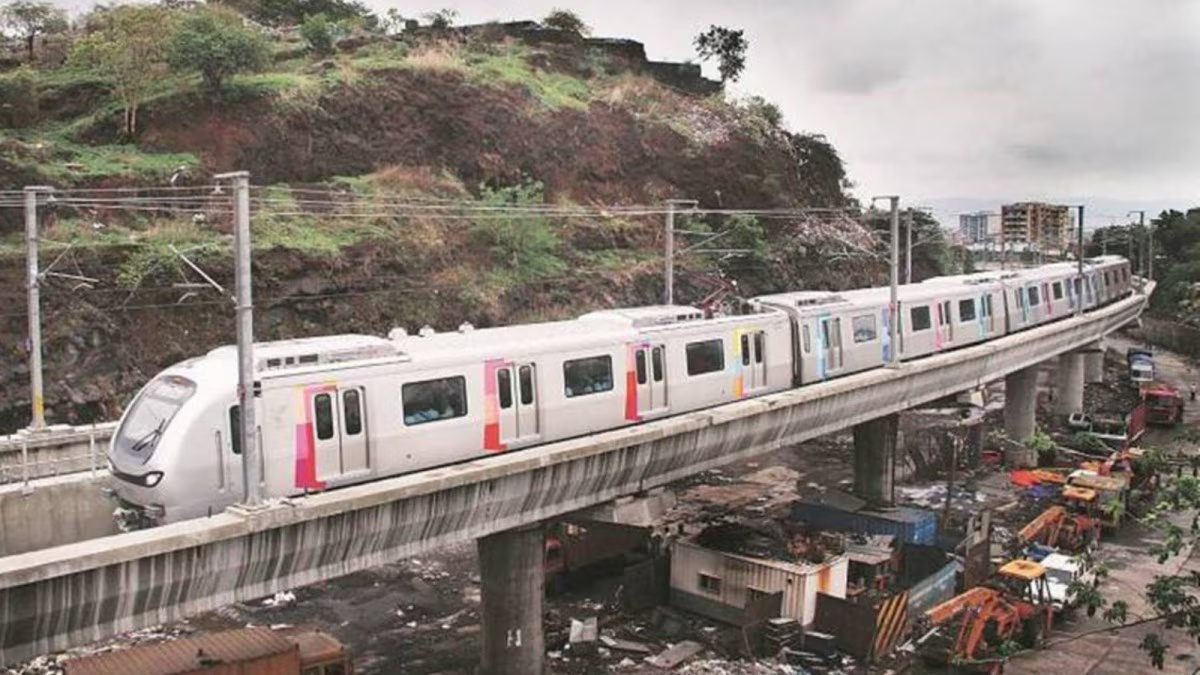
Mumbai Metro 5A Link To Improve Regional Connectivity
A major expansion of suburban rail transit in the Mumbai Metropolitan Region has moved forward, with the state clearing an integrated metro corridor connecting Thane, Bhiwandi, Kalyan and Ulhasnagar. The decision signals a renewed push to strengthen public transport in densely populated urban clusters, where road congestion and long commute times continue to strain both residents and local economies. The approved network combines two linked corridors—Metro Line 5 and its extension—spanning over 34 kilometres and serving some of the region’s fastest-growing residential and industrial zones. Officials estimate that the project could benefit nearly seven million people, offering a shift towards more predictable and lower-emission mobility across peripheral urban areas that have historically relied on road-based transport.
The alignment reflects a mix of elevated and underground sections, with design changes introduced to minimise disruption in high-density areas. In one instance, a station was moved below ground to avoid dismantling an existing flyover, highlighting the trade-offs between infrastructure expansion and preserving already stressed urban systems. Elsewhere, a double-decker configuration integrating a flyover with metro infrastructure is planned, pointing to a trend of layered transport solutions in space-constrained cities. Urban planners note that such integration is critical for regions like Bhiwandi and Kalyan, where industrial activity coexists with rapid residential growth. Improved transit connectivity could reduce dependence on informal transport networks, cut travel times significantly, and support more equitable access to jobs and services. Estimates suggest commute durations along the corridor may fall by up to half once operational. The project also reflects a broader shift towards transit-oriented development, where infrastructure investment is expected to influence land use patterns.
Experts say enhanced connectivity often drives real estate demand, particularly in emerging suburbs, but caution that planning must ensure affordability and prevent unregulated sprawl. Without coordinated zoning and housing policies, transport gains risk being offset by uneven urban expansion. Financial structuring for the project includes a mix of state support and debt financing, underscoring the capital-intensive nature of metro systems. While such investments are often justified by long-term economic benefits, including productivity gains and reduced congestion costs, their success depends on timely execution and integration with existing transport networks. Alongside the metro approval, the state has also advanced funding mechanisms for expressway land acquisition and sanctioned infrastructure works for a major religious gathering in Nashik. These parallel decisions point to a wider infrastructure strategy aimed at improving connectivity across regions, though they also highlight the competing demands on public resources.
For Mumbai’s extended metropolitan belt, the metro expansion offers a potential pathway towards more sustainable mobility. However, its long-term impact will depend on how effectively it aligns with broader urban planning goals, including reducing emissions, managing growth, and ensuring that infrastructure benefits are distributed across diverse communities.