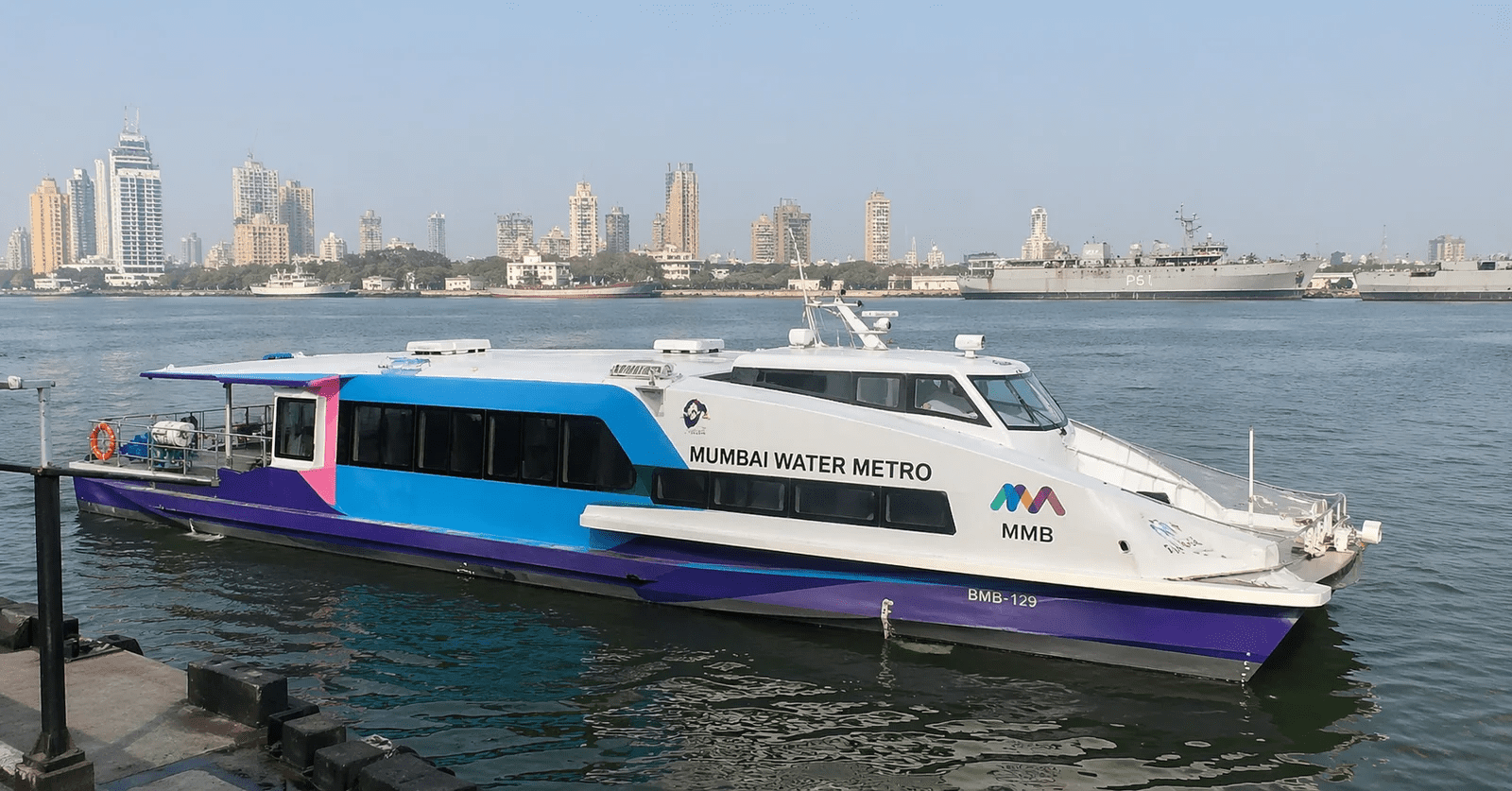
Mumbai’s push to diversify its urban transport network has taken a step forward, with authorities initiating the process to appoint a consultant for developing terminals and support systems under the Mumbai Water Metro Project. The move signals a shift towards leveraging the city’s coastal geography to reduce congestion on overburdened road and rail networks. The first phase of the Mumbai Water Metro Project is designed to connect multiple nodes across the Mumbai Metropolitan Region through a network of water-based routes. The plan includes both upgrading existing ferry corridors and introducing new connections that extend towards emerging urban centres such as Navi Mumbai, Thane, and Vasai. By integrating 26 terminals across 16 routes, the system aims to create a more distributed and flexible mobility framework.
Urban transport experts view water-based transit as an underutilised asset in coastal cities like Mumbai. Despite a long history of ferry services, the sector has remained fragmented and limited in scale. A structured expansion, supported by modern terminals and navigational infrastructure, could improve reliability and attract a wider commuter base. This becomes particularly relevant as the city’s population continues to grow, placing increasing strain on conventional transit systems. The consultant’s role will involve planning, design, procurement assistance, and supervision of infrastructure development, including safety and emergency provisions. These elements are critical for building public confidence in water transport, which must meet stringent standards to compete with road and rail options. Experts note that well-designed terminals, seamless ticketing systems, and last-mile connectivity will determine the success of the initiative. The Mumbai Water Metro Project is also being positioned within a public-private partnership framework, where the government will focus on core infrastructure while private operators manage vessels and services. Such models are increasingly used in urban transport to balance investment risks and operational efficiency.
However, analysts caution that clear regulatory frameworks and performance benchmarks will be essential to ensure service quality and affordability. From a sustainability perspective, water-based transit offers potential environmental benefits. By shifting a portion of commuter and tourist traffic away from road networks, the project could help reduce vehicular emissions and ease congestion. However, experts emphasise that these gains depend on adopting cleaner vessel technologies and ensuring that terminal development does not disrupt sensitive coastal ecosystems. The project also aligns with broader regional planning efforts aimed at improving connectivity between economic hubs. Enhanced links to upcoming infrastructure such as the new international airport and industrial zones could support both passenger mobility and tourism. At the same time, integrating water transport with existing metro and rail systems will be crucial for creating a cohesive urban mobility network.
As the tendering process progresses, attention will turn to execution timelines and inter-agency coordination. Large-scale infrastructure projects in complex urban environments often face delays due to regulatory and logistical challenges. Ensuring timely delivery will be key to maintaining momentum. If implemented effectively, the Mumbai Water Metro Project could redefine how residents navigate the city’s waterways, offering an alternative that is not only efficient but also aligned with long-term goals of sustainable and resilient urban transport.