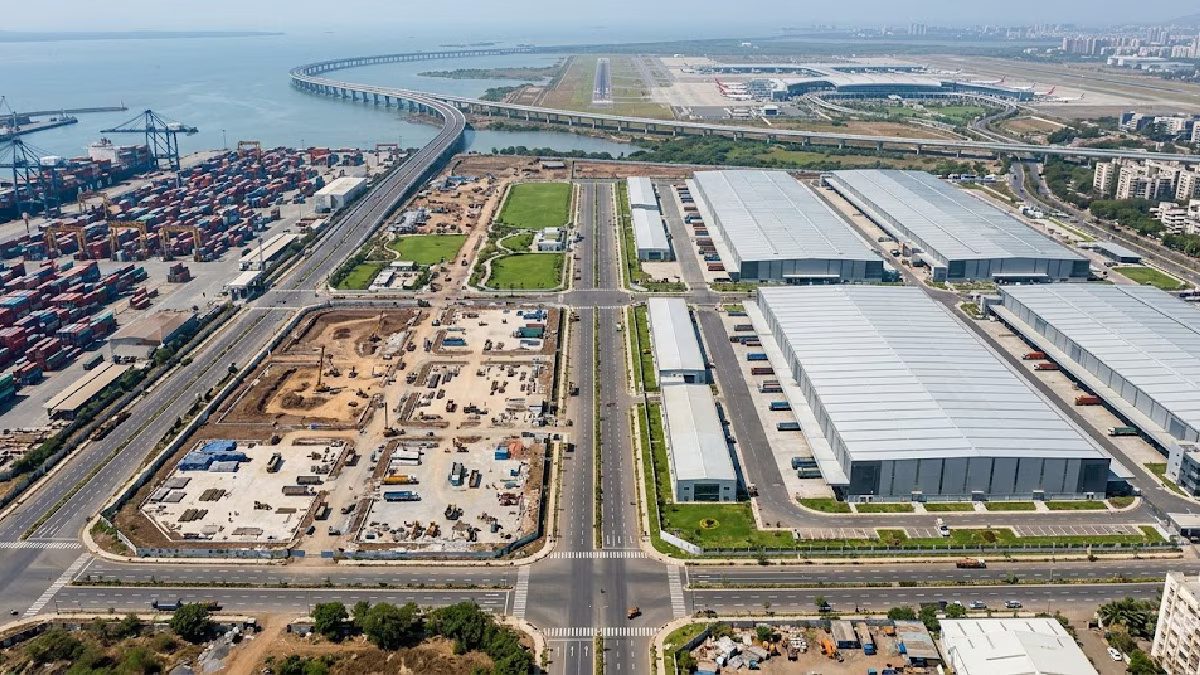
Navi Mumbai is moving closer to becoming a major freight and warehousing hub, with planning authorities initiating the first phase of a large-scale Navi Mumbai logistics park project. The development, spread across hundreds of hectares, is expected to strengthen supply chain efficiency, attract private investment, and reshape the region’s industrial landscape. The project is being planned in the Pushpak node near Chirle, an area strategically positioned within a rapidly evolving infrastructure network. Proximity to key assets such as the country’s largest container port, an upcoming international airport, and major highway corridors places the proposed site at the intersection of multimodal connectivity. For logistics operators, this convergence reduces transit time and improves cargo handling efficiency across road, sea, and future rail links.
In its initial phase, authorities have opened bids for a cluster of land parcels covering around 72 hectares. These plots form part of a larger master plan that envisions the Navi Mumbai logistics park as an integrated ecosystem rather than a standalone industrial estate. The layout divides the site into multiple functional zones, each designed to accommodate warehousing, freight handling, and light industrial activity. Urban development experts note that such integrated planning is increasingly essential as cities expand beyond traditional boundaries. “Logistics infrastructure is no longer peripheral—it sits at the core of economic activity, influencing everything from retail supply chains to manufacturing competitiveness,” said an industry analyst tracking infrastructure investments in western India. The planning authority has committed to developing core infrastructure—including internal road networks, water supply, drainage systems, and sewage facilities—before handing over plots to private developers. This approach is intended to reduce entry barriers for investors and ensure that the park operates with a baseline level of service efficiency from the outset.
The economic potential of the Navi Mumbai logistics park extends beyond freight movement. By clustering related industries such as container freight stations, inland depots, and ancillary services, the project is expected to generate employment and stimulate local business ecosystems. Analysts also point to likely spillover effects in real estate, with increased demand for commercial and residential developments in surrounding areas. However, the scale of the project also raises questions around sustainability and land use. Large logistics hubs can intensify traffic volumes, increase emissions, and strain local resources if not planned with environmental safeguards. Experts emphasise the need for green logistics practices, including energy-efficient warehouses, electrified transport fleets, and integrated public transport access for workers. The site’s location within a rapidly urbanising corridor further underscores the importance of balanced development. With parallel investments in social infrastructure—such as education and healthcare hubs—planners are aiming to create a mixed-use urban environment rather than a purely industrial zone.
As the bidding process progresses, the focus will shift to how effectively the project integrates economic ambition with environmental responsibility. The Navi Mumbai logistics park represents a significant opportunity to modernise India’s logistics sector, but its long-term success will depend on whether growth is aligned with sustainable urban planning principles.