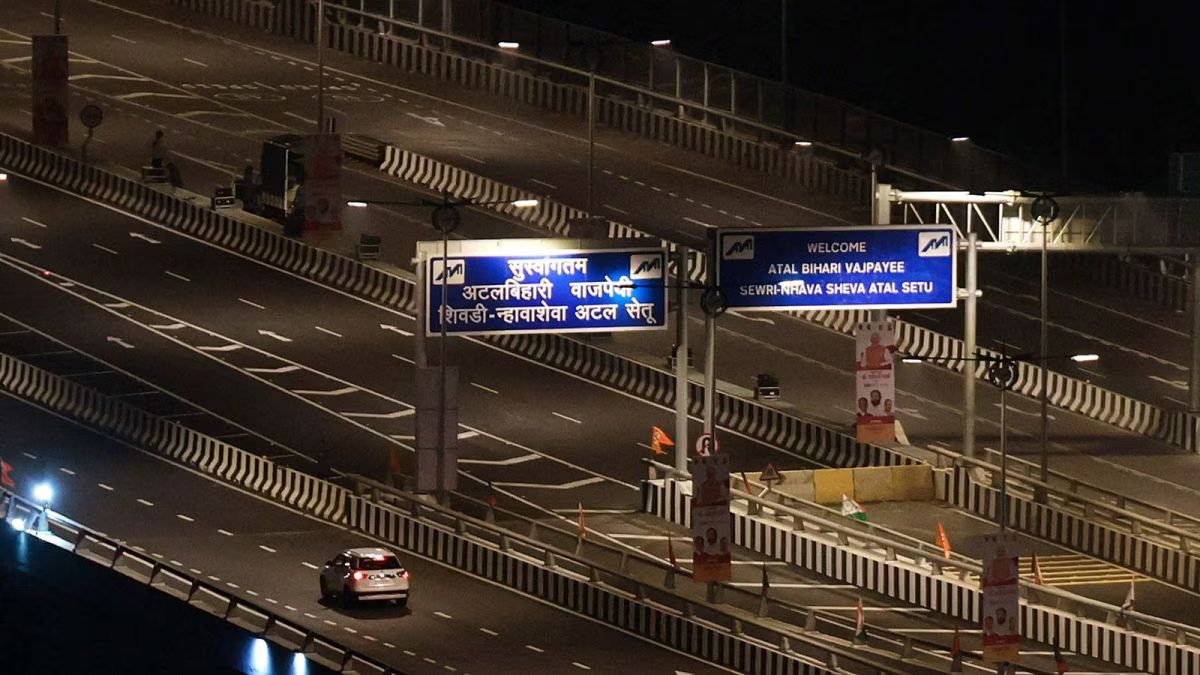
A new road link connecting Mumbai’s eastern waterfront corridor to the Mumbai–Pune Expressway is set to significantly reduce travel time between the two cities, reshaping mobility across one of India’s busiest economic corridors. The Atal Setu connector project is expected to cut journey duration by up to 90 minutes by creating a seamless, signal-free route that bypasses existing congestion points. The connector, currently under construction, will directly integrate the Mumbai Trans Harbour Link with the expressway network, eliminating the need for vehicles to navigate through bottleneck-prone urban junctions in Navi Mumbai and Panvel. For commuters and logistics operators, this translates into more predictable travel times and reduced fuel consumption.
Urban transport planners view the Atal Setu connector as a critical missing link in the region’s infrastructure grid. While the trans-harbour bridge has already improved east–west connectivity within the metropolitan region, its full potential depends on efficient onward connections. By extending this corridor inland, the project aims to create a continuous high-speed route between coastal Mumbai and Pune’s industrial and residential zones. The economic implications are significant. The Mumbai–Pune stretch serves as a vital axis for manufacturing, finance, and trade. Improved connectivity is expected to lower logistics costs, enhance supply chain efficiency, and support industrial growth in both cities. Access to key assets such as port infrastructure and emerging business districts is also likely to improve, reinforcing the region’s role as a national economic engine. From a mobility perspective, the project could alter travel behaviour. Reduced journey times may encourage more frequent intercity commuting and boost short-distance tourism. Hill destinations and satellite towns along the corridor are likely to see increased visitor flows, potentially driving demand for hospitality and real estate development. However, urban experts caution that such growth must be managed carefully to avoid unplanned expansion and ecological stress in sensitive zones.
The design of the connector emphasises uninterrupted travel, with grade-separated sections and streamlined entry points. Supporting infrastructure, including service roads and access ramps, is being developed to ensure smoother transitions between networks. Construction progress has advanced steadily, with key structural components already in place, and completion targeted within the next year. Sustainability remains a central consideration in evaluating projects of this scale. While faster roads improve efficiency, they can also induce higher vehicle usage if not complemented by public transport integration. Experts suggest that long-term planning should align such corridors with multimodal systems, including rail and bus networks, to balance mobility gains with environmental goals. The Atal Setu connector is part of a broader vision to compress travel times across the Mumbai Metropolitan Region, often described as a shift towards “distance-neutral” urban mobility. By reducing the friction of movement, policymakers aim to unlock economic potential across peripheral areas while easing pressure on core city zones.
As construction progresses, the project will be closely watched for its ability to deliver both speed and sustainability. Its success could set a precedent for future infrastructure planning in rapidly urbanising regions, where the challenge lies in connecting growth centres without compromising environmental resilience or urban liveability.