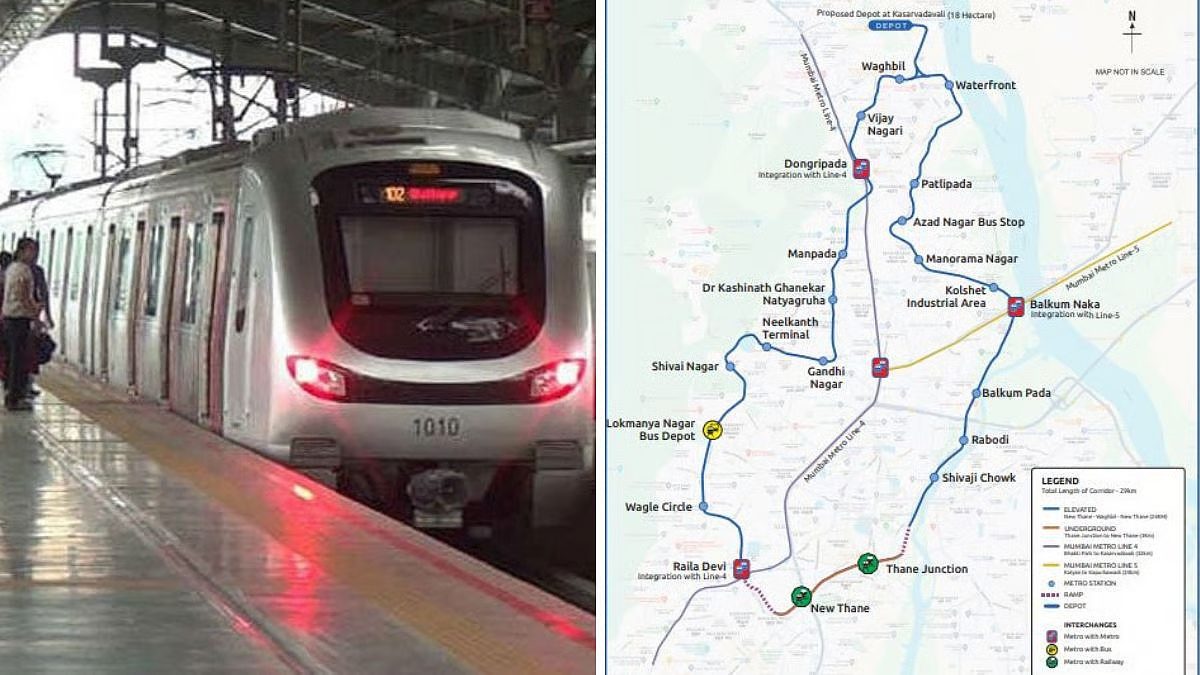
The Thane Ring Metro Project has entered a new phase of scrutiny after being brought under a central monitoring framework, signalling both urgency and complexity in delivering urban transport infrastructure in one of the Mumbai region’s fastest-growing corridors. The move places the project within a select group of nationally tracked initiatives, reflecting its scale, cost implications and importance to regional mobility. The proposed corridor, designed as a circular transit network with over 20 stations, aims to connect Thane’s railway hub with peripheral residential and commercial zones. With urban expansion pushing development further away from traditional centres, such projects are increasingly viewed as critical to reducing travel times and easing pressure on congested suburban rail and road systems. Urban planners note that orbital metro systems can redistribute commuter flows, especially in cities where radial transport networks are already saturated.
However, the inclusion of the Thane Ring Metro Project under a centralised review mechanism also points to implementation challenges. Officials familiar with the process indicate that periodic assessments will focus on timelines, inter-agency coordination and resolution of bottlenecks—common hurdles in large-scale infrastructure delivery. The monitoring platform is typically used to accelerate projects that risk delays due to administrative or technical complexities. At the same time, the project has drawn scrutiny from local stakeholders. Concerns have been raised over financial viability, environmental impact and the potential disruption during construction, particularly in densely populated neighbourhoods. Sections of the alignment include an underground stretch, which, while reducing surface disruption in the long term, often requires intensive construction activity and careful management of groundwater and soil conditions. Transport experts suggest that while metro expansion aligns with low-carbon mobility goals, its success depends on integration with existing transport modes.
Without strong last-mile connectivity, feeder systems and pedestrian infrastructure, large metro investments may not fully translate into reduced private vehicle usage. In Thane’s case, this becomes especially relevant given the city’s evolving land-use patterns and increasing dependence on road-based travel. The debate also reflects a broader shift in how infrastructure projects are assessed. Beyond capacity and speed, there is growing emphasis on sustainability, inclusivity and long-term urban resilience. Questions around whether such investments adequately serve diverse income groups, or whether they risk reinforcing uneven development, are becoming central to public discourse.
For now, the heightened oversight is expected to bring sharper focus to execution. Whether the Thane Ring Metro Project can balance speed with accountability—and deliver a system that is both efficient and equitable—will likely shape its role in the region’s future mobility landscape.