


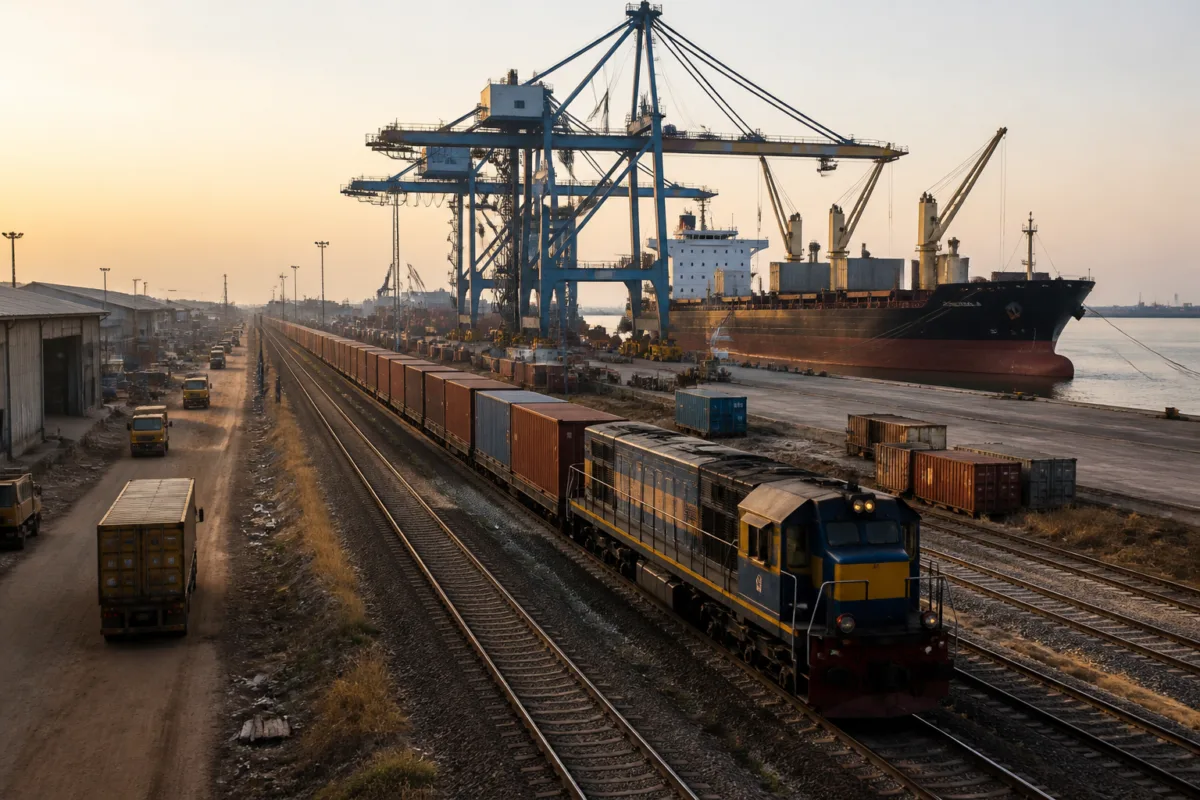
JSW Infrastructure reported a 12 per cent decline in net profit attributable to owners for the September quarter, even as revenue, EBITDA and cargo volumes increased, indicating stronger operating activity across its ports and logistics businesses.
The company’s net profit stood at ₹318 crore in the quarter, compared with ₹361 crore in the corresponding period. Revenue rose 17 per cent to ₹1,481 crore from ₹1,266 crore, while EBITDA increased 11 per cent to ₹674 crore.
The results point to continued expansion in the company’s infrastructure operations. Cargo volumes handled in India grew 8 per cent during the quarter to 29.4 million tonne. The increase was reported alongside higher revenue from both the ports segment and the logistics business.
Revenue from ports increased 9 per cent to ₹1,202 crore from ₹1,103 crore. JSW Infrastructure attributed the growth to higher cargo volumes, increased contribution from ancillary services and rupee depreciation. The port business remains the larger contributor to the company’s reported revenue, with the quarter’s performance reflecting activity across cargo handling and related services.
The company’s logistics business generated revenue of ₹279 crore, up from ₹163 crore in the same quarter. JSW Infrastructure said the increase was driven by a growing contribution from its rail logistics business. The result highlights the expanding role of rail-linked freight operations within the company’s broader logistics portfolio, although the company did not provide a separate figure for rail logistics revenue in the information reported.
The quarter also left the company with net cash of ₹1,693 crore and gross debt of ₹7,292 crore. These figures provide a snapshot of its financial position as it manages a business that combines ports, cargo handling and inland logistics. The reported cash and debt figures were not accompanied by further details on the company’s borrowing costs, repayment schedule or capital expenditure in the supplied results.
For India’s freight network, the reported cargo and rail-logistics growth is relevant because ports and inland transport operate as connected parts of the movement of goods. A rise in port volumes can increase the need for supporting rail and logistics capacity, while stronger rail-linked operations can widen the hinterland served by port infrastructure. The figures reported for the quarter, however, do not establish how much of the growth came from specific ports, commodities or regions.
The results therefore present a mixed picture: operating metrics improved, but profit attributable to owners declined compared with the year-earlier quarter. JSW Infrastructure reported higher revenue from its main ports business, stronger logistics revenue and increased EBITDA, while the net profit figure remained below the corresponding period’s level. The company’s next reported update will indicate whether the cargo and logistics growth is sustained across subsequent quarters.

