


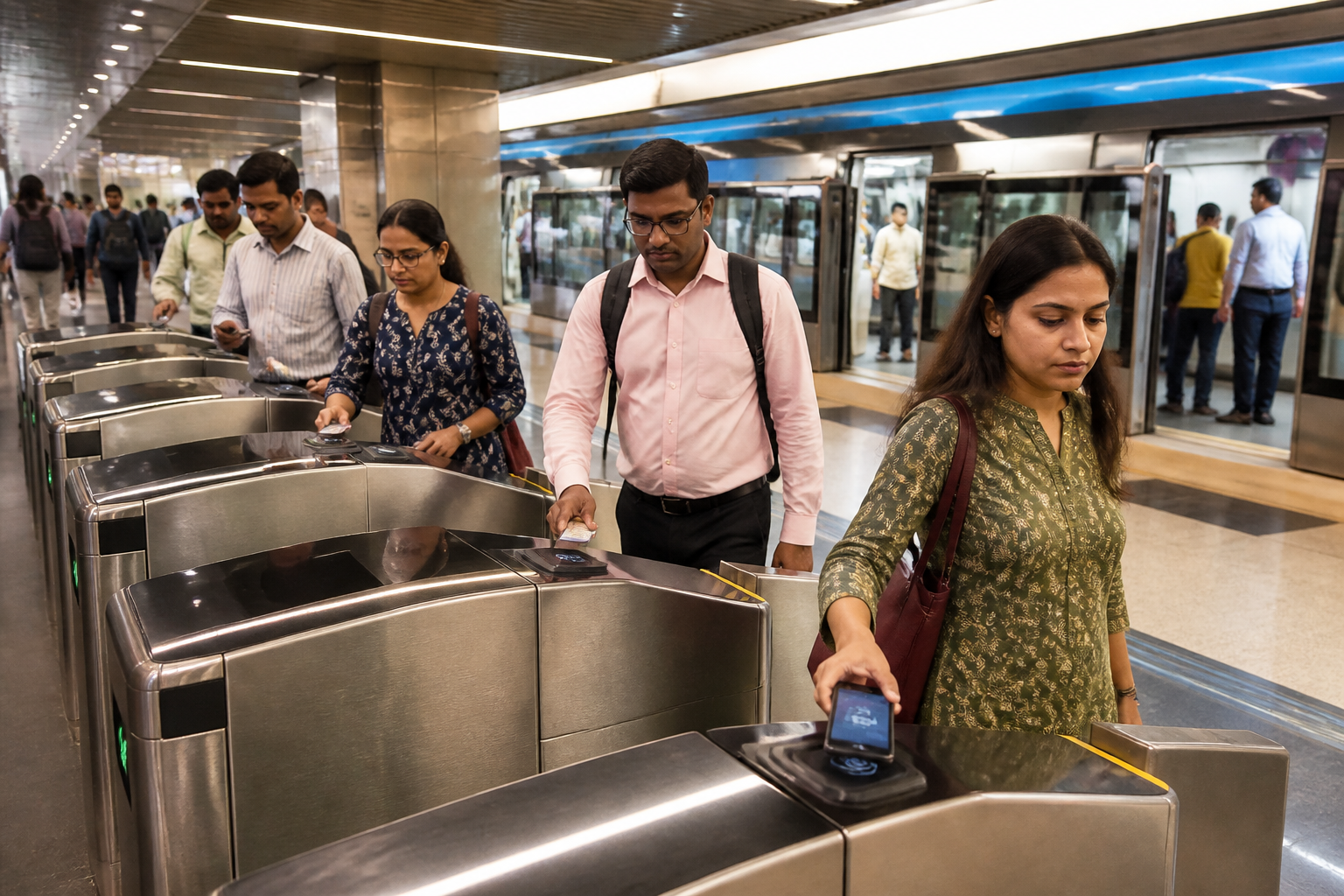
Mumbai Metro Line 3 has recorded more than 2.5 crore digital ticket sales, signalling strong passenger adoption of paperless ticketing on the underground corridor between Aarey and Cuffe Parade. The Mumbai Metro Rail Corporation said 2,51,45,566 digital tickets had been purchased by 8 September.
The Metro 3 corridor is currently carrying approximately 1.75 lakh passengers a day, according to a report by Loksatta – Mumbai. The line has offered passengers multiple ticketing options, including the Metro Connect 2 app, WhatsApp ticketing, Mumbai One, Metro One and National Common Mobility Card, or NCMC, services.
The digital ticketing system is intended to reduce the need for passengers to wait at ticket counters. By allowing commuters to purchase tickets through mobile platforms or use stored-value and interoperable cards, the system provides an alternative to paper tickets and counter-based transactions.
NCMC accounted for the largest share of the reported digital ticket sales. A total of 1,31,17,704 digital tickets were purchased using NCMC cards by 8 September. Metro One accounted for 51,67,040 tickets, while the ONDC-linked WhatsApp ticketing service recorded 44,13,208 tickets.
Mumbai One cards accounted for another 24,47,614 digital tickets during the same period. Together, these four reported categories totalled 2,51,45,566 digital ticket purchases, the figure cited for the period since digital ticket services began on the corridor.
The ticketing milestone comes as Metro 3 operates within Mumbai’s wider expanding metro network. Six metro corridors are currently operational in the city, and passenger use across the system is increasing, according to the report. Metro 3’s daily ridership and its spread of ticketing channels indicate that the corridor is serving a passenger base with varied preferences for mobile applications, messaging platforms and transport cards.
The Mumbai Metro Rail Corporation has continued to make both paper and digital tickets available. The range of options means passengers who do not use digital services can still purchase tickets at counters, while regular commuters can use card-based or online alternatives. The authority’s senior officials attributed the response to the availability of these multiple purchasing channels.
The reported figures also show that digital ticketing on Metro 3 is not dependent on a single platform. NCMC was the most widely used option among the categories listed, followed by Metro One, WhatsApp ticketing and Mumbai One. The figures provide a snapshot of how passengers are using different payment and access systems on one of Mumbai’s key underground transit corridors.
The latest disclosed milestone is based on sales recorded up to 8 September. The corridor’s daily passenger estimate and the ticketing figures were reported by Loksatta – Mumbai based on information provided by senior officials of the Mumbai Metro Rail Corporation.
