


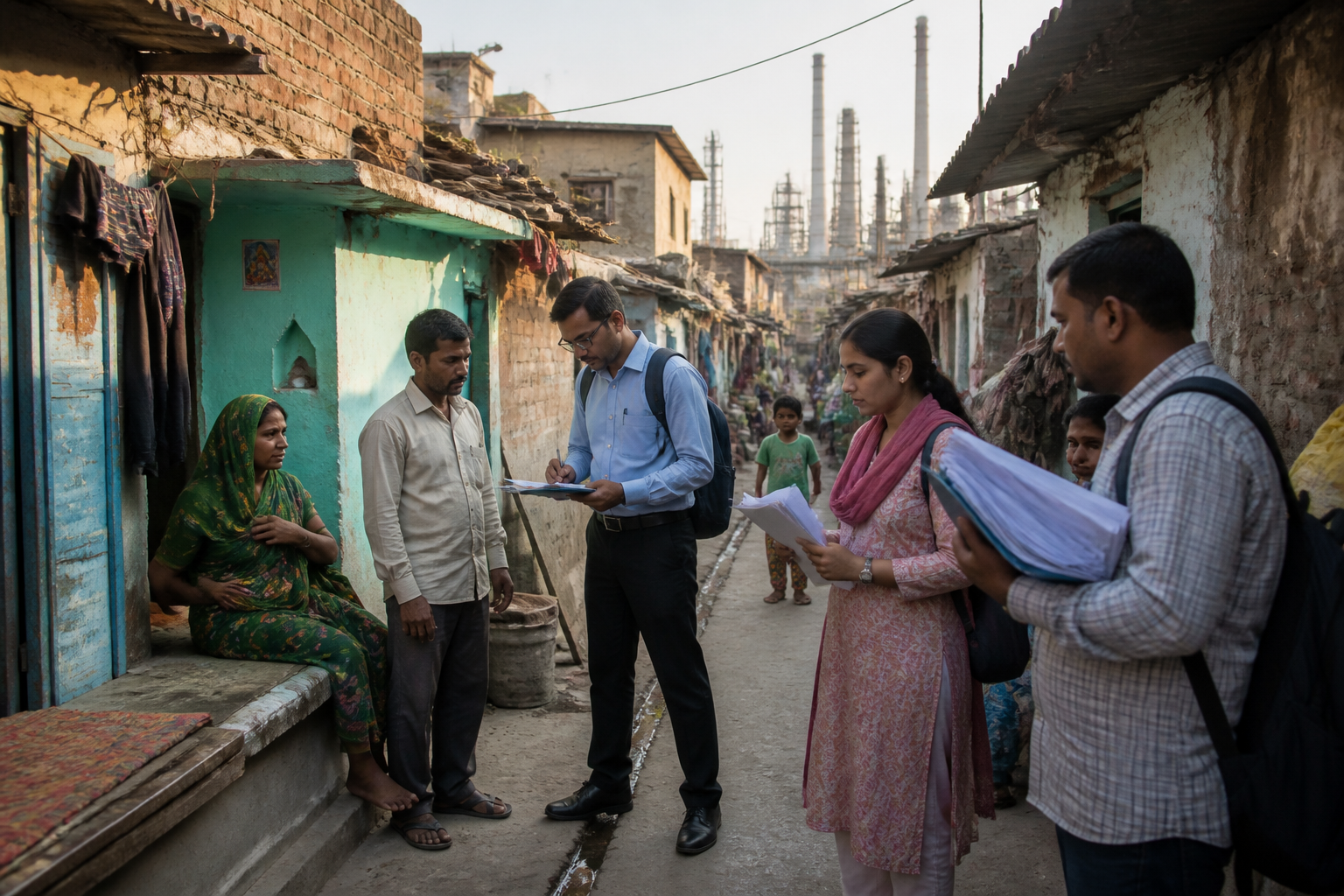
The Delhi Development Authority has begun a slum rehabilitation survey in Indira Kalyan Vihar, marking the first on-ground step towards identifying families who may qualify for benefits under the Delhi Slum and JJ Cluster Rehabilitation and Relocation Policy-2026.
Teams from the DDA’s in-situ slum rehabilitation branch are visiting homes in the JJ cluster at Site-2 of the Okhla Industrial Area Phase 1. Officials are collecting information on the number of residents in each household and documents required to assess eligibility for rehabilitation.
The survey is intended to establish how many families live in the cluster and determine which households meet the conditions set out in the 2026 policy. The DDA has asked residents to remain present during the survey and provide the information and documents requested by its teams.
A key element of the exercise will be the policy’s eligibility cut-off date of January 1, 2025. Documents collected during the survey will be examined to determine whether individual families satisfy the prescribed conditions linked to that date. The report does not specify the full list of documents or other eligibility requirements.
The survey follows directions issued during a review meeting held on June 16. The DDA and the Delhi Urban Shelter Improvement Board were instructed to begin the survey process in five JJ clusters initially and subsequently extend it to 50 clusters. Indira Kalyan Vihar is the first location where the exercise has been reported as having started.
The wider programme is expected to cover around four lakh people, according to the report. Data and documents collected from the clusters will be used to identify eligible families before the rehabilitation process moves to subsequent stages. The report does not provide a construction schedule, details of proposed housing units or a timeline for relocation.
The DDA has said that surveys will be conducted in other JJ clusters across the capital in phases after the Indira Kalyan Vihar exercise. The immediate next step is the completion of household-level data collection and eligibility assessment in the cluster.
