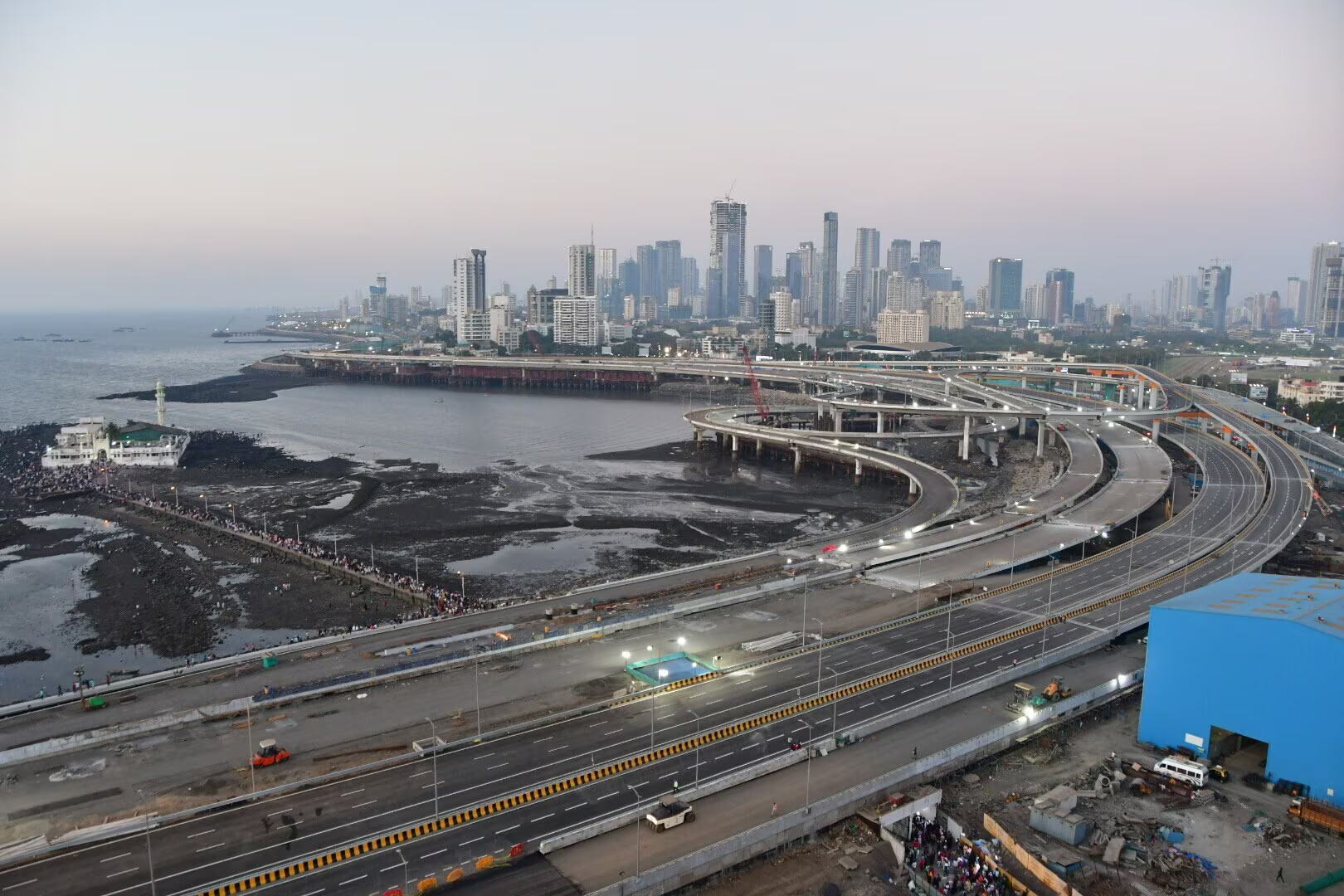
Mumbai’s flagship coastal corridor has recorded a sharp rise in vehicular movement since its opening, with usage accelerating significantly after round-the-clock operations were introduced. The high-speed link connecting the city’s southern business districts with its western suburbs has now handled tens of millions of trips, underlining its growing role in reshaping daily commuting patterns.
The Mumbai coastal road traffic surge has been particularly evident following the transition to 24-hour access in mid-2025. Daily volumes have increased substantially in both directions, with a noticeable jump in vehicles heading towards the city’s commercial core. The corridor’s seamless connectivity to key employment hubs has made it an increasingly preferred route for office commuters and long-distance drivers alike. Initially opened in phases, the corridor witnessed steady adoption, with monthly traffic rising rapidly as motorists familiarised themselves with the route. The addition of the return carriageway and the expansion of public access points further boosted usage. Over time, the road has evolved from a new infrastructure asset into a critical mobility spine within Mumbai’s transport network.
Urban mobility experts point out that the Mumbai coastal road traffic trend reflects a broader shift in travel behaviour. High-capacity corridors that offer predictable travel times often attract users from parallel arterial roads, reducing congestion in some areas while concentrating traffic in others. This redistribution can improve overall network efficiency, but also requires continuous monitoring to manage peak loads. The corridor’s impact extends beyond travel time savings. By enabling faster east-west connectivity, it supports economic activity across multiple zones, linking residential neighbourhoods with commercial districts. However, planners caution that increased reliance on road-based infrastructure must be balanced with investments in public transport to ensure long-term sustainability.
From a climate perspective, the rising Mumbai coastal road traffic raises questions about emissions and urban air quality. While smoother traffic flow can reduce idling and fuel consumption, higher vehicle volumes may offset these gains. Experts suggest that integrating the corridor with mass transit systems and promoting shared mobility could help mitigate environmental impacts. Civic authorities view the project as a key component of Mumbai’s broader infrastructure upgrade, aimed at reducing travel time and improving accessibility. However, the next phase of planning will likely focus on managing demand, enhancing multimodal integration, and ensuring that the benefits of the corridor are distributed equitably across the city.
As Mumbai continues to expand its transport infrastructure, the experience of the coastal road highlights both the opportunities and challenges of large-scale urban mobility projects. Sustaining efficiency while addressing environmental and capacity concerns will be central to its long-term success.
Mumbai Coastal Road Records Over 3 Crore Vehicles Since Opening