


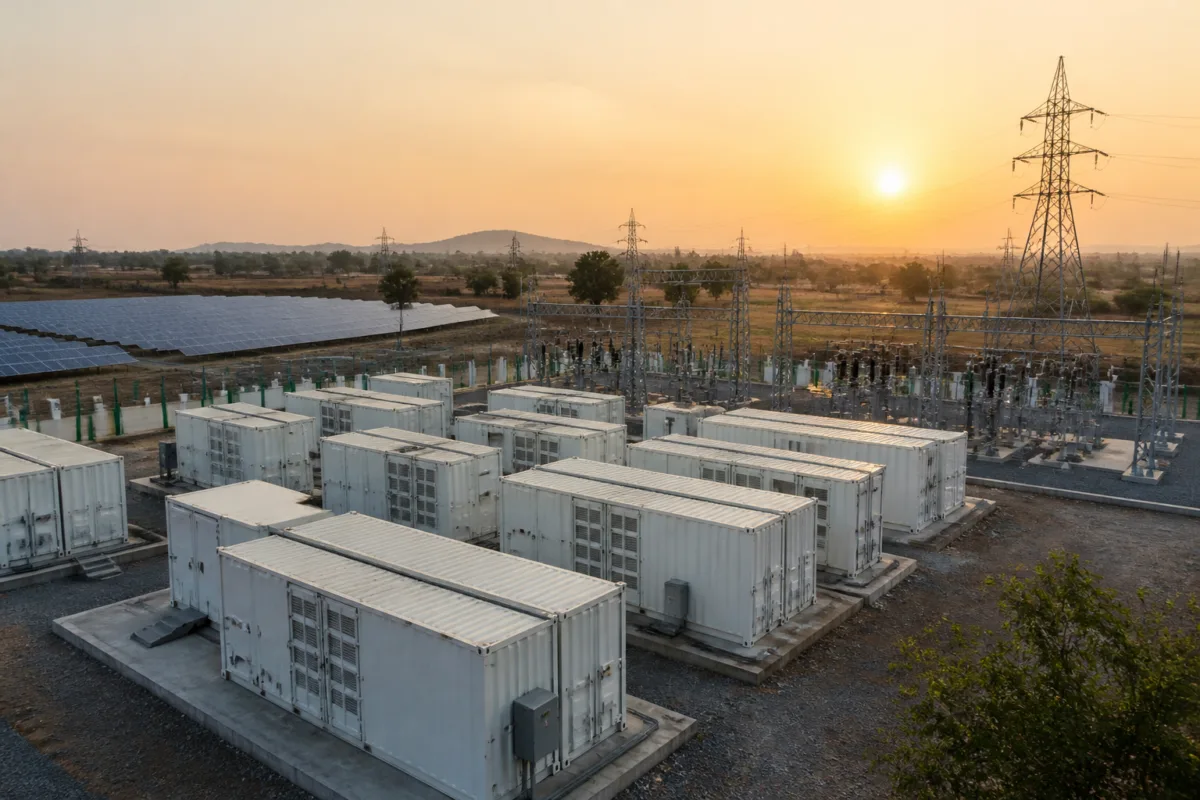
MSEDCL battery storage systems have supplied 1,000 megawatt-hours of electricity across Maharashtra, helping the state utility meet peak evening demand by storing surplus solar power generated during the day.
The Maharashtra State Electricity Distribution Company Limited said the milestone was achieved through battery energy storage systems integrated into its decentralised distribution network. MSEDCL claimed it was the first power distribution company in India to supply electricity at this scale through such a network.
The stored power comes primarily from surplus solar generation under the Mukhyamantri Saur Krishi Vahini Yojana 2.0, which supplies daytime electricity to agricultural pumps. The storage systems allow excess solar power to be held during daylight hours and dispatched after solar generation declines, when demand typically rises.
Lokesh Chandra, Additional Chief Secretary to the Chief Minister and Chairman and Managing Director of MSEDCL, said the initiative was particularly important as electricity demand increased amid hotter conditions and reduced rainfall in parts of Maharashtra. He said the programme was helping transform the state’s electricity supply system.
Around 7,000 MW of decentralised solar capacity has been commissioned under the Mukhyamantri Saur Krishi Vahini Yojana 2.0, according to MSEDCL. The electricity generated under the scheme is primarily supplied to agricultural pumps, while the battery systems are intended to improve the use of surplus generation and make it available during evening demand peaks.
MSEDCL currently has 500 MW of battery power capacity operational. Since the systems can supply electricity for two hours, the installed capacity represents 1,000 MWh of energy storage. The operational projects comprise systems with a power capacity of 10 MW each, deployed at 50 locations across the state.
The utility said solar electricity is relatively economical during daylight hours, but distribution companies may need to procure power at higher rates from the market once solar generation falls in the evening. MSEDCL’s storage projects are intended to reduce that dependence by shifting surplus renewable electricity to periods when demand is higher.
MSEDCL has planned battery storage projects with a total power capacity of 750 MW, capable of supplying electricity for two hours. These projects would provide 1,500 MWh of storage capacity. Projects accounting for 1,000 MWh are already operational, while the remaining capacity is expected to be commissioned by the end of December 2026. A further 4,000 MWh of storage capacity is under development, the utility said.
The initiative is expected to support electricity supply during peak evening hours and periods of higher demand, including the summer season. Its immediate focus is to combine decentralised solar generation with storage across multiple distribution locations rather than relying only on large, centralised power facilities. MSEDCL’s next stated milestone is the commissioning of the remaining projects in its 750 MW programme by December 2026.

