


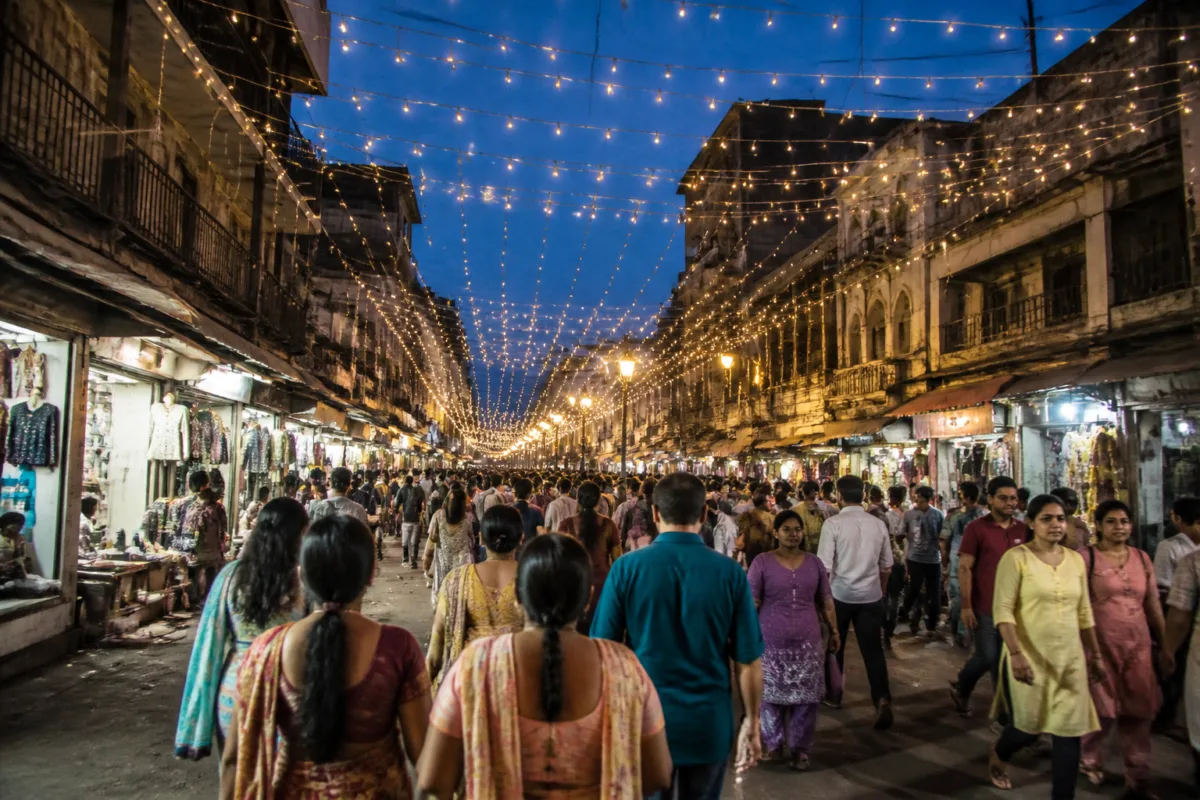
Pune’s Diwali lighting has been inaugurated across Laxmi Road, Kumthekar Road and Bajirao Road, bringing decorative illumination to approximately three kilometres of the city’s traditional market district. Pune Municipal Commissioner Naval Kishore Ram inaugurated the installation on Thursday, 29 October, as traders prepared the streets for the festival shopping season.
The initiative has been organised for the third consecutive year through the joint efforts of the Pune Vyapari Mahasangh, the United Retail Trade Garment Association and the Pune Saraf Association. The lighting is intended to create a festive atmosphere in the markets and highlight the cultural character of one of Pune’s best-known traditional shopping areas.
Laxmi Road, Kumthekar Road and Bajirao Road are recognised for their concentration of retail businesses, garment stores, jewellery outlets and other long-established commercial establishments. The streets attract shoppers during Diwali and remain important to Pune’s traditional retail economy, alongside the city’s newer malls and commercial developments.
Speaking at the inauguration, Ram said Pune’s traditional markets continued to retain their importance and that the city had scope to develop a stronger culture of walking through its streets, experiencing local places, eating local food and shopping at stores. He compared this kind of experience with the preference in parts of Europe for exploring city streets rather than visiting malls alone.
“Pune is the cultural capital. Traditional markets continue to hold their importance even today,” Ram said. He added that Pune’s celebrations of Ganeshotsav, Navratri and Diwali reflected the city’s cultural life, and that the decorative lighting added to the festive atmosphere in the market areas.
The commissioner also acknowledged the role of traders’ associations beyond festival arrangements. According to Ram, the trading community has supported the city during crises and has come forward whenever assistance has been required.
Milind Shalgar, secretary of the United Retail Trade Garment Association, said traders had come together to preserve Pune’s cultural legacy and improve the shopping experience during Diwali. He said the associations had decided to organise decorative lighting every year and claimed that Pune had been an early city to undertake such an activity, with other cities later following the example.
The installation represents a recurring collaboration between the municipal administration and market associations rather than a municipal infrastructure project. The supplied announcement does not provide details about the lighting cost, electricity consumption, installation permissions, traffic arrangements or the duration for which the decorations will remain in place.
The Diwali lighting will remain part of the festive setting across the three traditional market roads as shoppers visit the area during the festival period, according to the participating traders’ associations.

