


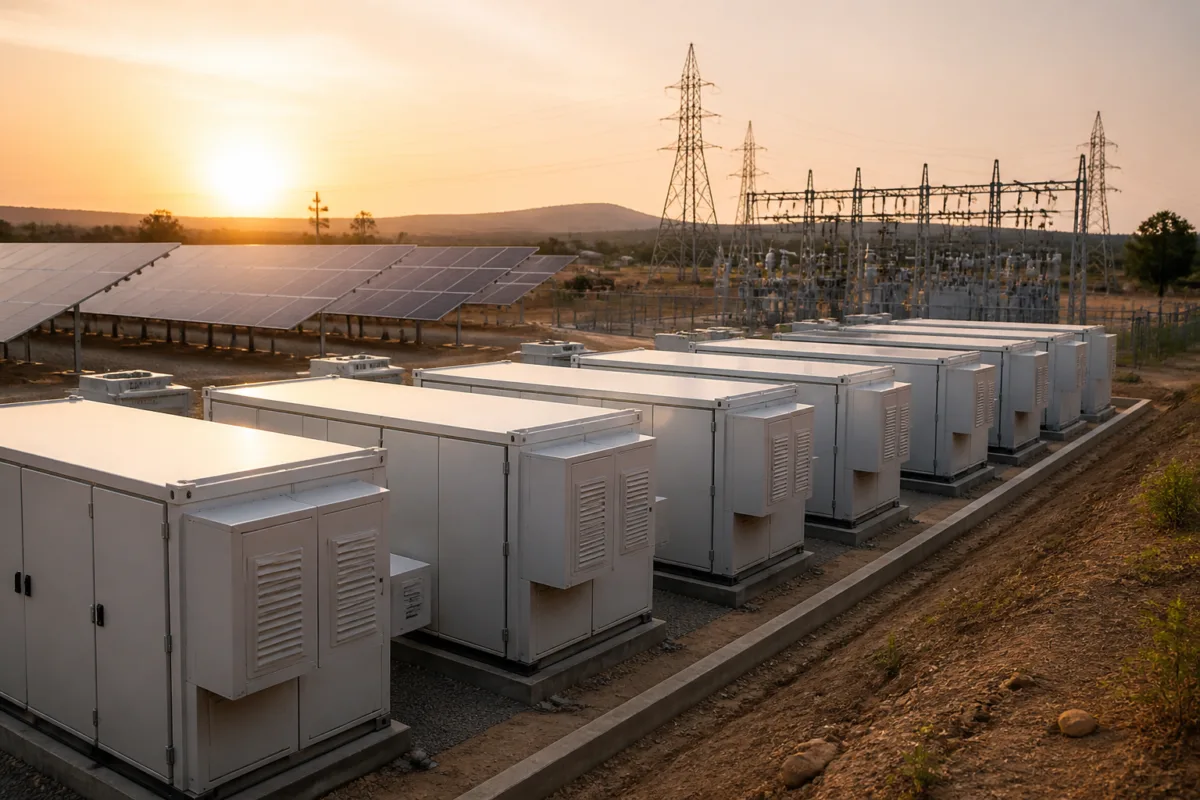
MSEDCL has supplied 1,000 megawatt-hours (MWh) of electricity through battery energy storage systems across Maharashtra, using surplus daytime solar power to meet peak evening demand, the state distribution company said on October 29.
The stored electricity has been generated under the Mukhyamantri Saur Krishi Vahini Yojana 2.0, which supplies solar power to agricultural pumps during the day. MSEDCL said the battery systems allow excess solar generation to be stored and dispatched after solar output declines, when electricity demand typically rises.
Lokesh Chandra, Additional Chief Secretary to the Chief Minister and Chairman and Managing Director of MSEDCL, said the company had become the first in India to supply power on this scale through battery storage integrated into a decentralised distribution network. He said the initiative was particularly relevant amid increased electricity demand and drought-like conditions in parts of Maharashtra.
Around 7,000 MW of decentralised solar power capacity has been commissioned under the agricultural solar scheme, with the electricity primarily supplied to agricultural pumps. MSEDCL has made 500 MW of battery storage capacity operational under its Battery Energy Storage System initiative. Since the systems can supply electricity for two hours, the operational capacity represents 1,000 MWh of stored energy.
The operational battery projects comprise systems with an individual power capacity of 10 MW deployed at 50 locations across Maharashtra. MSEDCL said the projects are intended to improve the use of renewable electricity and support supply reliability during peak evening hours, when utilities may otherwise need to procure power from the market at higher rates.
The distribution company has planned battery storage projects with a total power capacity of 750 MW, also designed to provide electricity for two hours. This would create an overall storage capacity of 1,500 MWh. Projects representing the remaining 500 MWh are expected to be commissioned by the end of December 2026, while projects with a further storage capacity of 4,000 MWh are under development, according to MSEDCL.
MSEDCL linked the current push to increased October electricity demand following hotter conditions and reduced rainfall associated with the El Niño phenomenon. The utility said battery storage could be particularly useful during the summer, when demand typically increases. The next stated milestone is the commissioning of the remaining projects in the 750 MW planned portfolio by December 2026.

