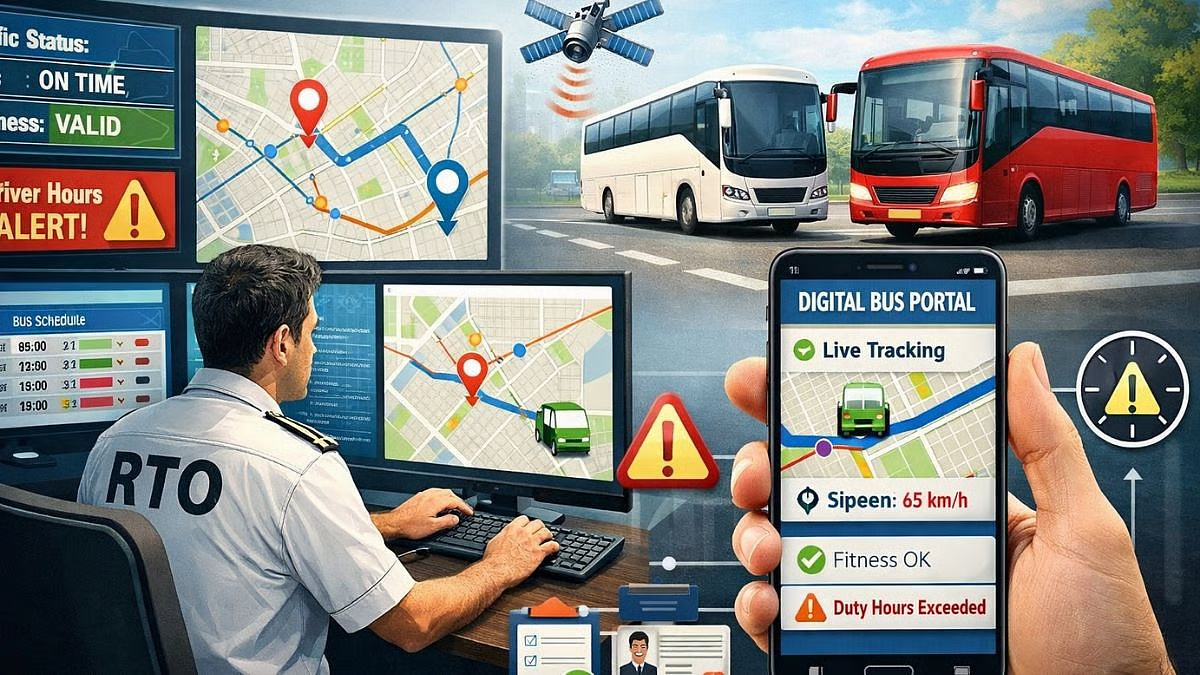
Maharashtra Expands Digital Access To Bus Benefits
The Maharashtra State Road Transport Corporation (MSRTC) has introduced a new digital requirement for passengers using selected fare concessions, making NCMC cards necessary for women and senior citizens travelling on its buses from September 1. The change affects access to discounted tickets across the state and marks a wider shift towards electronically recorded public transport benefits. Under the new system, concessionary tickets for women, senior citizens and passengers covered by the Amrit Senior Citizen Scheme will be issued through NCMC cards. Travellers who want to use these benefits must register for the card and carry it during their journeys.
The move is significant because MSRTC operates one of Maharashtra’s largest public bus networks, connecting major cities with smaller towns and rural communities. For passengers who depend on concessionary fares, particularly older people and those travelling frequently for essential services, the availability of registration facilities will be as important as the technology itself. MSRTC has begun distributing and registering NCMC cards at depots and bus stations. Authorised agents have also been positioned outside depot premises to assist passengers with the process. The arrangement is intended to make the transition more accessible, although the experience will depend on how quickly cards are issued and whether registration facilities can cope with demand. The National Common Mobility Card is designed to support electronic payments across compatible transport systems. In the MSRTC network, its immediate role is more focused: linking passenger eligibility with concessionary ticketing. Digitising that process can give the corporation a clearer record of concession usage and reduce dependence on manual ticketing and verification.
There is also a financial and administrative dimension. Concession schemes create a recurring cost for public transport operators, while digital records can provide more precise information on passenger categories and journeys. Industry observers say better data could eventually help transport authorities assess subsidy requirements and plan services more effectively. However, a digital-first system also creates a practical challenge. Some senior citizens may have limited familiarity with digital registration or may live far from facilities where cards are issued. Women and older passengers who rely on buses for healthcare, education, work or essential travel should not face disproportionate barriers because of the transition. The corporation plans to extend the NCMC cards system to other concession categories in phases. The success of the rollout will therefore depend not only on technology but also on clear communication, adequate registration points and support for passengers who need assistance.
For Maharashtra’s public transport system, the change could improve concession management over time. The immediate priority, however, remains ensuring that digitisation makes subsidised travel easier to access rather than creating a new hurdle for the people these concessions are designed to support.