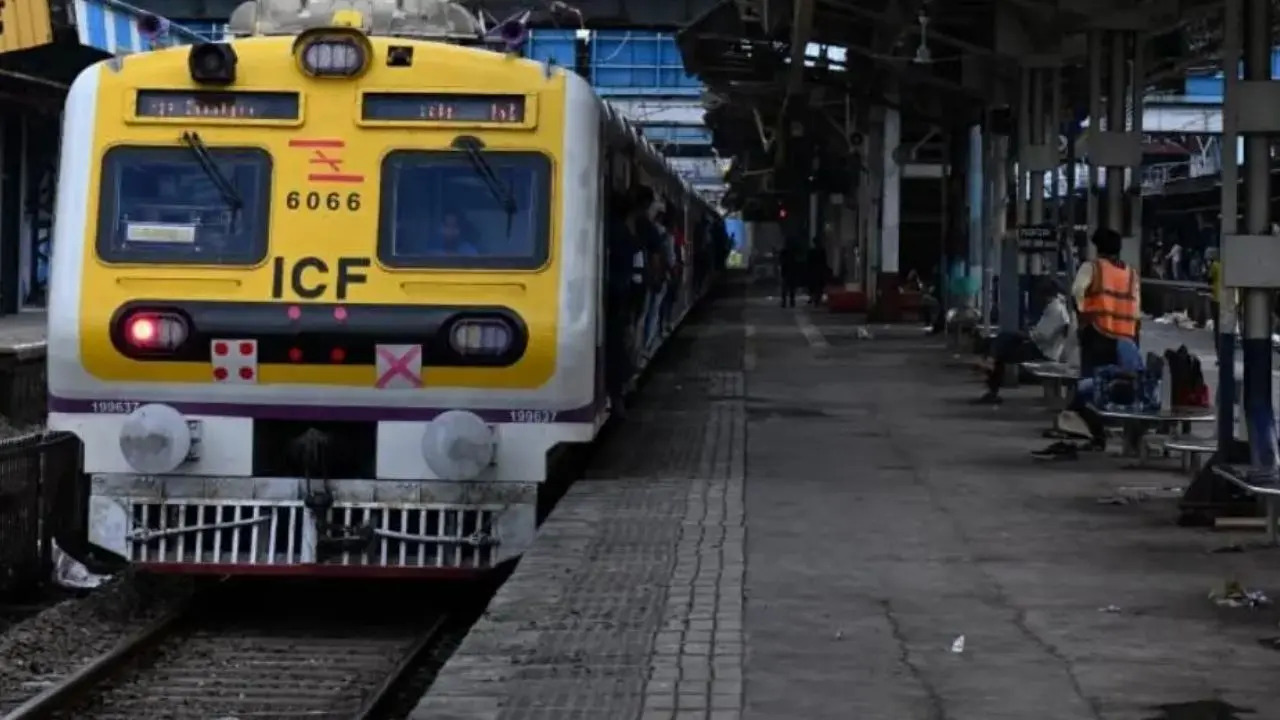
Mumbai’s suburban railway recorded a modest but notable decline in passenger traffic during April-June 2026, with 44.65 lakh fewer journeys than in the corresponding period last year. The change comes as the city’s expanding Metro network begins to overlap with established suburban corridors, raising a larger question for Mumbai’s transport planners: how should two rail systems serving increasingly similar catchments divide demand? Western Railway’s Mumbai Central Division recorded total suburban ridership of 25.60 crore during the quarter, down 1.71% from 26.04 crore a year earlier. The decline was concentrated in conventional services. Second Class passengers fell about 3% to 21.28 crore, while First Class traffic dropped 7.23% to 2.54 crore.
The internal assessment has identified growing Metro competition as one possible contributor, particularly around the Borivali-Dahisar and Andheri stretches. However, the figures do not demonstrate that the 44.65 lakh decline represents a direct migration from local trains to Metro services. Passenger behaviour can also be influenced by hybrid working, changing travel patterns, fares, service frequency and other modes of transport. The stronger movement is visible within the suburban railway itself. AC train journeys and season-ticket passengers rose from about 1.37 crore to 1.78 crore, an increase of nearly 30%, or around 41 lakh passengers. That growth also needs careful interpretation. Railway data does not track individual passengers across ticket categories, so some of the increase may reflect existing First or Second Class commuters upgrading rather than entirely new users.
At the same time, Metro development is changing the competitive landscape. Corridors around Mumbai’s western suburbs increasingly offer passengers alternatives for shorter and cross-suburban trips. Metro Line 9’s arrival in the Mira-Bhayandar belt has already been associated with lower footfall at some Western Railway stations, although comparisons across different periods require caution. For Mumbai, the shift is significant because suburban rail remains the backbone of mass mobility. A small percentage change can represent millions of journeys and potentially alter revenue, service planning and investment priorities. The rise of Metro services should therefore be viewed less as a simple contest between operators and more as a test of whether the region can build an integrated public transport system. A stronger Metro network can reduce pressure on overcrowded trains and provide faster alternatives on suitable routes. But planners will need better passenger-level data, coordinated ticketing and reliable interchange facilities to understand where demand is moving.
The next challenge is to make the two systems complement each other rather than duplicate capacity. If Mumbai can align rail investment with actual travel patterns, Metro growth could improve network resilience while allowing suburban rail to focus resources where its capacity remains most critical.