


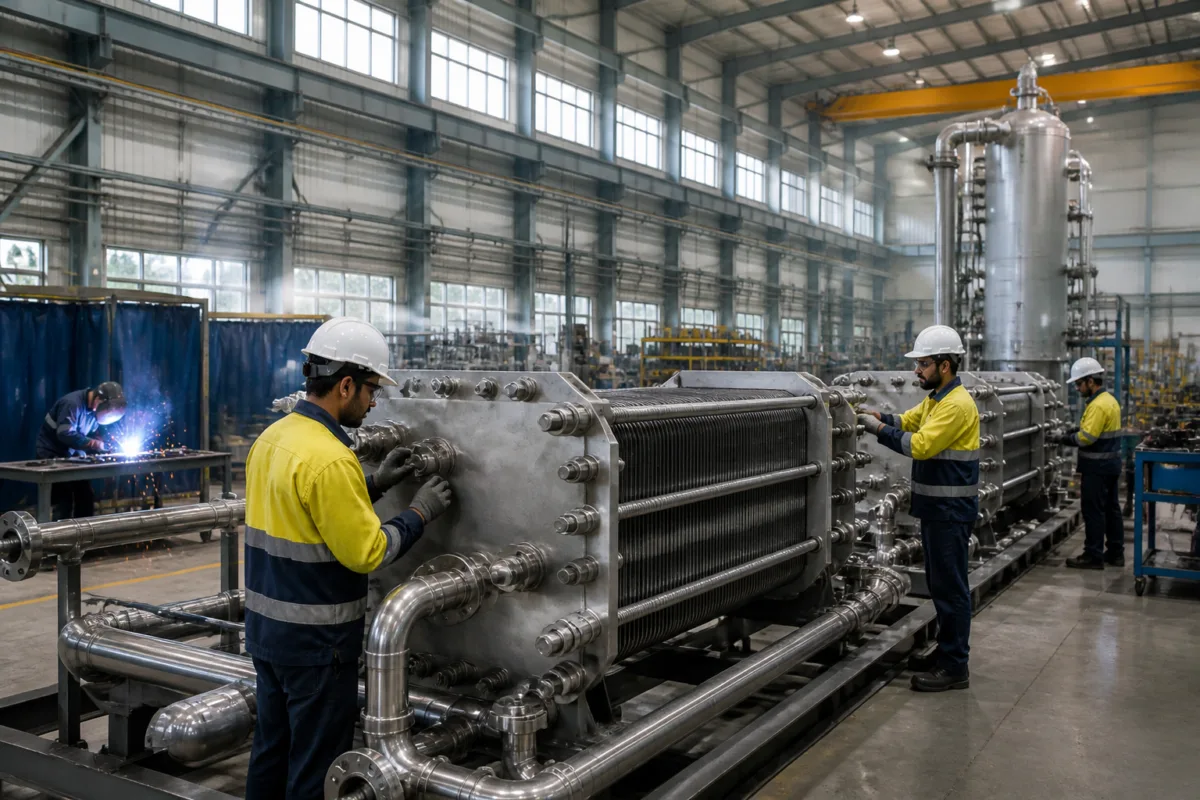
Indian electrolyser manufacturers are urging the Centre to create an approved list of domestic suppliers, similar to the Approved List of Models and Manufacturers (ALMM) used for solar modules, as green-hydrogen projects struggle to generate equipment orders.
The proposed mechanism would require green-hydrogen developers and public-sector companies to source electrolysers from approved Indian manufacturers. Industry participants have raised the proposal at government roundtables and industry forums, according to an executive involved in the discussions, cited by the Economic Times.
The demand comes as manufacturers face a prolonged gap between investment in production capacity and actual market demand. More than 20 companies, including Reliance Industries, John Cockerill Greenko Hydrogen, Advait Infratech, Homi Hydrogen, L&T Electrolysers and Adani New Industries, have won bids under the production linked incentive (PLI) scheme to establish electrolyser manufacturing facilities in India, the report said.
Manufacturers are concerned that green-ammonia project awards have not yet translated into significant equipment orders. Developers are still working towards financial closure and have not placed orders with electrolyser companies. According to the report, procurement may take place only around two to two-and-a-half years after project awards, extending the wait for manufacturers that have already invested in factories.
An approved-supplier framework could provide a defined market for domestic equipment and reduce dependence on imports, particularly from China, industry representatives told the Economic Times. The proposal also seeks to include public-sector oil companies such as Indian Oil Corporation, Bharat Petroleum Corporation and Hindustan Petroleum Corporation among buyers covered by domestic sourcing requirements.
The issue is closely linked to the design of the PLI scheme. The Ministry of New and Renewable Energy has allowed manufacturers in the first tranche flexibility to commission their facilities by August 2027. Companies without immediate orders can defer the start of their PLI incentive period so that they do not lose the initial incentive years while production remains idle.
Manufacturers, however, say the timeline flexibility does not resolve the underlying demand problem. Since the incentive is linked to actual production, companies will not receive benefits in the absence of orders and output. A prolonged gap could leave newly established factories carrying operating and capital costs without sufficient utilisation.
The proposed list would therefore address more than import competition. It would connect public procurement and project implementation with the manufacturing capacity created through government support. For developers, such a system could provide clearer sourcing rules; for manufacturers, it could improve visibility over future orders. Its effectiveness would depend on how eligibility, procurement obligations and project timelines are defined.
The report said the ministry did not respond to queries. Until green-hydrogen and green-ammonia projects reach financial closure and begin placing equipment orders, India’s expanding electrolyser manufacturing base will continue to face uncertainty over when planned capacity will translate into production and revenue.

