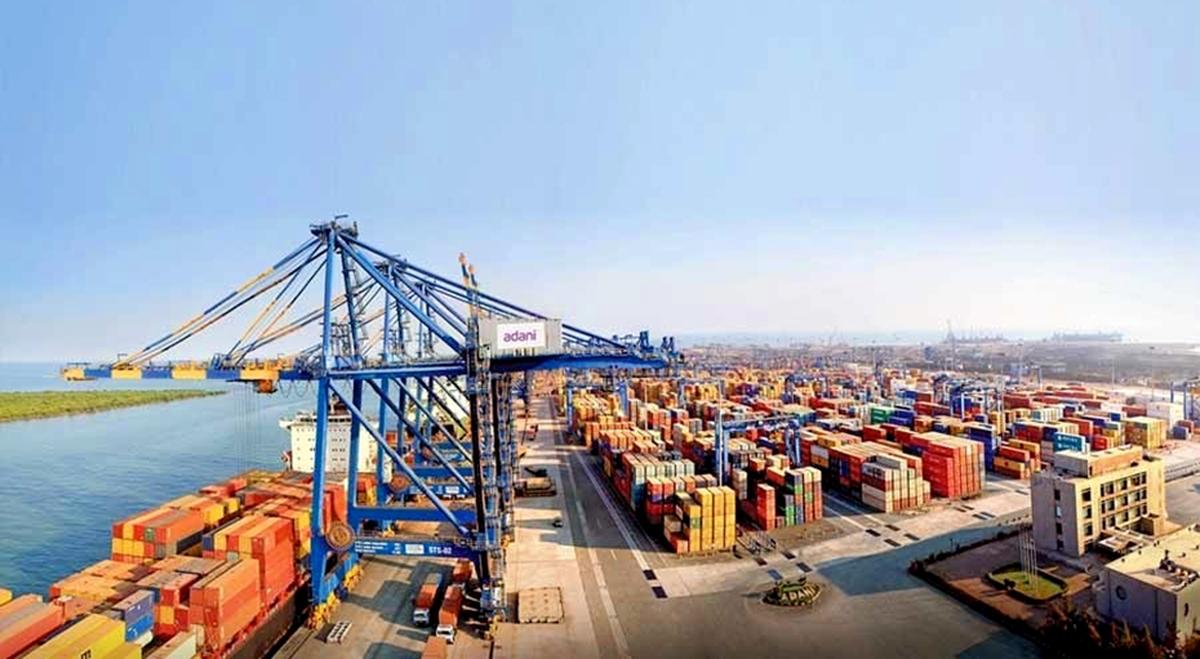
Kolkata’s Netaji Subhash Dock is set for a major container infrastructure expansion after a new 30-year concession was signed for an outer container terminal and Berths 1 to 5. The project, awarded under a public-private partnership, could add about 0.93 million TEUs of annual capacity and, together with an earlier terminal project, take planned capacity at the dock system to roughly 1.4 million TEUs.
The agreement, signed on 12 August, marks a shift from planning to formal project execution. A wholly owned project company has been established to implement the development under a Design-Build-Finance-Operate-Transfer model. The new terminal is expected to involve investment of around ₹832 crore and will cover the outer container facility alongside Berths 1 to 5.For Kolkata, the significance extends beyond adding berth capacity. The city’s port remains closely tied to the industrial and commercial economy of eastern India, where efficient movement of containers can influence logistics costs, delivery times and the competitiveness of manufacturers and traders. Greater handling capacity could also reduce pressure on existing facilities as regional cargo demand grows.The development follows a separate concession signed in September 2025 covering reconstruction of Berth 8 and mechanisation of Berths 7 and 8 at Netaji Subhash Dock. That earlier project carries an estimated cost of ₹740 crore and is designed to provide around 0.45 million TEUs of annual container capacity. Combined with the new concession, the two projects are expected to create approximately 1.4 million TEUs of capacity, with development taking place in phases.
The operational transition has already begun at the existing project. Customs clearance was granted in May 2026 for operations at Berth 7 and its adjoining backup area, allowing activity to begin while the wider infrastructure programme progresses.Urban planners and logistics specialists generally view port modernisation as more than a capacity exercise. Its wider value depends on how efficiently cargo connects with rail, road and inland logistics networks. Without coordinated freight planning, additional terminal capacity can simply shift congestion from the waterfront to surrounding roads and urban corridors.Environmental performance will also become increasingly important as Kolkata expands its maritime role. Electrified cargo-handling equipment, cleaner power systems, efficient truck movements, rail-linked freight and better land-use planning can help limit emissions and reduce disruption for communities around port areas.
The next test will therefore be execution. For Kolkata, the value of the investment will ultimately be measured not only by containers handled, but by whether modernised port infrastructure delivers faster trade flows while reducing pressure on the city’s roads, neighbourhoods and environmental systems.