


A report by Gujarat Samachar – Ahmedabad has raised concerns about the impact of rising food, cooking-fuel and transport costs on households and small commercial vehicle operators in Ahmedabad ahead of Diwali. The report lists increases in ghee, pulses, rice, compressed natural gas (CNG), piped natural gas (PNG), commercial LPG and petrol-diesel prices, while also alleging that adulteration and hoarding risks have grown during the festive season.
The reported increases matter because they affect several parts of the urban household budget at the same time. Food prices influence daily consumption and festive cooking, cooking-gas prices affect household energy costs, and CNG and petrol prices feed into the operating costs of rickshaws, taxis, school vans and small transport businesses. The supplied report says families with limited incomes and middle-class households are facing greater difficulty in planning Diwali spending.
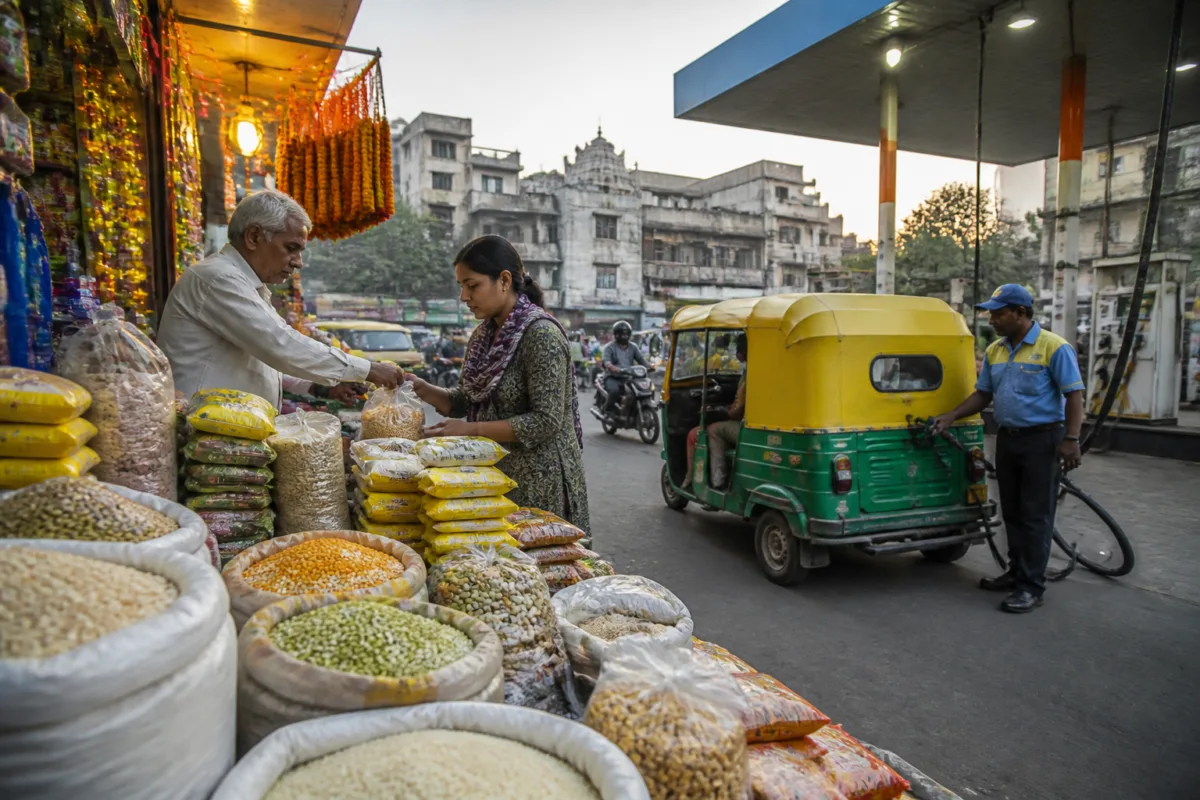
According to the report, the price of several pulses has increased in Ahmedabad. Tuvar dal is cited at Rs 130 per kg, compared with Rs 100 earlier. Moong dal is reported at Rs 120 per kg, while chana dal has risen from Rs 80 to Rs 95 per kg. Urad dal is reported at Rs 105 per kg. The report also says that different varieties of rice have become Rs 20-25 more expensive per kg.
The report attributes increases in dairy products to Amul. It says the price of a 500-gram pouch of pure ghee rose from Rs 325 to Rs 345, while butter prices increased by Rs 3 for 100 grams and Rs 15 for 500 grams. However, the same report gives inconsistent figures for the 1 kg ghee carton, describing the increase as both Rs 80 and Rs 50 from a stated earlier price of Rs 630. That discrepancy is a material limitation and requires confirmation from the company or an official price list before the figure can be treated as established.
The report also links higher household costs to cooking gas and vehicle fuels. It says commercial LPG cylinder prices increased by Rs 10-17 from 1 November. It further reports that Vadodara Gas Limited raised CNG prices by Rs 1.50 per kg and domestic PNG prices by 50 paise. The report separately says that Adani Gas increased CNG prices by Rs 2.30 per kg, taking the Ahmedabad price to Rs 100.77 per kg. These claims concern different gas distributors and should be checked against the applicable tariff notices and effective dates.
For urban mobility, fuel-price changes can affect both passengers and operators even when the immediate increase is imposed on the fuel rather than on fares. The report specifically identifies rickshaw drivers, taxi drivers, school-van operators and small transporters as groups facing higher operating costs. It also places petrol in Ahmedabad at approximately Rs 102 per litre and diesel at approximately Rs 82 per litre. The supplied material does not establish whether these fuel prices are uniform across the city, nor does it state whether any fare revisions have been authorised.
The connection between household inflation and urban transport is important because food distribution, commuting and service delivery depend on the same cost system. A rise in CNG or diesel can increase the operating expenses of passenger vehicles and goods carriers. Higher fuel costs can also affect the movement of food and consumer goods between wholesale markets, retailers and neighbourhoods. The supplied report describes these pressures together, but it does not provide a cost breakdown showing how much of any retail increase is attributable to fuel, procurement, storage, taxation or retailer margins.
The report also alleges that black-market operators, hoarders and adulterators are taking advantage of festive demand. It says that genuine ghee has become difficult to find in the market and that adulterated products are being sold. These are allegations contained in the source report and are not independently established in the supplied material. No enforcement order, inspection data, laboratory finding, seizure record or statement from a food-safety authority is provided alongside the claims.
That distinction is significant for governance. Monitoring food prices and product quality involves different institutions and powers. Retail prices may be influenced by suppliers, distributors and market conditions, while adulteration requires sampling and laboratory testing. Hoarding and black-marketing allegations require inspection and enforcement evidence. The report attributes public concern to the combination of these issues but does not identify a specific government order, inspection drive or enforcement action in Ahmedabad.
The report’s account therefore presents a picture of simultaneous pressure across food, household energy and mobility expenses, rather than a single price event. The cited increases include pulses and rice, dairy products, commercial LPG, CNG and PNG. Their effects are likely to differ across households: a family that cooks primarily with piped gas faces a different exposure from one using LPG, while a CNG-dependent driver faces a different cost structure from a private vehicle owner. The supplied material does not quantify the average monthly impact on any of these groups.
The timing before Diwali adds a seasonal dimension. Festive periods generally involve higher demand for food ingredients, cooking fuel, travel and household purchases. The report says that rising prices could make celebrations more difficult for families with limited incomes. That account is presented as a description of public and household pressure, not as a measured estimate of reduced festive spending. No household survey, retail price index or city-level inflation series is included in the supplied report.
The central urban question is how Ahmedabad’s households and informal transport economy absorb several cost increases at once. The report identifies the pressure points but does not establish their causes in a complete way. It also does not show whether the increases are city-specific, part of wider market movements, or linked to changes in supply, taxation, distributor pricing or seasonal demand. Those distinctions matter for any policy response because price monitoring, consumer protection, fuel regulation and income support operate through different administrative channels.
The available evidence supports treating the report as an alert about reported price pressures, particularly for pulses, rice, gas and transport fuel. It does not support presenting every figure as independently confirmed. The most immediate verification needs are the Amul ghee price change, the effective dates and tariff notices for CNG and PNG, the commercial LPG increase, and the source of the reported Ahmedabad petrol and diesel prices. Any claim about adulteration, hoarding or government inaction also requires documentary or official confirmation.
For now, the supplied report establishes that inflation concerns are being reported across multiple urban expense categories in Ahmedabad before Diwali. It leaves unresolved the exact magnitude of some increases and whether enforcement agencies have recorded the alleged market abuses. Those details should be checked against company price lists, distributor notices, official fuel records and food-safety or consumer-protection actions before the figures are treated as verified citywide conditions.

