Kolkata Land Pooling Could Unlock Industrial Growth
Kolkata’s next phase of industrial growth could depend as much on how land is assembled as on how much land is available. West Bengal is examining ways to address fragmented land parcels that can delay industrial projects, with land pooling emerging as one possible route. For Kolkata and its wider metropolitan region, the issue has implications for jobs, infrastructure, housing pressure and the environmental cost of expanding the urban footprint.
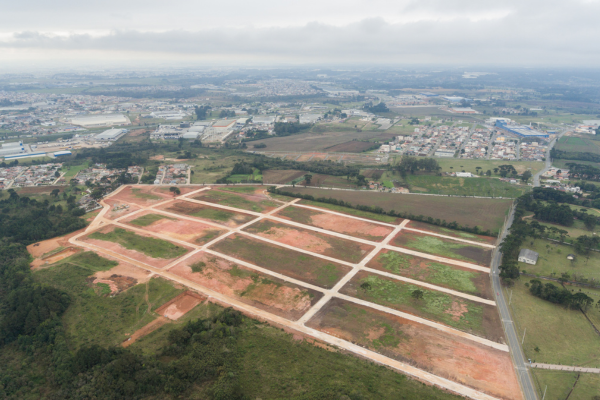
Land pooling broadly involves bringing multiple parcels together for planned development rather than relying on separate transactions for every small holding. The approach can create larger, contiguous sites while allowing landowners to participate in the development process.The challenge is particularly relevant to West Bengal, where small and fragmented holdings have long shaped the rural and peri-urban land market. Research has found that fragmentation can make productive investment and infrastructure provision more difficult, although consolidation itself can involve complex administrative and social issues.For Kolkata, the consequences extend beyond industrial estates. As developable land around the city becomes increasingly constrained, projects can push outward towards peri-urban areas. That can increase pressure on agricultural land, wetlands, drainage systems and existing settlements if expansion is not supported by coordinated spatial planning.A land pooling framework could therefore have value beyond speeding up transactions. If designed around infrastructure capacity, it could help concentrate industrial activity where roads, rail links, power, water, waste treatment and worker housing can be planned together.
That would be particularly important for the Kolkata metropolitan region, where transport congestion and unplanned peripheral growth already carry significant economic and environmental costs.West Bengal already operates formal land-allotment mechanisms through agencies including the West Bengal Industrial Infrastructure Development Corporation. Its current land dashboard shows industrial land availability across several parks, while separate systems track applications and approvals.The policy debate also comes as the state government moves towards a more active role in helping investors secure industrial land. In July, the government announced a direct land-purchase mechanism under which land could be procured and subsequently provided for industrial projects, signalling a shift towards addressing land access as a central investment constraint.For Kolkata, however, the success of any land pooling model will depend on more than assembling larger plots. Transparent valuation, clear land records, consent mechanisms and safeguards for existing livelihoods will be critical. Equally important will be preventing industrial expansion from consuming environmentally sensitive land simply because it is cheaper or easier to assemble.
The immediate test is whether West Bengal can turn fragmented ownership into coordinated development without transferring the costs to farmers, residents or the city’s ecological systems. For Kolkata, smarter land management could ultimately matter as much as new roads or industrial projects in determining how sustainably the metropolitan economy grows.