


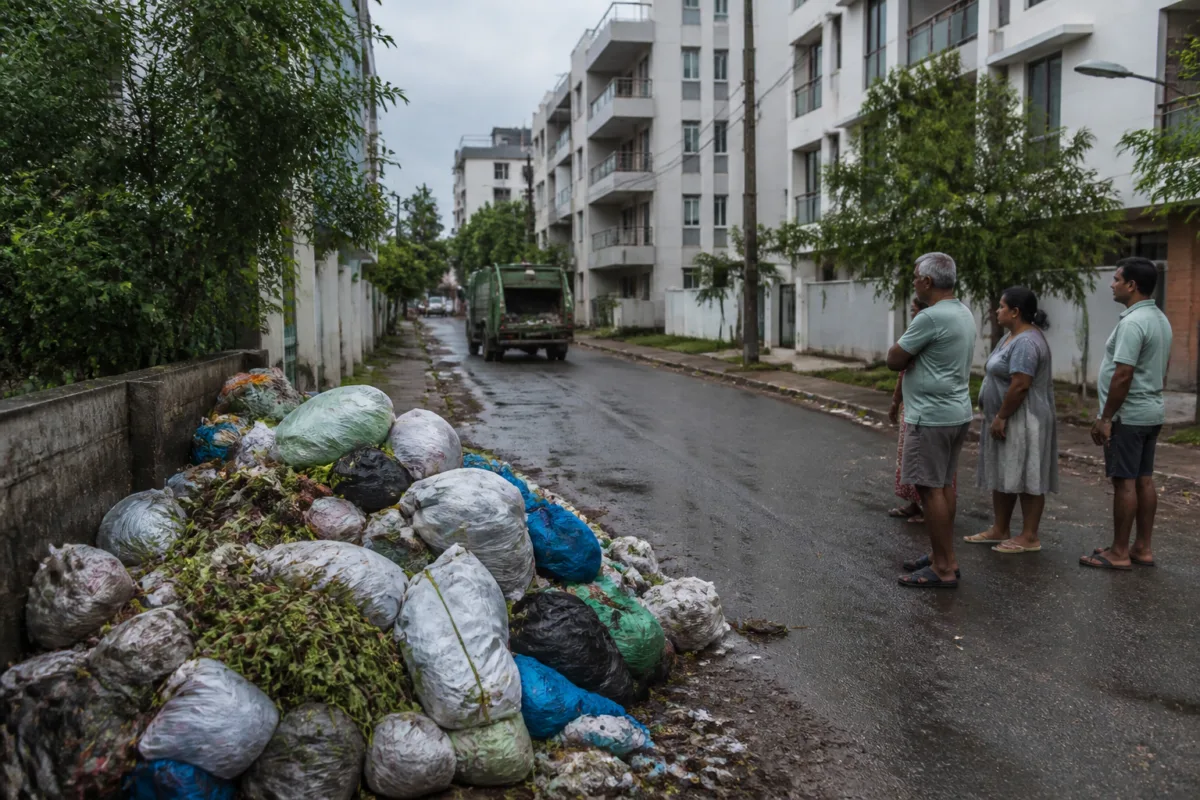
Kasavanahalli residents in Bengaluru have recorded severe gaps in wet waste collection, with pickups taking place on only 48 of 196 resident-reported days during a monitoring campaign, despite solid waste management rules requiring daily collection.
The data was collected during a pilot campaign conducted from October 21 to 28 through GEODHA, a citizen-driven platform that tracks garbage collection through resident check-ins. The exercise involved 67 residents across more than 20 streets and 15 layouts in Kasavanahalli.
Residents reported that wet waste was being collected less than twice a week on average, with a typical gap of four days between pickups. One resident reported going seven consecutive days without a collection. In another instance, a truck reportedly arrived but refused to take the wet waste because it was full.
The missed pickups have resulted in the accumulation of wet waste, which residents say contributes to dumping along roadsides and in public spaces. Dry waste collection was reported to be relatively more reliable, taking place approximately twice a week.
Pratul Venkatesh, founder of GEODHA, said the pilot was the first attempt by residents to systematically track daily garbage collection at the ward level. He said the data showed that collection was inconsistent even within the same neighbourhood, with residents living a few streets apart reporting different outcomes on the same day.
“When we escalate, officials maintain that trucks cover every block. The data shows collection is irregular and selective, and wet waste is frequently missed,” Venkatesh said.
A set of check-ins recorded on October 27 showed that only three of 36 residents reported receiving wet waste collection, while 33 reported missed pickups. The snapshot represented a collection rate of about 8 per cent among those respondents.
The monitoring campaign follows repeated complaints from Kasavanahalli residents about missed pickups, roadside dumping and deteriorating sanitation. The Kasamuktha Kasavanahalli team has submitted representations on behalf of more than 40 resident welfare associations to civic authorities and Mahadevapura MLA Manjula Limbavali, seeking reliable daily collection.
GEODHA also assisted residents in filing 47 complaints about missed collection through Sahaaya, Bengaluru’s official grievance platform. According to Venkatesh, all 47 complaints remain marked “Registered”, with no action recorded. He said the complaints were assigned to outdated or incorrect marshals.
The resident-generated data is also drawing attention to differences in how waste collection is organised across Bengaluru. Venkatesh said some areas have waste collectors segregating multiple waste streams on the vehicle itself, while others use separate trucks and schedules without adequate coordination to ensure that every household is serviced.
Residents are seeking more collection vehicles, stronger monitoring, transparent contractor payments and accountability for missed pickups. They have also demanded that collection records be verified before contractor bills are cleared and that complaints be routed to officials responsible for the affected locality.
GEODHA plans to expand the monitoring campaign across Bengaluru to assess whether waste collection services are being delivered as promised. In Kasavanahalli, residents’ immediate demands are daily wet waste collection, effective grievance redressal and measures to prevent waste from accumulating on streets.

