


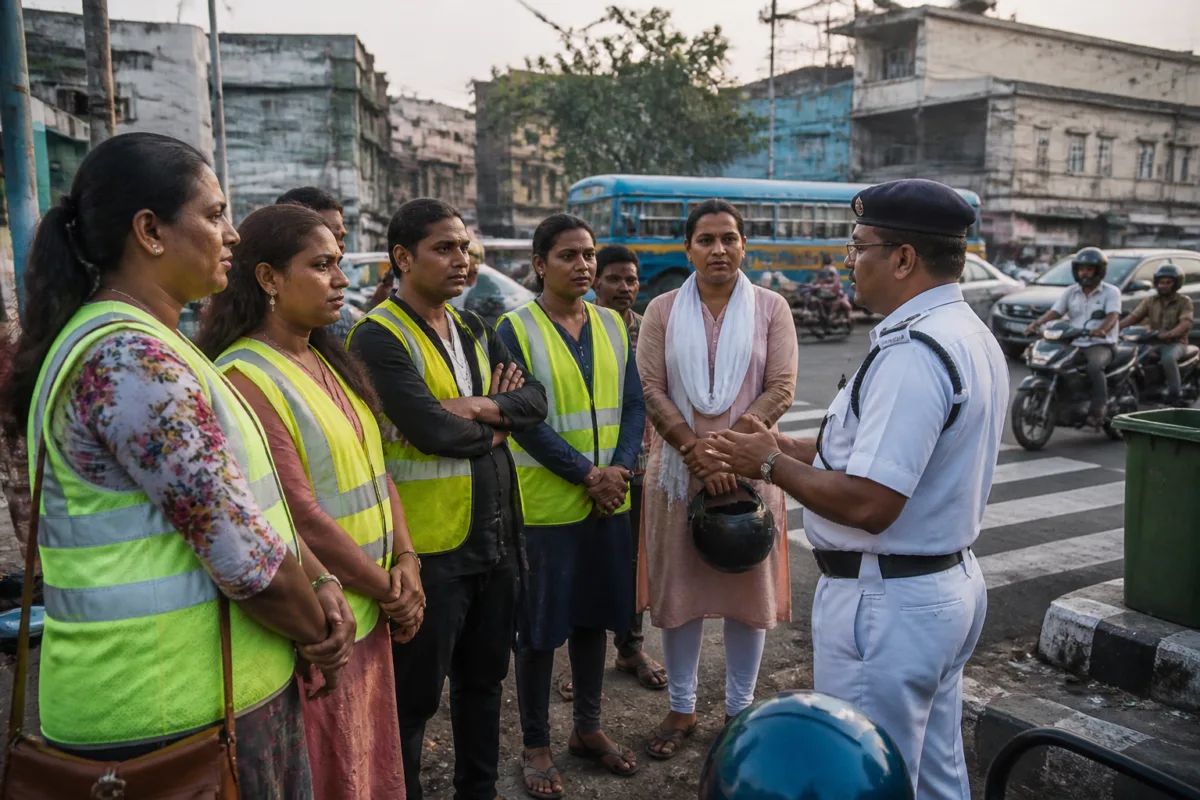
West Bengal plans to create a paid Brihannala Brigade in which transgender people would support road-safety outreach at traffic intersections or assist municipal bodies with follow-up on unpaid property taxes, state urban development and municipal affairs minister Agnimitra Paul said on November 20.
Paul announced the proposed programme at a press conference at Nagar Unnayan Bhavan. She said the initiative was backed by chief minister Suvendu Adhikari and would provide selected participants with a fixed monthly stipend.
Under the proposed road-safety role, police would train participants before deploying them at traffic intersections. Their duties would include reminding two-wheeler riders to wear helmets and motorists to use seat belts. They would also encourage commuters not to spit or litter, and to use designated waste bags instead of throwing rubbish from moving vehicles.
A second group would accompany municipal inspectors on household visits to follow up on overdue property-tax payments. According to Paul, participants would be trained to speak with residents courteously, explain the follow-up process and handle payment-related interactions professionally. The government intends the arrangement to support civic bodies facing staffing shortages in tax recovery, she said.
The proposal combines two different forms of urban administration: public-behaviour messaging in heavily used street spaces and doorstep engagement linked to municipal revenue collection. Property-tax recovery is a key municipal function because it supports the delivery and maintenance of civic services, although the report does not specify the cities or municipalities that would participate, the amount of the stipend or how the programme would be funded.
The employment component is aimed at transgender people who face barriers to education and formal work, according to the report. Paul said such discrimination leaves some people dependent on begging at traffic signals, on local trains or on other informal sources of income. A regular, paid public-facing role could therefore connect livelihood support with visible civic work, but the proposal’s effectiveness will depend on transparent recruitment, adequate training and clearly defined responsibilities.
The state has not yet disclosed how participants would be selected, how many people would be deployed or when the brigade would begin operating. It has also not outlined how participants would be supervised at intersections, how their safety would be protected during household visits or how complaints from residents and road users would be handled.
The programme takes its name from Brihannala, the identity Arjuna assumed while teaching dance and music during the Pandavas’ final year of exile in the Mahabharata. The character has cultural associations with transgender identities in India.
Until the government issues operational details, the Brihannala Brigade remains a proposed initiative rather than an active civic service. Its urban significance will depend on whether the final framework treats participants as trained public workers with defined protections and accountability, rather than as a symbolic presence at traffic signals or during tax collection visits.

