


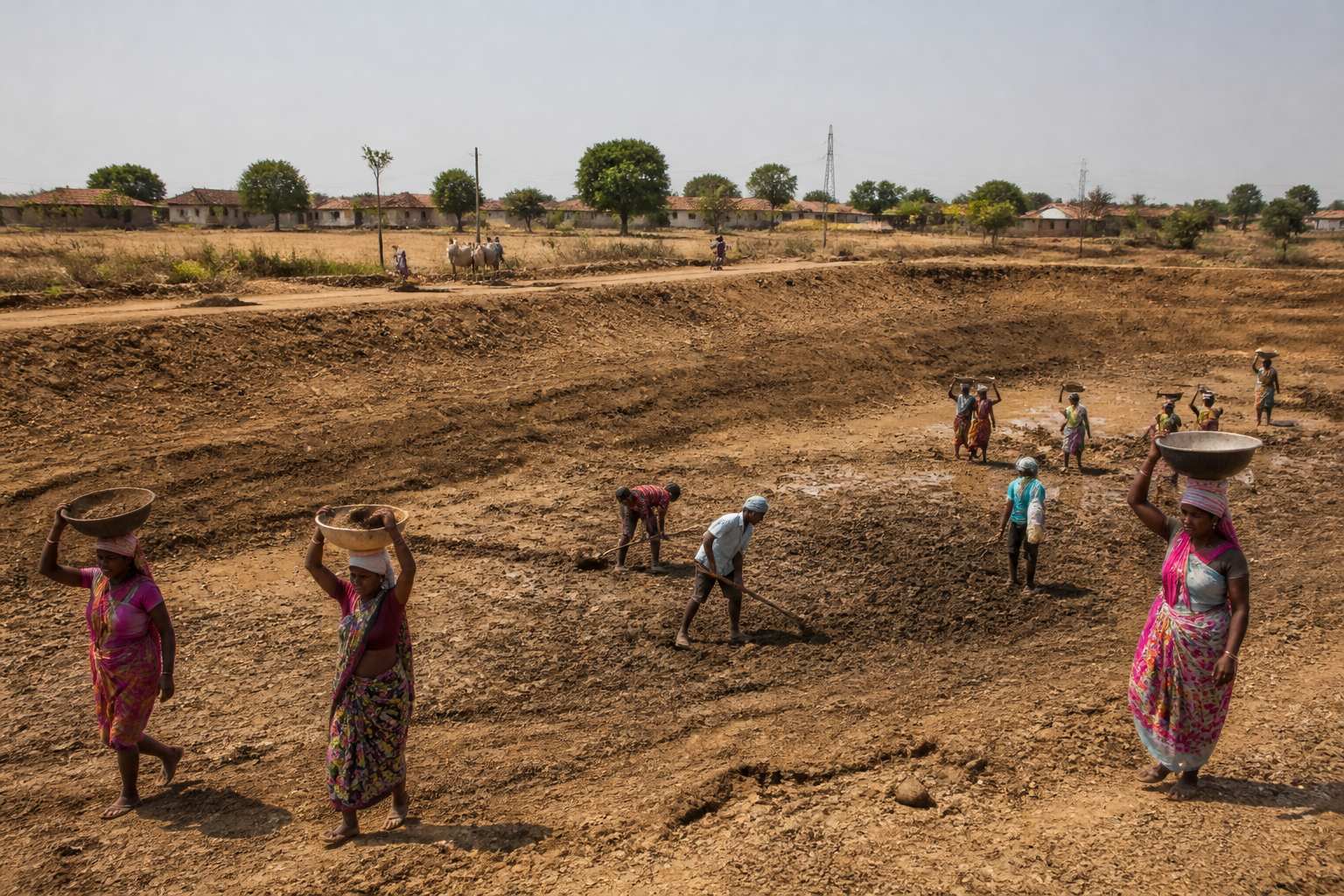
Karnataka generated two crore person-days of employment under the Viksit Bharat-Guarantee for Rozgar and Ajeevika Mission (Gramin), or VB-G RAM G, between July 1 and October 13, a 19% increase over the 1.7 crore person-days recorded under MGNREGA during the corresponding period last year.
The rise has come as Karnataka faces a severe rainfall deficit. Rural development and panchayat raj minister Eshwar Khandre said the increase was linked to drought conditions attributed to the El Nino effect and that work was provided to a larger number of rural poor, Dalits, disadvantaged unskilled workers and landless labourers.
VB-G RAM G replaced the Mahatma Gandhi National Rural Employment Guarantee Scheme in Karnataka from July 1. The programme has provided the highest number of person-days in Raichur, which recorded 24 lakh, followed by Bidar with 21 lakh and Koppal with 18 lakh.
The sharpest year-on-year increases were reported in Vijayanagara, where employment generation rose 340%, followed by Kalaburagi at 257%, Koppal at 207%, Ballari at 175% and Bidar at 173%, Khandre said.
The state has issued 87,164 new job cards this year and is carrying out e-KYC verification for existing cards. It is also conducting job card camps to help eligible households access employment. According to the minister, these measures have helped hundreds of families find work locally instead of migrating in search of employment.
The work being taken up under the programme includes desilting lakes, rejuvenating canals and ponds, undertaking social forestry, building cattle sheds and farm ponds, preventing soil erosion, constructing compost pits and improving rural roads. The scheme has also been expanded to include houses under housing schemes, community halls and rural bus stands.
The stated focus is on combining wage employment with permanent village assets. In drought-affected areas, works related to water bodies, soil conservation and farm ponds also address local pressure on agricultural livelihoods, although the report does not provide separate figures on the number or completion status of these assets.
Each family is eligible for up to 125 days of employment annually under the programme. The daily wage is Rs 382 for both men and women, allowing a household that obtains the full quota to earn up to Rs 47,750 in a year, Khandre said.
The employment increase comes alongside a widening official drought assessment. The Karnataka government declared nine more taluks drought-hit on Wednesday, taking the total number of drought-affected taluks to 226. Only 14 taluks, mostly in the coastal region, remain outside the list.
The latest figures place rural employment, drought relief and village infrastructure in the same administrative response. The next focus will be on expanding access through job cards and verification while implementing works across the affected taluks under the employment guarantee programme.

