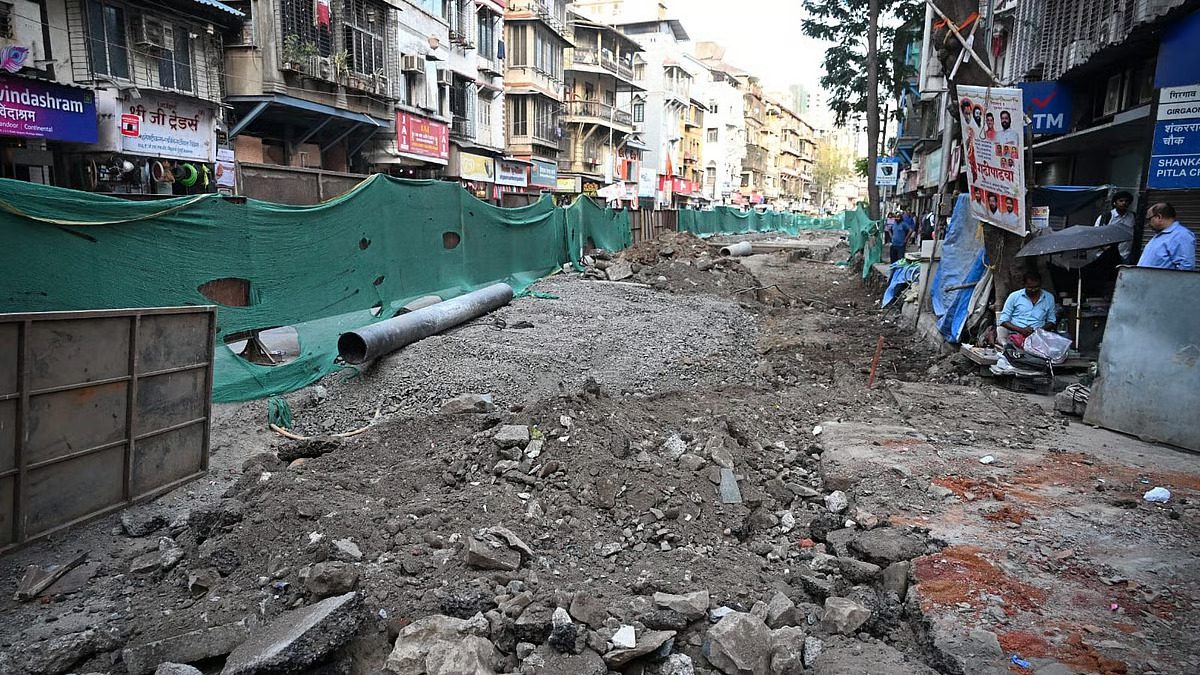
A long-delayed arterial road project in Mumbai’s western suburbs is nearing completion, offering potential relief to commuters in Kandivali East and adjoining neighbourhoods. The 120-foot Development Plan (DP) road connecting Magathane and Goregaon has progressed significantly following coordinated efforts between civic authorities and local stakeholders, highlighting the role of community engagement in unlocking stalled infrastructure.
The corridor, which has faced years of administrative, legal, and logistical hurdles, is designed to provide an alternative east–west link parallel to already congested routes. Its near-completion is expected to ease pressure on key junctions and improve connectivity to major transport corridors, including the Western Express Highway, which frequently experiences peak-hour congestion. Urban planners note that the Kandivali DP road Mumbai project represents a critical intervention in a part of the city where rapid residential growth has not always been matched by proportional expansion in road infrastructure. The delay in execution had led to bottlenecks affecting daily commuting patterns, particularly for residents dependent on limited east–west connectivity options.
A significant portion of the progress has been attributed to the clearance of encroachments along the alignment. More than 300 unauthorised structures were removed to enable road widening and continuity, a process often fraught with resistance in dense urban settlements. Officials involved in the project indicated that sustained coordination between civic departments and local residents helped streamline execution and reduce conflict.Community representatives played an active role in maintaining dialogue with authorities and supporting alignment decisions that ensured the road could be developed as originally planned. Urban governance experts suggest that such collaborative approaches are increasingly necessary in cities like Mumbai, where land constraints and overlapping claims often delay public infrastructure projects.
The project has also underscored the importance of consistent administrative oversight in driving timelines. Infrastructure specialists point out that many urban road projects stall not due to technical challenges but due to fragmented coordination between agencies, legal disputes, and shifting priorities. In this case, focused execution and stakeholder alignment appear to have accelerated progress in its final stages. Once operational, the Kandivali DP road Mumbai corridor is expected to significantly reduce travel time for several large residential clusters and improve access to commercial zones and transit nodes. It may also redistribute traffic flows currently concentrated on overburdened routes, contributing to more balanced urban mobility patterns.
However, experts caution that road expansion alone cannot serve as a long-term solution to congestion. Integrating such corridors with public transport systems, pedestrian infrastructure, and non-motorised mobility networks will be essential to ensure sustainable gains. Without this integration, improved road capacity may lead to induced traffic demand over time. As the project approaches completion, attention is likely to shift towards operational readiness, traffic management planning, and ensuring that the benefits are equitably distributed across surrounding communities. The outcome could serve as a reference point for similar urban infrastructure interventions across Mumbai’s growing suburbs.
Kandivali Residents Felicitate Civic Engineer For Accelerating DP Road Project