


Subheadline: Alternative-fuel vehicles surpassed petrol in India’s passenger-vehicle retail market in August, while rural demand outpaced urban growth across every major vehicle category.
Standfirst: India’s auto retail market reached a record August in 2026, but the headline number conceals a more consequential shift. CNG, hybrid and electric passenger vehicles together accounted for 41.95% of retail sales, narrowly exceeding petrol’s 40.85% share. At the same time, rural markets grew faster than urban markets across vehicle segments, with rural passenger-vehicle sales rising 24.99% year on year. The figures, released by the Federation of Automobile Dealers Associations and reported by Economic Times, point to two simultaneous changes in India’s mobility market: consumer fuel preferences are becoming more diversified, and demand is increasingly being shaped outside the largest urban centres. This analysis examines what the August data confirms, what it does not yet establish, and why the September-November festive period will be a more important test of whether these shifts endure.
India’s auto retail market recorded its biggest-ever August in 2026, with total vehicle sales reaching 24,23,201 units, up 17.51% from August 2025, according to the Federation of Automobile Dealers Associations, or FADA. The result came even as sales declined 6.48% from July, which had been a record month for the industry.
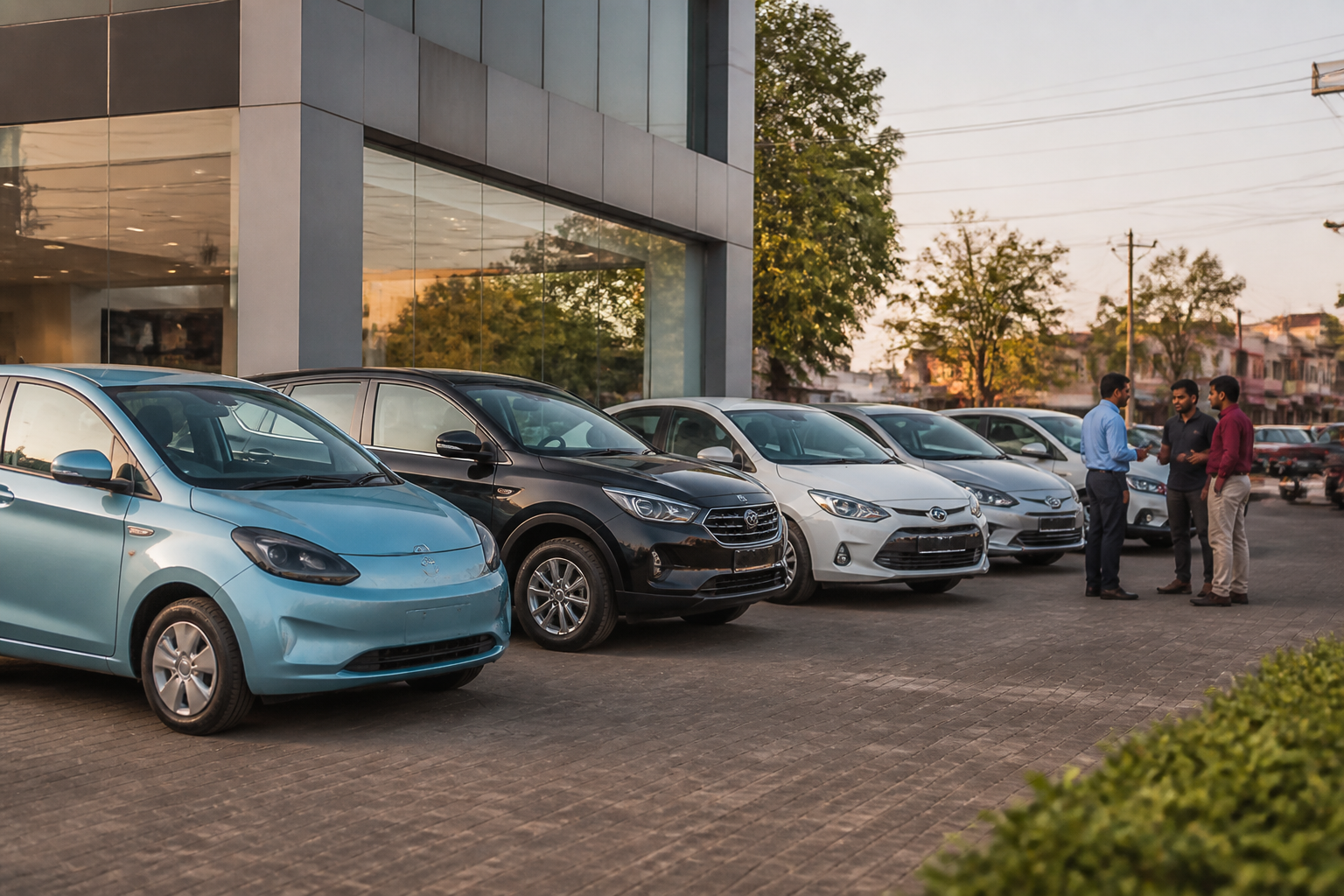
The most significant change was in passenger-vehicle fuel preferences. Vehicles using CNG, hybrid systems and electric power collectively accounted for 41.95% of passenger-vehicle retail sales in August. Petrol vehicles accounted for 40.85%. It was the first time that the combined share of these alternative fuels surpassed petrol in India’s passenger-vehicle retail market.
The difference was narrow, but the direction of movement was notable. According to the supplied report, petrol had led the combined alternative-fuel category by nearly 11 percentage points a little over a year earlier. The August figures therefore represent more than a monthly change in rankings. They show that the passenger-vehicle market is no longer organised around petrol as the overwhelmingly dominant fuel choice, at least in retail-share terms.
The data does not establish that one alternative technology has replaced petrol. CNG, hybrids and electric vehicles are grouped together, even though their operating models, infrastructure requirements and consumer segments differ. The figures instead show that the combined presence of these technologies has become large enough to challenge petrol’s position. Without a separate breakdown for each fuel type, the supplied evidence cannot identify which alternative is driving the shift or whether the change is concentrated in particular price bands, vehicle categories or locations.
The second major feature of the August data is the strength of rural demand. Rural retail sales rose 19.79% year on year, compared with 15.17% growth in urban markets. Rural passenger-vehicle sales increased 24.99%, more than twice the 10.93% growth recorded in urban areas.
That gap changes the way the market’s expansion should be understood. The August increase was not limited to metropolitan or large-city demand. It included a stronger contribution from rural markets across all vehicle categories. In passenger vehicles, where the fuel transition was most visible, rural growth was particularly pronounced. The supplied figures do not show whether rural buyers were more likely than urban buyers to choose CNG, hybrids or electric vehicles, so the relationship between the rural demand surge and the alternative-fuel shift remains unestablished.
The rural performance also has to be read alongside the weakness in tractors. Tractor sales were nearly flat year on year, increasing 0.84%, but fell 25.03% from July. FADA said the rural-urban deficit in tractors widened to around 13%, indicating continued monsoon-linked pressure on the segment. This creates an important distinction within the rural story: stronger retail demand across the broader vehicle market did not translate into equivalent momentum for agricultural vehicles.
The contrast suggests that rural auto demand is not a single, uniform indicator of economic strength. Passenger vehicles and other categories may respond to different purchasing conditions from tractors. The report does not provide enough information to determine whether the tractor slowdown resulted from farm incomes, monsoon timing, inventory decisions, purchase postponement or other factors. It does, however, show that the broader rural upturn coexisted with a specific weakness in one segment closely linked to agricultural activity.
Seasonality complicates the comparison. FADA attributed the month-on-month decline from July to the seasonal monsoon lull and a shift in the festive calendar. Ganesh Chaturthi and the spillover of Onam-led buying moved into September, meaning that some purchases that might otherwise have occurred in August were delayed.
The year-on-year comparison also carries a qualification. FADA said buyers had deferred purchases in August 2025 while awaiting a GST 2.0 rate cut. That relatively weak base contributed to the 17.51% annual increase recorded this August. The record therefore contains both genuine momentum and a comparison effect. The figures are strong, but they should not be treated as a clean measure of underlying demand without considering the timing of last year’s postponed purchases and this year’s festive calendar.
This is why the association identified showroom conversion from September through November as the more meaningful test. August recorded high retail volumes, but the festive period will reveal whether buyers who delayed purchases actually return to dealerships and complete transactions. It will also show whether the alternative-fuel share is sustained when the market receives the support of the main buying season.
For cities, the fuel-mix shift has implications beyond vehicle sales. Passenger vehicles are part of the wider urban mobility system, and changes in the types of vehicles entering the market can affect the demand for fuel, charging and refuelling infrastructure. However, the supplied material does not include data on charging points, CNG stations, vehicle use, emissions or city-level adoption. It therefore supports the conclusion that consumer choice is diversifying, but not a claim that urban transport emissions or congestion have already changed as a result.
The combined category also highlights a policy and planning challenge. CNG, hybrid and electric vehicles are often discussed as a single alternative to petrol, but they require different forms of support. CNG depends on refuelling availability. Electric vehicles require access to charging, reliable power and suitable vehicle economics. Hybrids reduce reliance on petrol in a different way from vehicles that operate entirely or partly on electric power. The August retail data establishes the market outcome, but it does not reveal whether infrastructure provision is keeping pace with the change.
The rural-urban numbers raise a parallel question about the geography of India’s vehicle transition. Rural markets grew faster than urban markets in every vehicle category in August, yet the supplied report does not separate the fuel preferences of rural and urban buyers. If alternative-fuel adoption is concentrated in cities, the national shift may reflect a different pattern from the overall rural demand surge. If it is spreading through smaller towns and rural markets, the infrastructure requirements would be broader than a metropolitan transition. The available figures cannot resolve that distinction.
FADA President Sai Giridhar described August as the biggest-ever August in Indian auto retail while also pointing to the seasonal monsoon lull and the delayed festive calendar. He said there was significant attention on whether companies could get the rural two-wheeler mix right. The comment reflects the uneven nature of the market: headline growth is strong, but manufacturers and dealers still have to match products and inventory to changing local demand.
The August data confirms three developments. India’s total auto retail market reached a new August high; rural markets outgrew urban markets across vehicle categories; and alternative fuels collectively surpassed petrol in passenger-vehicle retail sales for the first time. It does not yet confirm that the shift is permanent, that electric vehicles are responsible for most of it, or that the change is evenly distributed across cities and rural markets.
The next evidence will come from the September-November sales period. That window will show how much of August’s performance reflected deferred festive demand, how the rural market performs after the monsoon-linked slowdown, whether tractor sales recover and whether alternative fuels retain their lead over petrol. Until then, the August figures are best understood as an important market signal rather than a completed transformation of India’s mobility system.
