Hyderabad Traffic Reset Shifts Focus To Public Transport
HYDERABAD: Hyderabad’s growing dependence on private vehicles is prompting urban planners and citizens to push for a different approach to mobility. A proposed six-month action plan focuses on buses, MMTS, walking, cycling, parking management and stricter traffic enforcement instead of relying mainly on new road capacity. The shift could affect how future infrastructure and real estate growth are planned across the city.
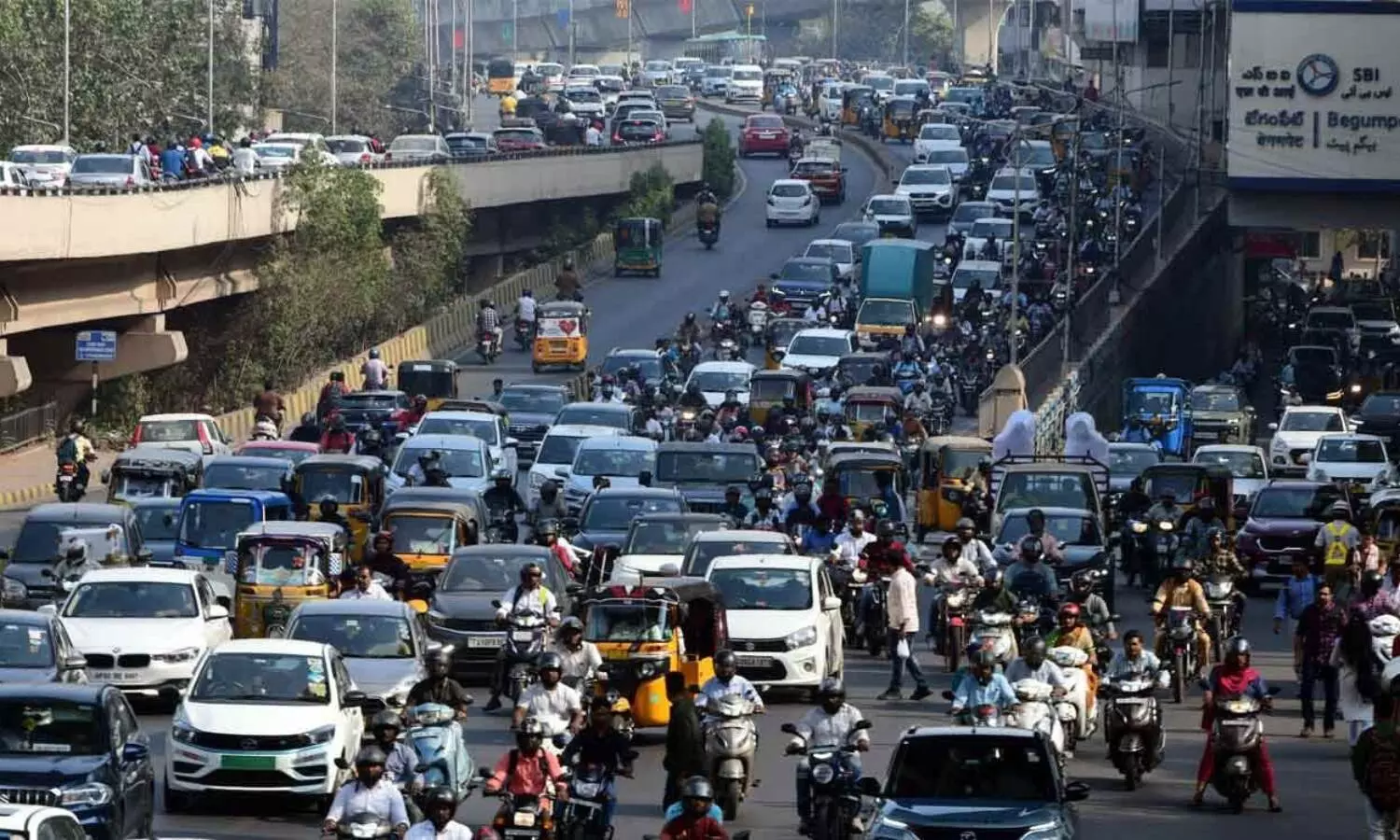
The case for a Hyderabad traffic reset is supported by a clear change in travel behaviour. Data presented by the citizen mobility campaign Move Hyderabad shows that the bus share of daily trips fell from 42% in 2011 to 25% in 2024. Over the same period, car trips rose from 4% to 16%, while two-wheelers reached 45%. The trend points to a broader infrastructure challenge. More road space can accommodate traffic for a period, but it does not necessarily reduce dependence on private vehicles. Hyderabad’s own Comprehensive Transportation Study has long recognised the importance of bus and rail-based mobility in the metropolitan transport system. The proposed measures include restoring MMTS services towards earlier levels, increasing bus availability and improving connections between buses, Metro and suburban rail. Bus-priority lanes are also being considered on busy corridors. The approach is significant because reliable public transport can reduce the need for individual vehicle trips while making commuting more affordable.
Parking policy is another major part of the proposed Hyderabad traffic reset. The recommendations include ending free on-street parking, acting against illegal parking and using parking limits rather than minimum requirements for new developments. Such measures could influence how commercial and residential projects allocate valuable urban land. The plan also gives greater importance to pedestrians and cyclists. Continuous footpaths, safer crossings, protected cycle tracks and bicycle parking have been proposed. These interventions have a wider environmental value, as better walking and cycling infrastructure can reduce short vehicle trips and improve access to public transport. Employers and schools could also have a role. Large workplaces may be encouraged to prepare mobility plans covering parking, carpooling and public transport. Shared school transport could similarly reduce peak-hour vehicle movements.
The proposals arrive as Hyderabad continues to expand major road infrastructure. Current works around KBR Park have already reduced available road space and prompted a one-way traffic arrangement during ongoing flyover and underpass construction. For the city, the immediate test is whether mobility policy can move beyond increasing vehicle capacity. Better public transport, safer streets and more disciplined parking could allow Hyderabad to accommodate growth without continually dedicating more land and investment to private vehicles.