


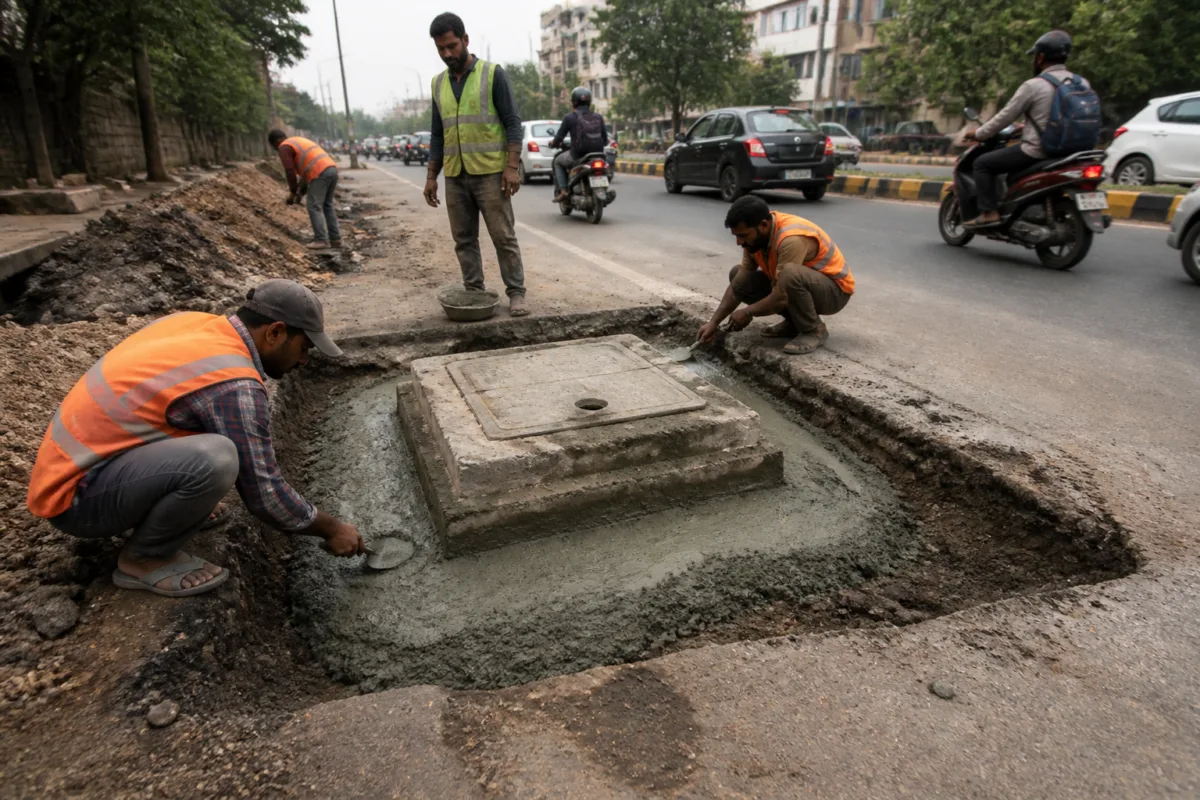
Pune Municipal Corporation is set to spend about Rs 7.20 crore to repair and bring 3,900 road chambers to the correct level, even as concrete and aggregate from several repairs carried out last year have reportedly crumbled, raising questions about construction quality and the value of repeated expenditure.
The chambers serve stormwater drains and sewerage pipelines across Pune. When they are lower than the road surface, they can create depressions; when they are higher, they form raised obstacles. Sakal reported that such uneven chambers have caused two-wheelers to skid and have also damaged vehicles, although the report did not provide a separate accident count.
According to information cited by the report, Pune has about 57,500 stormwater-drain chambers and nearly 1.10 lakh sewerage chambers. Their maintenance is handled by the Pune Municipal Corporation’s road and sewerage departments, which issue annual tenders and appoint contractors for the work.
The latest tender has been issued by the sewerage department for five circles and covers 3,900 chambers identified for repair from a list of 6,000 damaged chambers received by the civic body in April. The reported cost works out to Rs 18,274 per chamber.
The report said that the five contractors who worked on the repairs last year again qualified under the conditions of this year’s tender. Last year, the road department had issued a tender worth about Rs 25 crore for pothole repairs and bringing chambers to road level. This year’s tender for chamber-level repairs has been issued by the sewerage department.
Municipal Commissioner Navalkishor Ram had directed that all maintenance and repair works be carried out through ward offices. However, the chamber work is being undertaken through the main department, with the report citing the higher value of the work as the reason.
Vishal Haribhakt, chief engineer of the sewerage department, said the work on the 3,900 chambers would be completed within the next three months. He said the same contractors from last year were being used again and that defects should be reported to the civic body. The corporation would carry out corrective work and take action against those responsible if poor-quality work was found, he said.
The municipal department has prescribed a method for the repairs through a standard operating procedure. It involves excavating a 1.5-metre-by-1.5-metre square around a chamber, laying 200 millimetres of cement concrete and a layer of MG Chemical, and then placing an asphalt or concrete layer depending on the road surface. The chamber is to be brought level with the road. The work carries a one-year defect liability period.
The reported deterioration of portions of last year’s repairs places the focus on whether the prescribed method, supervision and defect-liability provisions will prevent the same problem from recurring. The immediate public impact will depend on whether the repaired chambers are brought level with surrounding road surfaces and remain intact under traffic and weather conditions.

