Hyderabad Minister Seeks Unified National Water Framework
HYDERABAD: Telangana has called for a unified national approach to water security, with a focus on better planning, tracking and long-term maintenance of water conservation assets. The proposal seeks to move water management beyond individual departments and treat it as a coordinated public priority.
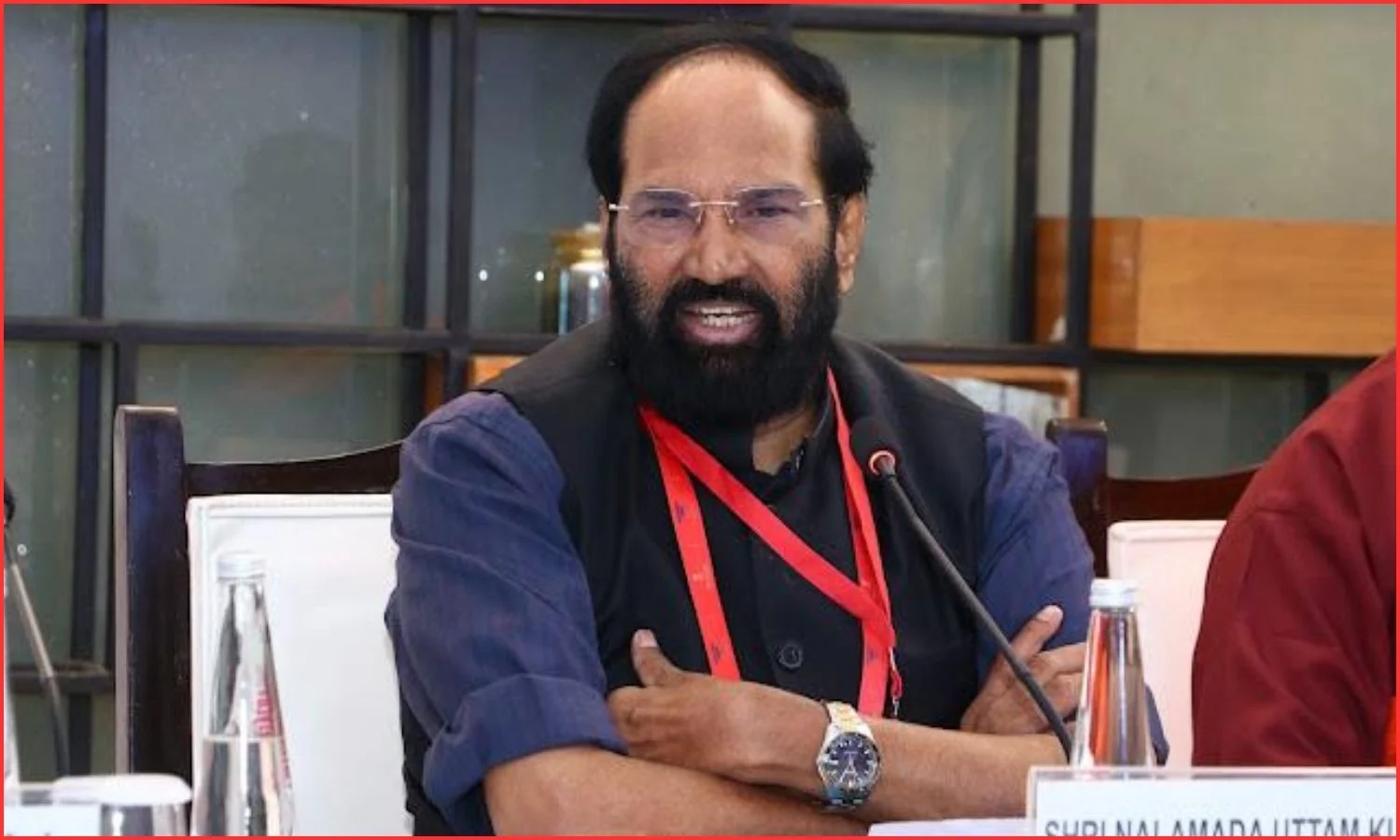
The state’s Irrigation and Command Area Development Minister urged the Centre to create a system where every water conservation structure is uniquely identified, geo-tagged and placed under a clearly defined agency or custodian. The aim is to make investments easier to track and ensure that completed projects continue delivering measurable benefits. Such an approach could address a common challenge in water management: the gap between creating infrastructure and maintaining it. Tanks, check dams, recharge structures and other assets can lose their effectiveness when responsibility is divided between departments or when maintenance is not clearly assigned. Telangana has also proposed bringing several existing funding and development programmes together. These include MGNREGS, the Pradhan Mantri Krishi Sinchayee Yojana, Finance Commission grants, CAMPA, watershed programmes, state schemes and corporate social responsibility initiatives.
Better coordination could reduce duplication and improve the use of public funds. It could also help authorities identify areas where investment is needed most instead of implementing separate projects without a common monitoring system. The proposal is particularly relevant for states where water conservation depends on thousands of small and medium assets spread across rural areas. A centralised digital record could help officials monitor the condition of these structures and identify projects requiring repair or restoration. Telangana has cited its water conservation work as an example of how large-scale asset restoration can be organised. The state reported that it was recognised as the best-performing state under the Jal Sanchay Jan Bhagidari initiative in 2025.
Of the 44,360 tanks and water bodies identified across the state, work had been taken up on 28,739, with restoration completed for 22,428. These figures indicate the scale of the infrastructure involved and the need for consistent monitoring after restoration. The state’s 2026–29 plan also proposes irrigation facilities covering 17.28 lakh acres, with an estimated investment of ₹46,110 crore. Beyond funding, implementation will depend on land acquisition, environmental approvals and coordination over inter-State water issues. The larger question is whether a unified framework can turn individual conservation projects into a connected water-security network. For Telangana and other water-stressed regions, the success of such a system will ultimately depend not only on how many assets are created, but on how effectively they are maintained and how much water benefit they deliver over time.