


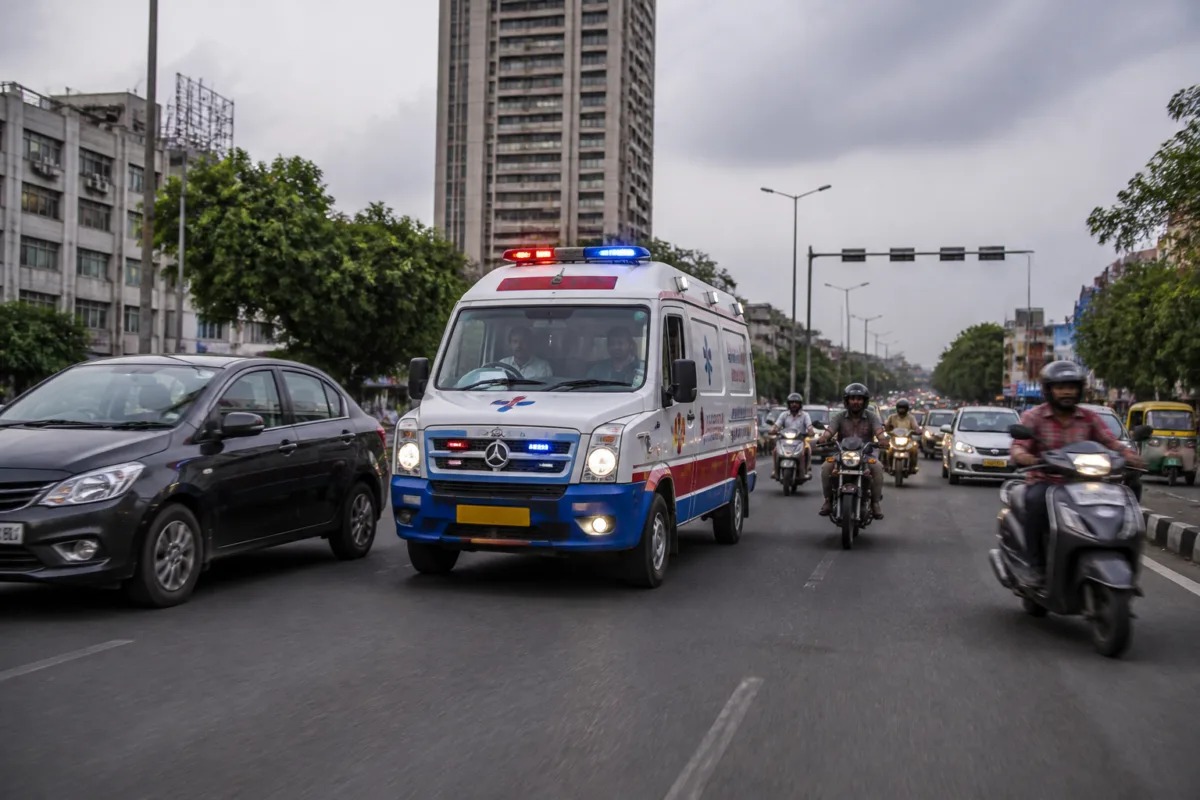
Gujarat’s 108 emergency service recorded 50,979 cases between October 11 and 19, as festive travel, increased road movement and changes in food consumption coincided with a heavy demand for ambulance support across the state.
The figure was reported by Sandesh, which cited an analysis of cases handled by the Gujarat 108 emergency service. On October 19 alone, the service received 5,831 emergency calls from across Gujarat, according to the report.
Pregnancy and childbirth-related emergencies accounted for the largest category during the nine-day period, with 10,943 cases recorded. Road accidents were the second-largest reported category, at 6,817 cases, during a period marked by increased vehicle movement on roads for festive travel.
The service also recorded 6,314 cases involving severe stomach pain, which the report linked to changes in food consumption during the festive period. A further 5,842 cases involved interpersonal conflict, assaults and general injuries. The 108 ambulance teams responded to these incidents and transported patients to hospitals, according to the report.
The figures also included 4,348 cases of serious breathing difficulties, 2,955 heart-related emergencies and 1,497 cases involving poisoning or venomous bites. The report presented these categories as part of the emergency caseload recorded during the period.
The concentration of cases highlights the range of responsibilities handled by Gujarat’s emergency medical transport system. The 108 network is required to respond simultaneously to time-sensitive maternal emergencies, trauma from road crashes, acute illness and injuries arising from public incidents. Each category places different demands on control-room triage, ambulance availability, paramedic response and hospital coordination.
The road accident figures are particularly significant during periods of heightened travel because ambulance response is affected not only by the number of incidents but also by traffic conditions and the distance to hospitals. The report does not provide a district-wise breakdown, response-time data, occupancy levels or details of the number of ambulances deployed during the nine-day period.
Similarly, the reported pregnancy and childbirth cases do not include information on the locations of incidents, the proportion requiring referral to higher-level facilities or the outcomes after hospital admission. Those details would be needed to assess how the surge affected individual districts and the wider public healthcare network.
The report said Gujarat 108 control-room personnel and ambulance staff worked around the clock to transport patients to hospitals during the critical treatment window commonly described as the golden hour. It did not identify any new operational measure, temporary deployment plan or additional funding announced in response to the higher call volume.
The immediate official next step reported is the continued operation of the 108 control rooms and ambulance fleet as emergency calls are received. Further assessment would depend on the service publishing more detailed information on district-level demand, response times, hospital transfers and case outcomes.

