


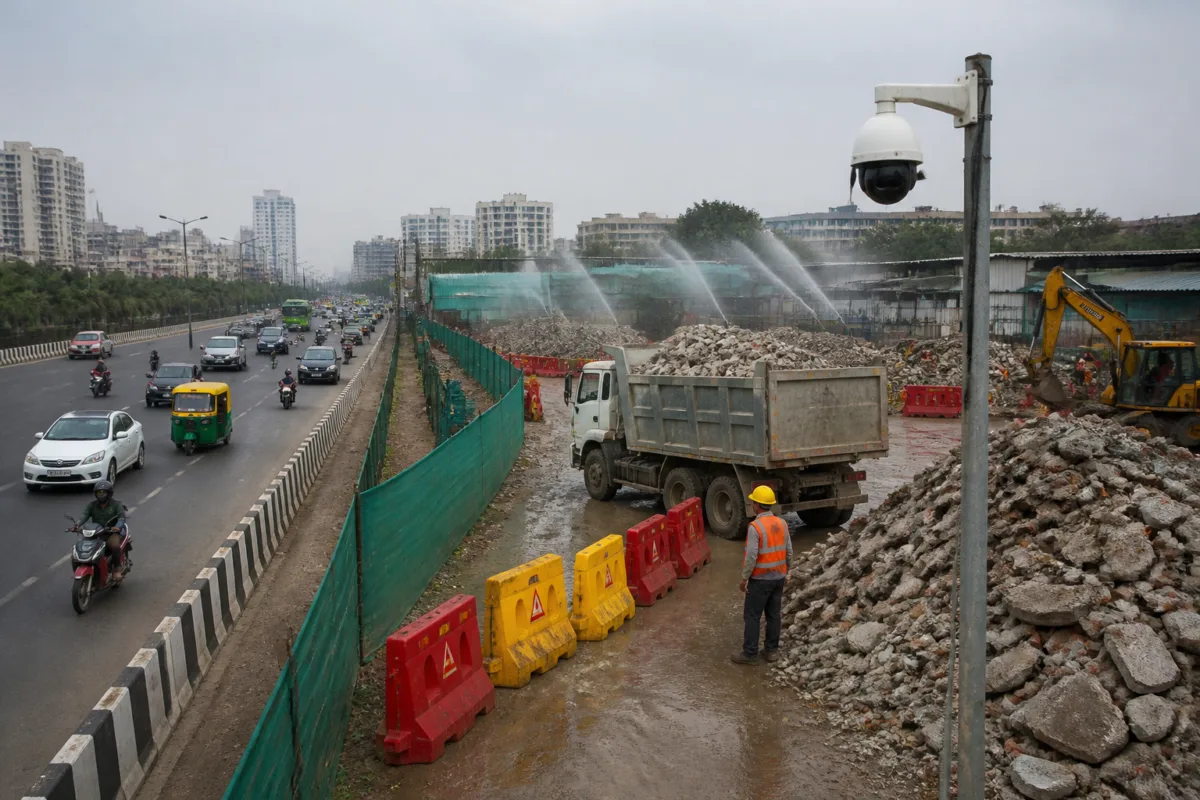
The Municipal Corporation of Delhi (MCD) has made all 125 secondary construction and demolition (C&D) waste collection centres operational ahead of winter, when air pollution typically worsens, while adding surveillance, dust-control measures and free doorstep collection for up to 20 metric tonnes of waste.
MCD officials said that as of October 1, signage and barricades or protective sheets had been installed at 118 centres. Water-sprinkling arrangements were available at 116 sites, while 113 centres had been equipped with 360-degree cameras to discourage dumping outside designated areas.
Of the 125 centres, 88 are registered on the Delhi Pollution Control Committee portal, according to an MCD official. Waste collected at the secondary centres is transported to processing plants by the respective concessionaires.
The civic body has reiterated that residents and waste generators can deposit up to 20 MT of C&D waste at the centres without paying a collection charge. The Delhi Malba Collection App, launched in March, allows users to request removal from their premises. Junior engineers are mapped to requests on the app, after which MCD vehicles or registered transporters collect and move the waste to a secondary C&D centre.
The free collection limit was earlier 1 MT but has now been increased to 20 MT after the earlier facility received a limited response. Waste quantities exceeding 20 MT attract a processing fee because the material is sent to the nearest C&D waste processing plant. Zone-wise details of the secondary collection centres are available on the MCD’s C&D portal.
Delhi currently generates approximately 6,000 MT of C&D waste every day. The MCD operates four processing plants at Burari, Rani Khera, Bakkarwala and Shastri Park, with a combined capacity of 5,000 tonnes per day. A fifth plant is under construction at Tehkhand.
According to the civic body, the plants process C&D waste into coarse sand, fine sand, recycled aggregates and screened soil. Screened soil is used to fill low-lying areas, while recycled aggregates and stone dust are used to produce paver blocks, tiles and concrete blocks for footpaths, berms, boundary walls and other civil works. MCD officials said efforts were also under way to improve processing efficiency at the four operational plants.
The expanded system links collection centres, the mobile app, junior engineers, registered transporters, concessionaires and processing plants. MCD expects the arrangement to reduce unauthorised dumping and improve the recovery of reusable material from construction waste.
Separately, the civic body flagged off 12 newly procured truck-mounted multipurpose vehicles as part of its air-pollution mitigation measures. The vehicles are fitted with anti-smog guns, water sprinklers and jetting systems, and each has a water tank capacity of 7,000 litres.
Mayor Pravesh Wahi said the vehicles would support road washing, drain jetting and the cleaning of public toilets in addition to their dust-control functions. The MCD’s next operational focus is to use the collection and processing network, along with the new vehicles, during the winter period when dust and waste dumping are closely linked to Delhi’s pollution-control efforts.

