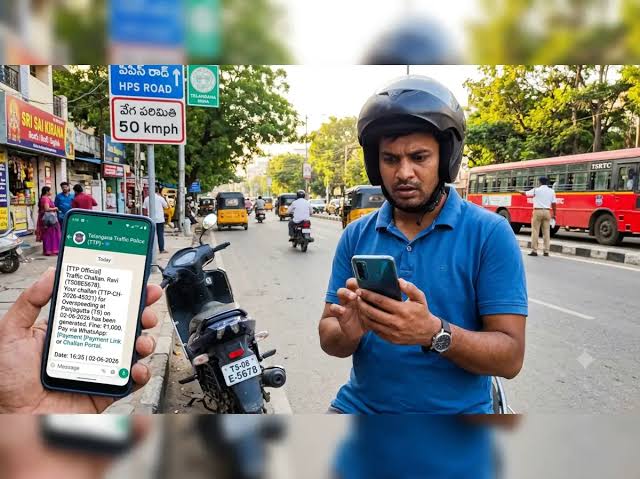
Hyderabad considers technology led traffic fine recovery
HYDERABAD: Telangana is examining whether traffic penalties can eventually be recovered through motorists’ FASTag accounts, signalling a possible shift towards more automated enforcement in Hyderabad. The proposal, discussed by senior traffic police officials with the metropolitan planning authority, comes as the city looks for ways to improve compliance without relying only on conventional policing.
The proposal is still under consideration and does not amount to an approved system. It follows a broader push by the state to use digital tools to improve traffic enforcement. Earlier this year, the state government also discussed linking vehicle owners’ bank accounts with traffic records to facilitate automatic recovery of unpaid fines. FASTag is already an established electronic payment mechanism for road tolls, making it a potentially useful platform for automated transactions. However, using it for traffic penalties would require clear institutional arrangements, secure data sharing and safeguards for motorists before any such system could be implemented. The issue is particularly relevant as Hyderabad faces increasing pressure on its road network. Traffic enforcement is already supported by cameras, cashless systems and electronic payment gateways, according to the Hyderabad Traffic Police. The department lists citizen-friendly enforcement and technology-based monitoring among its traffic initiatives.
For citizens, the proposed FASTag traffic fine mechanism could make it harder for persistent offenders to leave penalties unpaid. At the same time, an automated deduction system would need transparent notification, an accessible dispute process and strong protection against erroneous charges. These safeguards would be important if enforcement is increasingly shifted from physical interactions to automated financial transactions. The proposal also raises a wider question about the role of penalties in road safety. Traffic fines can discourage violations, but enforcement alone cannot address unsafe road design, inadequate public transport or poor last-mile connectivity. A people-first mobility strategy needs to combine enforcement with infrastructure that makes safe travel easier. Urban transport coordination will also matter. HMDA hosts the Hyderabad Unified Metropolitan Transport Authority, whose mandate includes coordinating traffic and transportation measures across the metropolitan region. Better coordination between transport agencies, traffic police and technology systems could help ensure that enforcement forms part of a broader mobility strategy rather than operating in isolation.
For Hyderabad, the next step is likely to be determining whether the FASTag traffic fine concept can work within existing financial and enforcement systems while protecting motorists’ rights. If adopted, the technology could strengthen compliance, but safer roads will ultimately depend on combining digital enforcement with better public transport, parking management, road design and responsible driving.