Hyderabad Anjayanagar Structures Face Safety Action
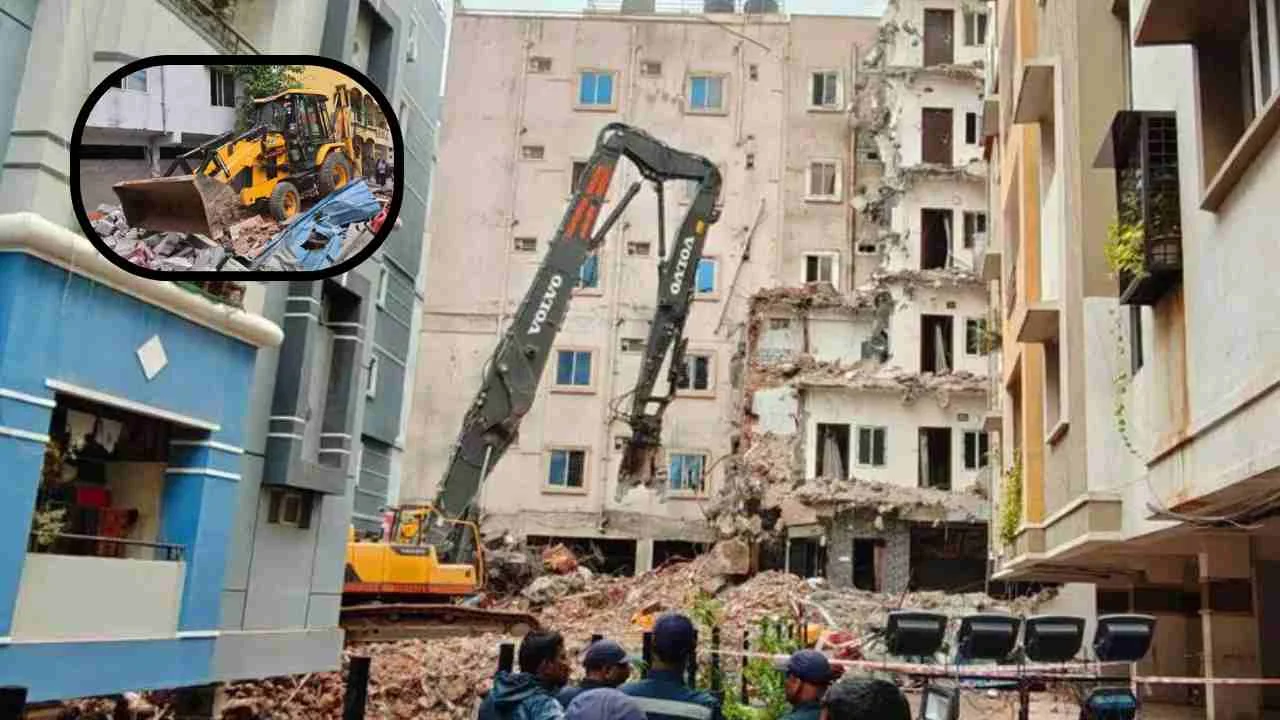
HYDERABAD: Authorities have begun removing structurally unsafe buildings in Anjayanagar after a seven-storey structure collapsed in the Sherilingampally area, prompting inspections of neighbouring properties. The operation has put illegal construction, drainage-canal encroachments and weak structural design under scrutiny, while raising wider questions about enforcement in Hyderabad’s rapidly developing residential neighbourhoods.
Teams from HYDRA and the local civic administration began demolition work after the collapse and continued operations on Monday. Officials said residents of buildings identified as unsafe were evacuated before demolition activities began, with teams proceeding cautiously to avoid damaging adjacent properties. The operation expanded after residents approached officials with concerns about other buildings near the collapsed structure. Authorities are now examining those properties and are expected to take action where structural or planning violations are established. According to the HYDRA commissioner, the collapsed structures were built on plots of around 50 square yards, with permissions reportedly granted for substantially fewer floors than were eventually constructed. The official also pointed to alleged encroachment on a flood drainage canal as part of the circumstances surrounding the development.
The combination of small plots, additional floors and foundations designed for lower loads creates a significant structural risk. When buildings are constructed beyond approved specifications, the original design assumptions may no longer hold, particularly where foundations and columns were not engineered for the additional weight. The drainage issue adds another layer to the problem. Encroachment on natural or engineered flood pathways can restrict the movement of stormwater and increase exposure to flooding during intense rainfall. In a city experiencing rapid construction and increasingly variable weather, protecting drainage corridors is therefore not only a planning requirement but also a component of urban resilience. The demolition itself presents a difficult engineering challenge. Removing a damaged multi-storey structure in a densely built neighbourhood requires careful sequencing to prevent debris, vibration or structural movement from affecting legally constructed buildings nearby. Authorities have indicated that this is why the removal process is taking longer than a conventional demolition.
The Anjayanagar incident also highlights a broader enforcement challenge for Hyderabad. Rapid densification can create strong demand for housing, but informal additions and construction beyond approved plans can undermine both public safety and neighbourhood infrastructure. For residents, the immediate priority is identifying unsafe structures before another failure occurs. A more durable response would involve regular structural inspections, stronger monitoring of construction permissions and protection of drainage corridors. Ensuring that development remains within approved structural and environmental limits will be essential as Hyderabad continues to expand into increasingly dense residential areas.
Hyderabad Anjayanagar Structures Face Safety Action