


Brent crude has crossed $100 a barrel again after a fresh escalation in the Middle East, reviving a familiar question for cities: how quickly does a geopolitical shock in an oil-producing region become a transport, logistics and household-cost problem on the ground?
The immediate event, reported by the Times of India on September 9, is a sharp rise in global crude prices after attacks on oil facilities and tankers, along with missile exchanges involving Iran, the United States and its regional allies. Brent crude rose 2.57% to $100.40 a barrel, while US West Texas Intermediate gained 2.10% to $94.98. The move marked the first time in almost six weeks that Brent had returned to triple-digit territory.
For urban economies, the significance is not limited to the price displayed on an international commodities exchange. Oil is embedded in the daily functioning of cities through road transport, freight movement, aviation, construction logistics and the distribution of food and manufactured goods. A sustained increase in crude prices can therefore affect both the cost of moving people and the cost of supplying the urban marketplace.
The price rise followed a deterioration in the conflict. According to the report, the US military said it had struck five Iranian tankers after attempted missile attacks on a Navy warship. Separately, attacks by an Iranian-backed Houthi rebel group set oil facilities in Saudi Arabia on fire. Iran also launched missiles towards US targets in Jordan, while Jordanian air-defence systems intercepted 18 of the 20 missiles fired from Iranian territory. The remaining two landed in unpopulated areas, the report said.
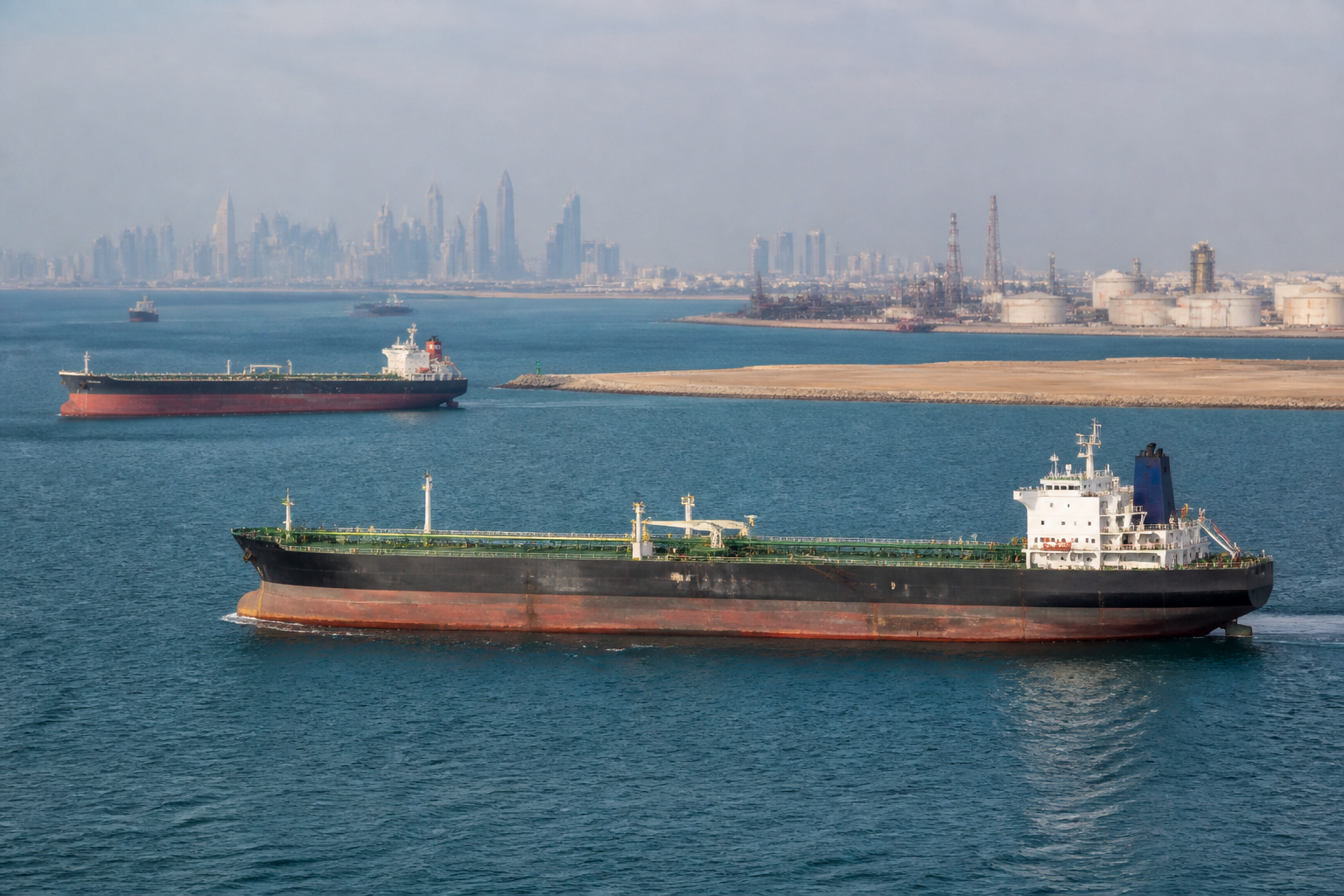
These developments matter to oil markets because they combine direct damage to energy infrastructure with a threat to the routes through which oil moves. The Strait of Hormuz remains the central flashpoint. Almost one-fifth of the world’s oil passed through the strategic waterway before the war began, according to the report. Any sustained concern over the security of that route can add a risk premium to crude prices even before a large, confirmed loss of supply occurs.
That distinction is important for understanding how oil shocks reach cities. Prices can rise because production has fallen, but they can also rise because traders expect future disruption, higher insurance costs, longer shipping routes or difficulty accessing supply. In each case, urban consumers and businesses may face consequences through fuel, freight and service costs, although the timing and scale of those consequences can differ.
The report describes an oil market that was already moving higher before the latest escalation. Brent had risen for four consecutive sessions, with gains of more than 1% on each day. It had increased by a quarter since early August. At the same time, the International Energy Agency was cited as estimating that global oil supply could fall by 4.3 million barrels per day this year, or about 4%.
That combination of tightening supply expectations and heightened geopolitical risk creates an unstable environment for cities. Urban systems depend on regular movement: workers travel to employment centres, buses and commercial fleets require fuel, food moves through wholesale and retail chains, and construction materials are transported between plants, warehouses and worksites. When the underlying energy cost rises, the pressure can appear across several sectors rather than in one isolated bill.
Road transport is the most direct channel. Higher crude prices can push up the cost of gasoline and diesel, affecting private motorists, freight operators, taxis, delivery services and other road-based businesses. The source report does not establish how Indian pump prices or public-transport fares will respond to the latest move. It does, however, identify the general transmission mechanism: more expensive crude can raise the cost of transport and place pressure on goods that must travel through cities and between regions.
The impact is especially visible in goods with high transport dependence or short shelf lives. Fresh food may become more expensive to move quickly, while furniture, appliances and other products shipped over long distances can face higher logistics costs. For urban households, this means the effect of an oil shock may not be limited to fuel purchases. It can also emerge through delivery charges, food prices, retail prices and the operating costs of services.
Aviation is another exposed sector. The report specifically identifies jet fuel as a cost that can rise when crude prices remain elevated. Airports and airline networks are closely tied to metropolitan economies, supporting business travel, tourism, cargo movement and regional connectivity. The material supplied does not indicate whether airlines have already changed fares or schedules, but it establishes why a prolonged oil increase would matter to aviation and the cities that depend on it.
The construction and real-estate sectors are also connected to energy prices through logistics. Materials, equipment and workers must move to project sites, while many inputs are manufactured and transported before they reach a city. The report does not provide project-level data or quantify the effect on construction costs. Any claim about a specific increase in housing or infrastructure prices would therefore go beyond the evidence available. The defensible conclusion is narrower: sustained fuel-cost pressure can add to the operating burden of urban construction and supply chains.
The policy environment described in the report is dominated by conflict management and economic pressure. US Secretary of State Marco Rubio said Washington would continue striking Iranian oil tankers if Tehran carried out further attacks on US warships. The United States also imposed sanctions on additional parts of Iran’s aviation industry, targeting more than two dozen commercial and private airlines as well as foreign cargo service providers. These measures form part of what the report describes as the US administration’s combined economic and military approach towards Tehran.
For urban economies, the policy question is not simply whether sanctions or military action are justified. It is how prolonged uncertainty affects the reliability and cost of essential systems. Oil-importing countries and major cities must manage exposure to an international market in which prices can move because of both physical supply conditions and expectations about future conflict. The source material does not describe India’s fiscal, pricing or strategic response to the latest increase, so those questions remain outside the established evidence in this report.
The Strait of Hormuz illustrates why geography remains central to the urban economy. A narrow maritime passage can influence fuel costs far beyond the countries directly involved in the conflict because energy supply chains are geographically concentrated. The report’s estimate that almost one-fifth of global oil moved through the waterway before the war began gives the route significance beyond its immediate location. It connects a regional security crisis to the operating costs of distant transport systems and metropolitan markets.
The current price is also not the highest recorded during the conflict. Brent remains below the $126-a-barrel level seen earlier in the war. That comparison places the latest increase in context: the market has returned to a historically significant threshold for this episode, but not to its previous peak. The difference matters because the urban consequences of a price move depend on its duration, its scale and the extent to which businesses and governments can absorb or pass on the increase.
What the evidence confirms is that oil prices have moved back into triple-digit territory amid renewed attacks, weakened hopes of a lasting ceasefire and concerns about supply security. It also confirms the channels through which a sustained rise could affect cities: gasoline, diesel, jet fuel, fresh food, long-distance goods, freight and travel. What remains uncertain is how long the disruption will last, whether the Strait of Hormuz will face further interference, and how national governments, transport operators and businesses will respond.
The developments that deserve monitoring are therefore concrete: further attacks on oil infrastructure or tankers, changes in the security situation around the Strait of Hormuz, additional sanctions, the direction of global supply and whether crude remains above $100. For urban residents, those milestones will determine whether the latest price surge remains a volatile market event or becomes a wider increase in the cost of moving through and supplying the city.
